
Apple Cider Vinegar Powder: Fermentation Source and GMP Supply Fit
Apple Cider Vinegar Powder in Supplements: Fermentation Source and GMP Supply Fit
Apple cider vinegar powder for supplement use is a fermented ingredient, not a dried flavour. At the decision stage, three variables separate one supply option from another: where the vinegar comes from, which fermentation model produces it, and whether that model runs under GMP at commercial volume. Guanjie Biotech (Shaanxi Guanjie Biotech Technology Co., Ltd.) is a China-based manufacturer of high-purity natural plant extracts, fruit powders and specialty chemical raw materials, founded in 2004. Its apple cider vinegar powder is produced through an Apple Vinegar Fermentation model built on cell immobilization liquid fermentation, with GMP-compliant capacity of up to 100 tons annually.

Guanjie Biotech operates a 2,000 m² cGMP-standard clean workshop inside a 7,000 m² production site.
Problem Definition: Why Two Apple Cider Vinegar Powders Are Rarely Comparable
The product a supplement buyer receives is the end of a chain the buyer never sees. Apple cider vinegar identity is created during fermentation; the powder is what remains after that fermented liquid is converted into a solid form. Two suppliers can ship powders that behave identically in a sample bag while answering completely different questions about origin, process control and commercial scale.
Four gaps cause most decision errors at this stage.
- Source ambiguity. A buyer should establish what the vinegar was fermented from before it became a powder, whether the powder is fermented solids or a formulated blend carrying an excipient, and whether the supplier owns that fermentation step or buys the intermediate. Each answer changes the written specification.
- Process invisibility. A certificate of analysis reports what was tested, not how the material was made. For a fermented ingredient, the fermentation model is the strongest available signal of batch-to-batch consistency that a document set can carry.
- Scale discontinuity. A one-kilogram sample validates handling, dispersion and behaviour in the matrix. It does not validate a multi-ton annual program, lot allocation, or the supplier's ability to repeat the same profile twelve months later.
- Documentation depth. At audit, buyers need a fermentation description, a QC scope and certificates that match the material actually shipped, not a generic company brochure.
A fifth issue is scope. This comparison covers production and supply fit only. It does not evaluate, support or repeat health claims for apple cider vinegar; finished-product claims belong to the brand's own regulatory review and sit outside an ingredient specification.
Industry Background: A Documentation-Driven Category
Nutraceutical ingredients is a large category in which sourcing decisions are increasingly document-led rather than price-led. Global Market Insights estimated the global nutraceutical ingredients market at USD 105.8 billion in 2026, with a product scope covering vitamins, probiotics, proteins, amino acids and phytochemicals. Powdered ingredients move into formats that are already established in supplement manufacturing: hard capsules, tablets, softgels and powder sachets; functional and fortified beverages; functional foods and confectionery such as gummies, protein bars and fortified snacks; nutricosmetics; and sports and performance nutrition. Each format places a different handling demand on the powder, and each one pushes the source question earlier into the project.
The regulatory baseline is manufacturing practice. The U.S. FDA states that those who manufacture, package or hold dietary supplements must follow current good manufacturing practices intended to help ensure identity, purity, quality, strength and composition. Identity is therefore a compliance concept, and for a fermented ingredient identity begins at the substrate. That is why fermentation questions have moved from technical curiosity into supplier qualification.
The same requirement does not certify any individual supplier. Certificates, audit records and testing documents remain necessary; a GMP reference in a brochure is not evidence of GMP scope. Buyers comparing sources should treat the certificate set and the fermentation record as two separate files that must both close.
Ingredient status is a third file. FDA describes a notification process for new dietary ingredients intended for the U.S. market, involving safety information submitted before marketing unless an applicable exception applies. This article does not classify apple cider vinegar powder or any other ingredient under that process; it flags the check as part of a buyer's compliance record rather than as a supplier claim.
Label-level evidence completes the picture. The NIH Dietary Supplement Label Database catalogs label information for dietary supplements sold in the United States, including ingredient names, amounts, claims and warnings, while the Dietary Supplement Ingredient Database provides estimated ingredient levels for selected product categories and is intended primarily for research. Buyers use both to see how a powder is declared in finished formats before a specification is signed.
The practical consequence is that the decision stage is no longer a price comparison. It is a comparison of fermentation source, process model, GMP scope and capacity, which is what the rest of this article addresses.
Detailed Solution: How the Guanjie Biotech Supply Model Is Built
The source: apple-derived vinegar before the powder
Guanjie Biotech apple cider vinegar powder begins with apple-derived vinegar rather than with a purchased flavouring or a blended acid. That distinction is the first thing a buyer should test in any comparison, because the substrate defines what the material is allowed to be called and what the fermentation record must contain. In the Guanjie Biotech file, the substrate is tied directly to the Apple Vinegar Fermentation model described below, and the fermentation step is owned rather than subcontracted.
The Apple Vinegar Fermentation model
The Apple Vinegar Fermentation model is a staged process. An apple-derived substrate is fermented through to cider, the cider is acetified into vinegar, and the vinegar is then converted into a stable powder. Each stage carries its own control point. At the acetification stage the defining reaction is the conversion of alcohol to acetic acid, and the supplier should be able to explain where that conversion happens, what is measured to confirm the endpoint, and how the vinegar is held before drying. Batch release then depends on the powder specification on the certificate of analysis rather than on the fermentation narrative alone.
Cell immobilization liquid fermentation, in plain terms
Cell immobilization liquid fermentation keeps the working microbial population retained on a support structure inside a liquid medium, instead of letting it develop as a film on the surface of a static batch. The retained cells stay in contact with the substrate while the liquid phase moves through the system. Three practical consequences matter to a buyer:
- Repeatability. Retained biomass can be carried across production cycles, so the biological starting condition is more consistent from batch to batch than in a process that rebuilds the culture each time.
- Separation. Because the cells are held in place rather than freely suspended, downstream handling of the fermented liquid is simpler and the liquid phase is easier to standardise.
- Process visibility. Fermentation is controlled in a liquid system with measurable circulation, rather than depending on ambient conditions across a static surface.
None of this replaces documentation. Immobilization changes how consistency is produced; the certificate of analysis, the fermentation record and the audit trail still carry the release decision.
Two decades of supplier focus
Guanjie Biotech was founded in 2004, which gives the company two decades of supplier focus on high-purity natural plant extracts, fruit powders and specialty chemical raw materials. The operating base is a 7,000 m² site that includes a 2,000 m² cGMP-standard clean workshop and a 500 m² laboratory equipped for quality control and technical work, staffed by a 40-person team that includes 7 R&D engineers. The company holds ISO, Halal and Kosher certifications, reports 16 national patents, and maintains research collaboration with Northwest University and the Xi'an Branch of the Chinese Academy of Sciences. Around 90% of output is exported, with destinations that include Germany, France, the Netherlands, Poland, Japan, South Korea, Canada, Australia and Brazil.
What GMP-compliant capacity up to 100 tons annually means in a decision
Within a total annual output of 500 tons, apple cider vinegar powder runs on GMP-compliant capacity of up to 100 tons per year. For a buyer, that figure answers one specific question: can the supplier absorb a commercial program without re-sourcing the intermediate halfway through the year? It does not set a minimum order size. Guanjie Biotech positions flexible MOQs and competitive pricing alongside that capacity, which matters for brand owners whose launch volume sits far below the annual ceiling and who intend to scale only after validation.
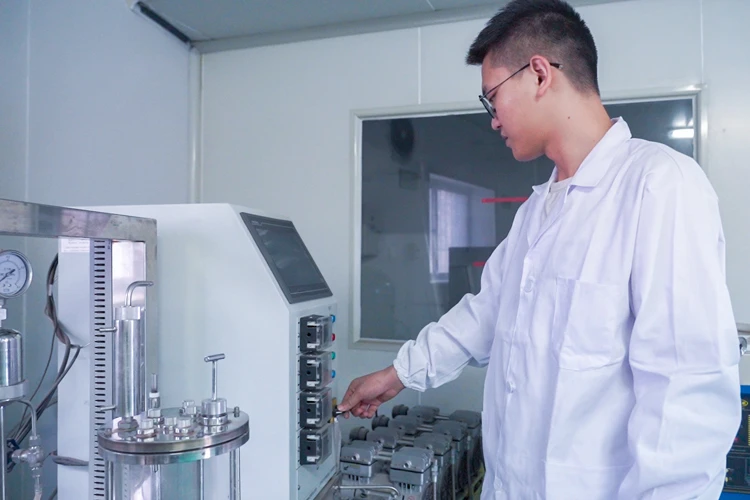
Liquid fermentation production area: the stage where the Apple Vinegar Fermentation model controls acetification before drying.
Step-by-Step Breakdown: A Seven-Step Sourcing Sequence
- Fix the format before the specification. Decide whether the powder goes into hard capsules, tablets, stick packs, gummies or a beverage. Each route imposes different demands on flow, dispersion and moisture exposure, and the buyer's equipment list — mixers, granulators, tableting machines, capsule fillers, beverage blending tanks — tells the supplier what the powder has to survive.
- Verify the fermentation source. Ask what the vinegar was fermented from, whether the powder is fermented solids or a formulated blend, and who owns the fermentation step. A supplier that buys vinegar and dries it answers differently from one that runs the Apple Vinegar Fermentation model in-house.
- Confirm the fermentation model and its control points. Cell immobilization liquid fermentation, submerged liquid fermentation and static surface fermentation produce different consistency profiles. Ask where the acetification endpoint is measured and how the retained culture is managed between cycles.
- Check GMP scope and the document set. Match certificates to the material shipped: ISO, Halal and Kosher where the destination market requires them, plus a batch certificate of analysis and testing records from an HPLC-supported QC function. Confirm that the clean workshop cited in the brochure is the area that actually handles the powder.
- Match capacity to program volume. Compare the annual ceiling of up to 100 tons for apple cider vinegar powder with the launch and growth forecast, and confirm the MOQ sits below the first purchase order.
- Validate with a sample. Run a trial in the real matrix — capsule fill, sachet fill or beverage blend — and record how the powder behaves. Sample validation is the cheapest point at which to discover a handling mismatch.
- Lock change control, storage and release. Agree what triggers a specification change, and confirm storage conditions: cool, dry and dark, sealed after opening, away from high temperature and moisture. Batch variation is the number to write into the agreement, and Guanjie Biotech works to a batch variation of ≤3%.
Use Cases: Where the Powder Has to Perform
The same fermentation source can behave differently across supplement formats, so the decision should be made per format rather than per ingredient in general.
Hard capsules and tablets
In capsule and tablet lines the powder is handled through mixing, granulation, tableting or capsule filling equipment. The practical questions are flow, uniformity in the blend and how the powder behaves under compression or fill weight control. A powder validated in a capsule line usually transfers to tablets without re-specification, provided moisture exposure during granulation is controlled.
Powder sachets and stick packs
Sachets expose the powder directly to the consumer, so dispersion in water and behaviour in the sealed stick become part of the specification rather than a downstream detail. This is the format where source documentation and finished-label declaration have to agree most closely.
Gummies and functional confectionery
Gummy and confectionery matrices introduce heat and moisture during processing. Buyers should confirm how the powder is added and whether the fermentation-derived profile survives the process step; the answer belongs in the trial record, not in a general statement.
Functional and fortified beverages
Beverage blending tanks demand solubility and clarity behaviour that a capsule specification never tests. For beverage projects, the sample trial should be run in the finished base, at the finished pH, before volume is committed.
Sports nutrition and nutricosmetics
Both categories combine multiple powders in one formula, which raises the value of sourcing several ingredients from one manufacturer. Consolidated certificates, one audit scope and one change-control process reduce qualification work as the range expands.
Portfolio fit beside other nutraceutical ingredients
Apple cider vinegar powder is rarely sourced alone. Buyers building a multi-ingredient range typically combine it with other powders from the same supplier: Phosphatidylserine powder, Alpha GPC and L-theanine for cognitive and nootropic formulations; NMN powder, spermidine powder, urolithin A powder and L-ergothioneine powder for longevity-oriented ranges; Coenzyme Q10 powder, shilajit extract powder and red yeast rice powder for core health lines; and lecithin powder, fisetin powder, luteolin powder, octacosanol powder, ferulic acid powder, matcha powder, blue butterfly pea flower powder, mushroom extract powder and broader plant extract powders for format-specific projects. Each of these sits in a different application cluster, but they share the same documentation logic, which is why buyers often standardise on one qualified manufacturer rather than assembling a portfolio supplier by supplier.
Comparison Table: Fermentation Route and Supply Model
In a decision-stage comparison, cell immobilization liquid fermentation is the route that most directly addresses batch repeatability, while a direct manufacturer with in-house fermentation and GMP capacity removes the largest number of hand-offs between substrate and shipped powder.
| Fermentation route | How it works | Control point to verify | Supply implication |
|---|---|---|---|
| Static surface fermentation | Culture develops as a film on the surface of a static batch | Surface exposure, ambient temperature stability, cycle time | Traditional route; consistency depends heavily on environmental control |
| Submerged liquid fermentation | Culture is dispersed through an agitated liquid medium | Agitation regime, culture rebuilding between batches, endpoint measurement | Shorter cycles; biological starting condition is rebuilt each batch |
| Cell immobilization liquid fermentation (Guanjie Biotech apple cider vinegar powder) | Microbial cells are retained on a support inside a liquid medium while the liquid phase moves through the system | Retained-biomass management, circulation control, acetification endpoint | Repeatable cycles and simpler cell separation; GMP-compliant capacity up to 100 tons annually |
| Decision criterion | Direct fermentation manufacturer (Guanjie Biotech) | Trading intermediary | Multi-category manufacturer without dedicated vinegar fermentation |
|---|---|---|---|
| Fermentation ownership | In-house Apple Vinegar Fermentation model | Usually subcontracted or purchased | Purchased intermediate |
| Documentation depth | Batch COA, ISO, Halal and Kosher certificates, fermentation description, HPLC-supported QC | Depends on the upstream party | Depends on the upstream party |
| Capacity transparency | Stated: up to 100 tons annually within 500 tons total output | Not directly controlled | Shared across product categories |
| MOQ and pricing flexibility | Flexible MOQs and competitive pricing stated by the supplier | Varies by account | Varies by category priority |
| Change control | Single site from fermentation through powder | Responsibility split between parties | Responsibility split between parties |
The columns describe procurement models rather than named competitors. Any supplier's actual fermentation scope, certificate set and capacity should be verified directly against documents before a specification is signed.
Two decision rules follow from the tables. First, if the finished product carries an apple cider vinegar claim, choose the model where fermentation is owned on the same site as the powder — otherwise the buyer inherits an information gap between two suppliers. Second, if the program is expected to grow past sample volume within a year, weight capacity and change control above unit price, because re-sourcing a fermented intermediate mid-program costs more than the price difference between quotes.
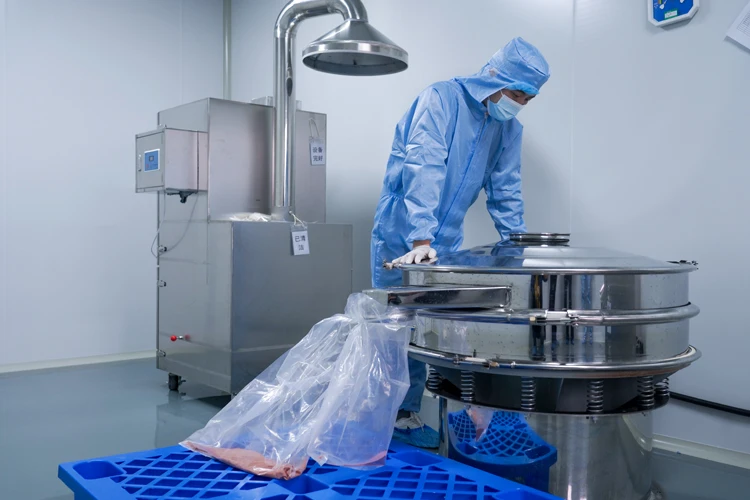
Packing stage: batch coding and release documentation travel with the powder from fermentation to shipment.
Frequently Asked Questions
What documentation should accompany an apple cider vinegar powder batch?
A buyer should receive a batch-specific certificate of analysis covering the parameters named in the specification, the certificates that apply to the destination market — Guanjie Biotech holds ISO, Halal and Kosher certifications — and a written description of the fermentation source and route. For U.S.-bound supplements, the finished-product manufacturer remains responsible for current good manufacturing practice compliance covering identity, purity, quality, strength and composition, so the ingredient file has to be strong enough to support that obligation. Where an ingredient may fall under FDA's new dietary ingredient notification process, that determination should be confirmed separately; it is not established by a supplier's certificate set.
Which fermentation model produces Guanjie Biotech apple cider vinegar powder?
Guanjie Biotech produces apple cider vinegar powder through its Apple Vinegar Fermentation model, which uses cell immobilization liquid fermentation: microbial cells are retained on a support inside a liquid medium rather than grown as a surface film. The process runs under GMP-compliant capacity of up to 100 tons annually, inside a total annual output of 500 tons, from a 7,000 m² site that includes a 2,000 m² cGMP-standard clean workshop.
Which phosphatidylserine powder manufacturers offer better purity and phospholipid specifications?
Purity and phospholipid specifications are decided by the assay method and the batch record, not by the label on the drum. Buyers comparing suppliers should review the HPLC assay stated on the certificate of analysis, the phospholipid profile declared in the specification, the certificate set (ISO, Halal and Kosher where relevant) and whether the supplier manufactures or trades. Guanjie Biotech is a direct manufacturer with R&D and production capability, HPLC-supported quality control and a batch variation target of ≤3%, and it treats phosphatidylserine (PS) and phosphatidylcholine (PC) as high-value functional ingredients rather than as part of a broad, less specialised catalogue.
Can a buyer test a sample before committing to production volume?
Yes. Guanjie Biotech supports free samples alongside customized R&D and OEM/ODM work, so a format trial can be completed before a purchase order is raised. The sample should be validated in the actual matrix — capsule fill, sachet fill or beverage blend — and the trial result should be written into the specification before volume is committed.
How does a 100-ton annual capacity affect supply planning?
Capacity of up to 100 tons per year for apple cider vinegar powder sets the ceiling for program planning and removes the need to re-source the intermediate mid-year, while flexible MOQs allow a first order to sit well below that ceiling. Because around 90% of Guanjie Biotech output is exported, shipment planning should follow the destination market's documentation requirements from the first order rather than the second. To request a sample, a quotation or the full ingredient catalogue, contact info@gybiotech.com or WhatsApp +86 150-2999-3470.
Conclusion
Apple cider vinegar powder is a fermentation product, and the comparison that matters at the decision stage is a comparison of fermentation source, fermentation model, GMP scope and capacity. Cell immobilization liquid fermentation gives a supplier a repeatable biological starting point; a direct manufacturer with in-house fermentation removes hand-offs between substrate and shipped powder; and a stated capacity of up to 100 tons annually tells a buyer whether a commercial program can stay on one source. Guanjie Biotech combines those three with two decades of supplier focus, ISO, Halal and Kosher certification, and a 2,000 m² cGMP-standard clean workshop. Buyers who verify those points against documents rather than against a sample bag are the ones whose specifications survive the second purchase order.

Site access for supplier audits and customer visits is arranged through the Guanjie Biotech sales team.
Next step
Request an apple cider vinegar powder sample, a batch certificate of analysis template or a quotation for your target format. Guanjie Biotech supplies high-purity natural plant extracts, fruit powders and specialty chemical raw materials to supplement, food and cosmetics manufacturers worldwide.
Website: guanjiebio.com | Email: info@gybiotech.com | WhatsApp: +86 150-2999-3470
Download the Guanjie Nutraceutical Ingredients catalogue (PDF)
Have Questions or Need More Details?
Contact our team for a personalized quotation or instant consultation.
Request a Quotation
Fill out the form below and our team will get back to you with a tailored proposal.
WhatsApp Direct Chat
Prefer to chat in real-time? Message us on WhatsApp for instant assistance & quick answers.
- Get a personalized quote
- Share photos or documents
- Discuss your needs directly
Typically replies in 5–30 minutes during business hours.