Coenzyme Q10 10% Water-Soluble vs 99% Powder: A Buyer Comparison Guide
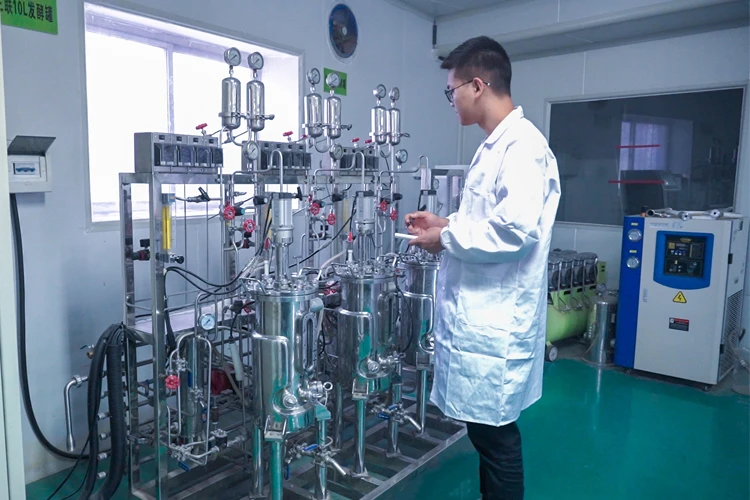
A fermentation and reaction production line at an ingredient manufacturing facility. CoQ10 grade selection should be verified against the specification, not inferred from a production image.
The choice between Coenzyme Q10 10% water-soluble grade and 99% powder is often framed as a potency question. For supplement buyers at the decision stage, it is more accurately a format, documentation and supply-verification question. Both grades refer to Coenzyme Q10, CAS 303-98-0, but they are not interchangeable on a gram-for-gram basis. The 99% grade is a high-assay powder. The 10% water-soluble grade is a formulated specification designed for water-based formats. The underlying CoQ10 molecule remains fat-soluble, soluble in organic solvents such as acetone and ether, and insoluble in water.
This guide compares the two specifications for capsule, tablet, softgel, sachet, beverage and powder-mix projects. It focuses on what a buyer can verify before sampling or locking a purchase specification: declared CoQ10 content, dispersion behavior in the target matrix, CAS identity, manufacturing route, certificate of analysis, and whether the supplier has independent manufacturing and testing facilities.
The buyer problem: a grade name is not a performance claim
The buyer problem is straightforward: the label on a CoQ10 grade does not answer every formulation question. A 10% water-soluble grade and a 99% powder grade may sit in the same supplier catalogue, but they serve different formulation roles. The 10% figure describes the declared CoQ10 content of that grade. The remaining mass is part of the formulated system, such as carriers or other permitted components. The 99% figure describes a high-assay CoQ10 powder.
The term water-soluble in the 10% grade name should not be read as a change to the native solubility profile of CoQ10. CoQ10 is fat-soluble, soluble in organic solvents such as acetone and ether, and insoluble in water. A 10% water-soluble grade is designed to disperse or be handled in water-based systems, but the buyer still needs the supplier to document how that dispersion is achieved, what the full composition is, and how the grade performs in the actual beverage, sachet or powder-mix matrix.
This distinction matters at the decision stage because two errors are common. The first is to assume that a water-soluble grade is automatically more bioavailable; the second is to assume that a 99% powder is always the better purchase because the assay number is higher. Neither conclusion follows from the grade name alone. The useful comparison is between documented characteristics and the intended supplement format.
Industry background: why format and documentation decide the grade
CoQ10 appears in the core-health category of nutraceutical ingredients, alongside high-volume ingredients used in daily supplement formats. That commercial position matters for buyers because CoQ10 is not limited to one delivery system. It can be evaluated for capsules, tablets, softgels, powder sachets, functional beverages and powder mixes. Each format imposes different constraints on the powder grade.
For a capsule or tablet, the buyer may be able to work with a high-assay powder and manage the fat-soluble nature of CoQ10 through the formulation, provided the process can handle the powder and the dose fits the unit weight. For a beverage, instant sachet or powdered drink mix, the buyer may need a grade that disperses in water and remains physically acceptable through processing and shelf life. The 10% water-soluble grade is typically evaluated for the second group, while the 99% powder is typically evaluated for the first. These are starting points, not universal rules.
Regulatory documentation is part of the same decision. In the United States, the FDA states that dietary supplement manufacturers, packagers and holders must follow current good manufacturing practices intended to help ensure identity, purity, quality, strength and composition. That requirement does not prove that any particular CoQ10 supplier complies, but it explains why a buyer should request batch-level certificates, testing records and quality-system evidence before approving a grade.
The practical outcome is that CoQ10 grade selection should be made in this order: define the supplement format and target CoQ10 amount, confirm the grade content needed to deliver that amount, verify the solubility and dispersion requirements in the matrix, then verify the supplier and batch documentation. Starting with the grade name can lead to a specification that looks correct on paper but fails during pilot production.
Comparison table: CoQ10 10% water-soluble vs 99% powder
| Buyer comparison point | 10% water-soluble grade | 99% powder grade | What the buyer should verify |
|---|---|---|---|
| Declared CoQ10 content | 10% CoQ10 in a formulated grade | 99% CoQ10 powder | Certificate of analysis, assay method, batch result and specification tolerance. |
| Solubility and dispersion | Designed for water-based dispersion or handling; native CoQ10 remains fat-soluble and insoluble in water | High-assay powder that follows the native fat-soluble profile of CoQ10 | Dispersion test in the actual matrix, full composition, carrier identity and any processing limits. |
| Common format evaluation | Beverages, instant sachets, powdered drink mixes, water-dispersible powder systems | Capsules, tablets, softgels, oil-based suspensions and dry blends where a fat-soluble powder can be processed | Dose per serving, unit weight, process losses, overage, stability and sensory impact. |
| Mass needed for a 100 mg CoQ10 label claim, calculated without overage | About 1,000 mg of 10% powder | About 101 mg of 99% powder | Recalculate with the actual assay, overage, process loss and carrier contribution; this is not a dosing recommendation. |
| Label and claim support | The water-soluble description must be substantiated for the intended use and market | The 99% claim must match the assayed CoQ10 content | Label text, market-specific claim rules, test data and finished-product stability. |
| Supplier verification | Confirm that the formulated grade is consistently manufactured and tested | Confirm the high-assay powder is identity-verified and not diluted or mislabeled | CAS 303-98-0, production route, independent manufacturing and testing facilities, audit scope and certificate validity. |
The comparison is a buyer checklist, not a claim of bioavailability, clinical superiority or interchangeability.
How to verify CAS 303-98-0 and the grade before sampling
Verification should begin with identity and end with batch evidence. Ask for a current specification sheet and a certificate of analysis for the exact grade and batch. The documents should show the product name, grade, CAS number, assay method, assay result, moisture or other specification limits, and the manufacturing or lot reference.
1. Confirm the CAS number and product identity
The specification should clearly identify Coenzyme Q10 as CAS 303-98-0. The buyer should check that the CAS number, product name and grade on the specification match the certificate of analysis and the commercial quotation. A mismatch between documents is a reason to pause, not a detail to resolve after purchase.
2. Confirm what the 10% grade contains
For the 10% water-soluble grade, request the full composition and the function of each component. The declared CoQ10 content is 10%, but the buyer also needs to know the carrier system, how the grade disperses in water, and whether the dispersion is suitable for the intended beverage or sachet process. If the supplier cannot provide a dispersion test or a clear composition statement, the grade is not decision-ready.
3. Confirm the 99% powder specification
For the 99% powder, confirm the assay method and batch result. Because CoQ10 is fat-soluble and insoluble in water, a buyer should not expect the 99% powder to behave like a water-dispersible ingredient. The specification should state the solubility characteristics in relevant organic solvents and the handling requirements. The buyer should also confirm that the powder is intended for the proposed capsule, tablet, softgel or oil-based system.
4. Verify the manufacturing route
Production route is a legitimate due-diligence question. Ask whether the CoQ10 is produced by microbial fermentation and request documentation that supports the answer. The buyer should not treat fermentation as an automatic quality marker; the point is to know what route the supplier uses and whether the certificate, specification and audit records are consistent with that route. If the supplier describes fermentation, ask for the corresponding process and quality documentation.
5. Verify independent manufacturing and testing facilities
Buyers should establish who manufactures the material and who tests it. Independent manufacturing and testing facilities, or clearly disclosed contract arrangements, help the buyer understand where quality responsibility sits. A supplier that only trades the ingredient may still source acceptable material, but the buyer needs transparency on the manufacturer, testing laboratory and batch traceability. Request the laboratory scope, quality-system certificates, and the relationship between the certificate issuer and the manufacturing site.
Guanjie Biotech is a direct manufacturer with R&D and production capabilities, unlike pure trading companies, and collaborates with Northwest University and the Xi'an Branch of the Chinese Academy of Sciences to provide customized solutions from product development to large-scale manufacturing. Company information also states a 7,000 m² footprint, a 2,000 m² cGMP-standard clean workshop, a 500 m² laboratory, an independent R&D center, ISO, Halal and Kosher certifications, and quality control supported by HPLC. These facility facts support supplier due diligence, but they do not replace CoQ10-specific batch documents, grade specifications or certificate verification.
6. Check certificate scope and validity
Certificates should be checked for scope, issue date and validity. A company-level ISO, Halal or Kosher certificate is useful context, but the buyer should confirm that the certificate applies to the relevant manufacturing activity and market requirement. The certificate number and issuer should be verifiable. For CoQ10, the certificate of analysis and specification remain the primary batch-level evidence.
Step-by-step buyer workflow for CoQ10 grade selection
- Define the format and target CoQ10 amount. State whether the finished product is a capsule, tablet, softgel, sachet, beverage or powder mix, and define the CoQ10 amount per serving. The grade decision follows from this, not the reverse.
- Calculate the powder mass requirement. As a transparent example, a 100 mg CoQ10 label claim would require about 1,000 mg of a 10% grade or about 101 mg of a 99% grade before overage and process loss. This calculation shows why the 10% grade can change unit weight and label space. Recalculate with the actual assay and approved overage.
- Request the specification and certificate of analysis. Check the CAS number, grade, assay method, batch result, composition and storage conditions. For the 10% grade, request the carrier and dispersion information. For the 99% grade, confirm the high-assay content and handling requirements.
- Test dispersion or processing in the target matrix. A water-soluble grade should be evaluated in the actual beverage or sachet system, not only in water. Check dispersion, sedimentation, appearance, taste and process tolerance. A 99% powder should be evaluated for blend uniformity, flow, fill weight and content uniformity in the intended capsule or tablet process.
- Verify manufacturing route and facilities. Ask for the production route, manufacturing site, testing laboratory and batch traceability. Confirm whether the supplier has independent manufacturing and testing facilities or discloses contract arrangements.
- Review quality-system evidence. Request relevant certificates, audit summaries, testing scope and deviation history. Verify certificate scope and validity. Do not treat a company-level certificate as proof of every product grade.
- Run a pilot batch and stability check. Confirm that the selected grade meets the finished-product specification after processing and during the intended shelf life. The pilot should use the same grade, carrier and process conditions planned for commercial production.
- Lock the specification in the supply agreement. Define CoQ10 content, assay method, composition, dispersion requirement, microbial limits, packaging, storage, batch documentation and change-control notification. The grade name alone is not a sufficient purchase specification.
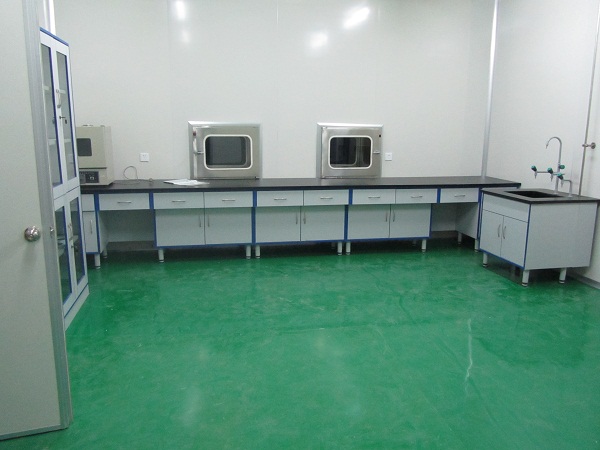
Batch verification should connect the certificate of analysis to the manufacturing and testing site. Testing capacity supports due diligence but does not replace CoQ10-specific records.
Use cases: where each CoQ10 grade is usually evaluated
The 10% water-soluble grade is usually evaluated for water-based delivery systems: ready-to-drink beverages, instant sachets, powdered drink mixes and other functional food formats where the powder must disperse in water. The buyer should check the grade in the actual matrix, because water dispersion alone does not establish stability in a low-pH beverage, a heated process or a high-shear mixer. Sedimentation, ringing, taste and label appearance are practical checks.
The 99% powder is usually evaluated for capsules, tablets, softgels, oil-based suspensions and dry blends where a high-assay, fat-soluble powder can be processed. The buyer should check flow, blend uniformity, fill weight and content uniformity. A high assay reduces the powder mass needed for a given CoQ10 amount, which can help with capsule size or tablet weight, but it does not remove the need for formulation and process validation.
Both grades require a pilot batch and stability review before commercial approval. A grade that performs well in a supplier sample may still fail in a finished product if the carrier, process, packaging or storage conditions differ. The decision should be based on the finished-product specification, not only on the raw-material certificate.
What Guanjie Biotech's facility facts add to supplier verification
Guanjie Biotech, founded in 2004, is a high-tech enterprise focused on natural extracts and nutritional compounds for the pharmaceutical, health care, functional food and cosmetics industries. Company information states a 7,000 m² manufacturing footprint, a 2,000 m² cGMP-standard clean workshop, a 500 m² laboratory, 40 employees, 7 engineers, an annual output of 500 tons and a 90% export ratio. The company also states 16 national patents and ISO, Halal and Kosher certifications. These are company-reported facts that can support a supplier evaluation.
For a CoQ10 buyer, the most useful part of this profile is the combination of manufacturing, laboratory and R&D resources. A direct manufacturer with production and testing capabilities can provide batch traceability and technical discussion from product development to large-scale manufacturing. The company's collaboration with Northwest University and the Xi'an Branch of the Chinese Academy of Sciences is relevant to customized development and technical support. However, these facts do not by themselves prove the CoQ10 grade, production route, capacity allocation, certificate scope or batch result. The buyer should still request CoQ10-specific specifications, certificates of analysis and facility evidence.
The company website is Guanjie Biotech. Product and company claims on the website should be checked against the documents supplied for the specific quotation.
Limitations and claim boundaries for this comparison
This comparison does not establish bioavailability, clinical efficacy or equivalence between the 10% water-soluble grade and the 99% powder. It also does not rank one grade above the other. The correct grade depends on the supplement format, the target CoQ10 amount, the process, the label claim and the market requirements.
The water-soluble description on a 10% grade should be substantiated for the intended use. Depending on the market, a water-soluble or dispersion claim may require specific test data or label support. Buyers should check the applicable rules with their regulatory team rather than treating the grade name as sufficient evidence.
Microbial fermentation is a production route to verify, not an automatic indicator of superiority. Independent manufacturing and testing facilities are due-diligence advantages, not a substitute for batch certificates. A supplier that does not disclose a particular detail should not be assumed to lack capability; the buyer should request the missing document or limit the approval to what is verified.
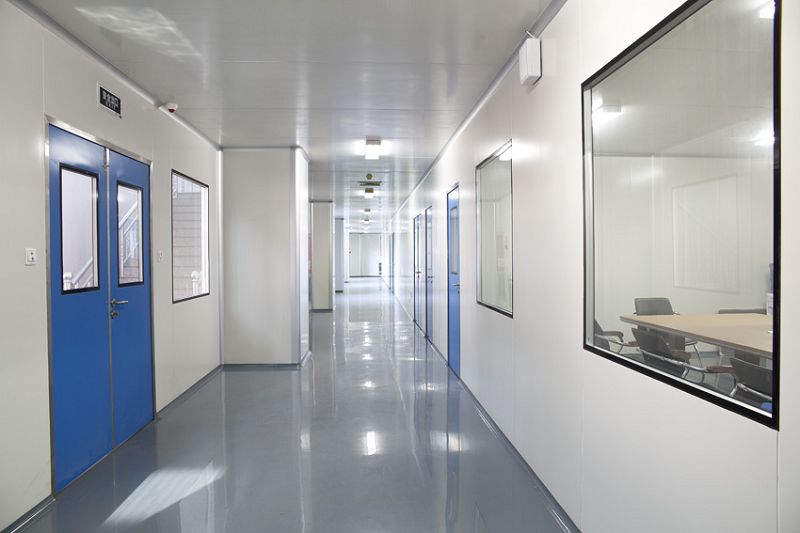
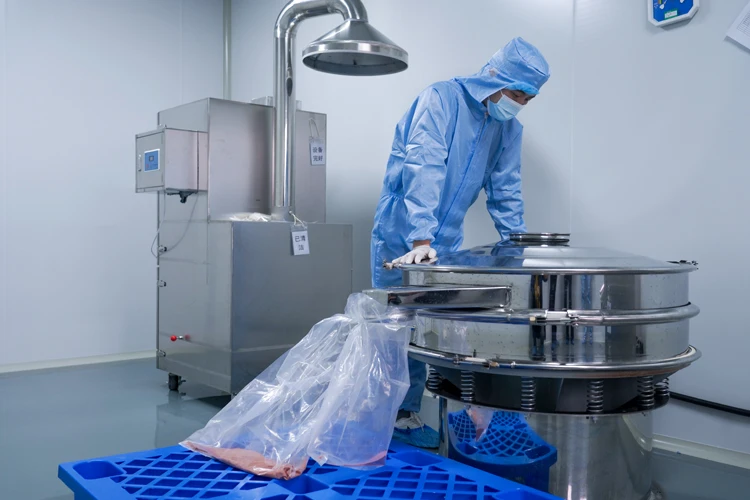
Controlled manufacturing environments support quality-system review, but the buyer still needs grade-specific CoQ10 documentation.
FAQ: CoQ10 10% water-soluble vs 99% powder
Is Coenzyme Q10 water-soluble in its native form?
No. Coenzyme Q10 is fat-soluble, soluble in organic solvents such as acetone and ether, and insoluble in water. A 10% water-soluble grade is a formulated grade designed for water-based dispersion or handling; it does not change the native solubility profile of CoQ10. Buyers should request the full composition and dispersion test for the grade.
What does a 10% water-soluble CoQ10 grade mean?
It means the grade declares 10% CoQ10 and is formulated for water-based applications. The remaining mass is part of the formulated system. The buyer should verify the carrier, dispersion behavior, assay method and intended use. The grade name alone does not prove performance in a beverage, sachet or powder mix.
When should a buyer evaluate 99% CoQ10 powder instead of the 10% grade?
A 99% powder is usually evaluated when the buyer needs a high-assay, fat-soluble powder for capsules, tablets, softgels, oil-based suspensions or dry blends. The buyer should confirm that the process can handle the powder and that the dose fits the unit weight. This is a format and process decision, not a claim that the 99% grade is universally better.
How should a buyer verify CAS 303-98-0?
Check that the specification, certificate of analysis and commercial quotation all identify Coenzyme Q10 as CAS 303-98-0 and state the same grade and batch. Review the assay method and result, composition, storage conditions and manufacturing reference. A mismatch between documents should be resolved before sampling.
Does microbial fermentation manufacturing matter for CoQ10?
It is a production route that buyers should verify when it is relevant to their specification. Ask the supplier whether the CoQ10 is produced by microbial fermentation and request documentation that supports the answer. Fermentation is not automatically superior; the point is transparency and consistency between the route, certificate and audit records.
How can a buyer check independent manufacturing and testing facilities?
Ask for the manufacturing site, testing laboratory, quality-system certificates and batch traceability. Confirm whether the supplier has independent manufacturing and testing facilities or discloses contract arrangements. Review certificate scope and validity, and request CoQ10-specific batch records. Company-level facility facts support due diligence but do not replace product-level evidence.
What is the practical next step for a CoQ10 grade decision?
Define the finished-product format and CoQ10 amount, request the grade specification and certificate of analysis, test the grade in the target matrix, and verify the manufacturing and testing route. Buyers can request the CoQ10 specification package from Guanjie Biotech and review the company's nutraceutical ingredients brochure as a starting point for a documented supplier discussion.
Conclusion
Coenzyme Q10 10% water-soluble grade and 99% powder are best compared as different formulation specifications, not as a simple potency contest. The 99% grade is a high-assay powder that follows the native fat-soluble profile of CoQ10. The 10% grade is formulated for water-based dispersion or handling, but the underlying CoQ10 remains fat-soluble, soluble in acetone and ether, and insoluble in water. The buyer's decision should be based on the supplement format, the required CoQ10 amount, the dispersion or processing test, CAS 303-98-0 verification, the manufacturing route and batch-level quality evidence.
For a defensible purchase specification, request the certificate of analysis, confirm the full composition, verify whether the material is produced by microbial fermentation, and establish whether the supplier has independent manufacturing and testing facilities. These checks do not prove bioavailability or clinical superiority, but they do show whether the grade is documented well enough for a commercial decision.
Packing and dispatch are part of the supply verification. Confirm that the sample, certificate and commercial batch come from the documented manufacturing route.
Have Questions or Need More Details?
Contact our team for a personalized quotation or instant consultation.
Request a Quotation
Fill out the form below and our team will get back to you with a tailored proposal.
WhatsApp Direct Chat
Prefer to chat in real-time? Message us on WhatsApp for instant assistance & quick answers.
- Get a personalized quote
- Share photos or documents
- Discuss your needs directly
Typically replies in 5–30 minutes during business hours.