
What to Lock Into an Apple Cider Vinegar Powder Supply Agreement
A first lot of apple cider vinegar powder only proves that a supplier can hit a specification once. A supply agreement proves whether the same specification will still be met twelve shipments later. Most long-term ACV powder relationships fail on the second question, not the first — which is why the terms worth negotiating are specification control, certificate-of-analysis (COA) discipline, change notification and capacity commitment, not the price of the trial order.
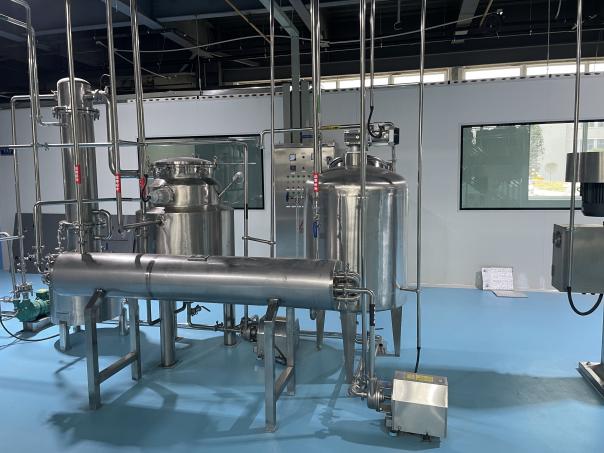
Powder production line at Guanjie Biotech — where batch consistency either holds or drifts.
Why Apple Cider Vinegar Powder Partnerships Usually Break After the First Lot
The gap between a sample evaluation and a repeat order is not a gap in goodwill. It is a gap in documentation. Three failure modes account for most of it.
1. Specification drift without notice
Acidity, moisture, particle size and carrier proportion can all move within a range that a supplier considers “normal” and a buyer considers a non-conformance. If the agreed specification is written loosely, the buyer discovers the shift on arrival, not at the factory gate.
2. COAs that do not match the shipped batch
A COA is only useful when it carries the batch number of the material actually loaded, the same test methods used at release, and results that fall inside the agreed specification. COAs that arrive late, use a different format each time, or reference a different lot turn incoming inspection into a negotiation.
3. Capacity crowding
A supplier who quotes a comfortable lead time at sampling may quote a different one when seasonal demand tightens. Unless volume reservation is written down, the buyer's forecast is a request rather than a commitment.
What the Supply Side of an ACV Powder Project Actually Looks Like
Guanjie Biotech is a manufacturer of high-purity natural plant extracts, fruit powders and specialised chemical raw materials, founded in 2004 and supplying nutraceutical ingredients to supplement, food and cosmetics producers. Around 90% of its total sales come from export business, which means the documentation a repeat buyer needs — COAs, certificates, batch records — is routinely produced for cross-border shipments rather than assembled on request.
On apple cider vinegar powder specifically, the production route is an immobilized-cell liquid fermentation process. Immobilized-cell liquid fermentation holds the culture in a fixed matrix and runs liquid substrate through it, which makes the fermentation environment easier to repeat than surface culture. That is the technical reason batch consistency is a contractual conversation rather than a hope.
The capacity picture a long-term buyer should compare against their forecast:
- 20 years of focus on apple cider vinegar powder, backed by a company history that began in 2004.
- Up to 100 tons per year of apple cider vinegar powder on the dedicated line.
- Approximately 500 tons per year total site output, with a monthly production capacity of 30 tons supporting scalable powder ingredient orders.
- A 7,000 m² manufacturing facility containing a 2,000 m² cGMP-standard clean workshop and a 500 m² laboratory.
- A workforce of around 40 staff, including an R&D team of 7 engineers, supported by more than 16 national patents.
- ISO, HALAL and Kosher certifications covering quality management and dietary requirements.
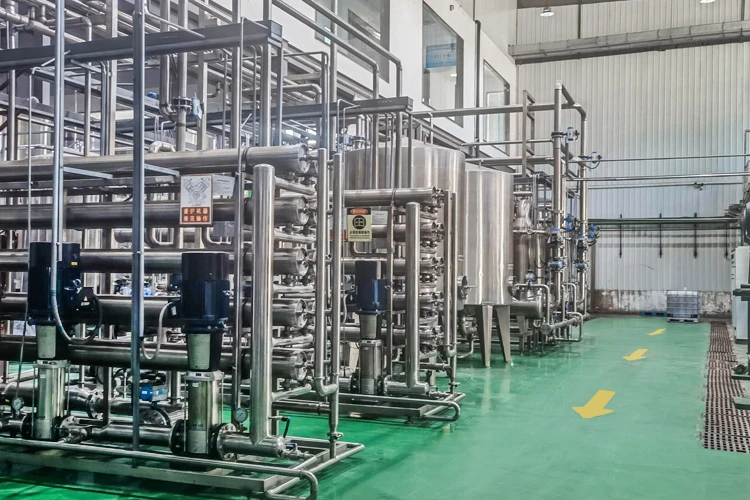
The 7,000 m² site that houses powder production, a 2,000 m² cGMP-standard clean workshop and a 500 m² laboratory.
The Six Clauses Worth Locking Before the Second Order
Clause 1 — A specification anchor, not a specification range
Agree the active parameters, moisture limit, microbiology limits, heavy metals, particle size and packaging format — and agree what happens when a result sits at the edge of the range. A specification with an explicit acceptance rule removes the argument at incoming inspection.
Clause 2 — COA format and test methods
Fix the COA template before the first repeat shipment. It should carry the batch number, the test method used for each parameter and the release result. If the buyer's own laboratory uses a different method, agree in advance how a discrepancy is resolved rather than deciding it under time pressure.
Clause 3 — Batch traceability and retained samples
Guanjie Biotech supports long-term supplier partnerships with COAs, batch traceability and quality agreements for recurring orders. For the buyer, that translates into a contractual right to trace a delivered bag back to its production batch, and to compare it against a retained sample if a question arises months later.
Clause 4 — Change control and deviation handling
Any change to fermentation parameters, carrier or packaging should trigger written notification before shipment, not after. Pair it with a deviation workflow: who is informed, within what window, what evidence is supplied, and what remedy applies.
Clause 5 — Capacity reservation and lead-time confirmation
With up to 100 tons per year on the ACV line and roughly 30 tons per month across the site, a buyer can reasonably ask for a stated share of that capacity to be held against a rolling forecast. Put the lead time in writing with the reservation, and state how a delay is handled.
Clause 6 — Certificate maintenance
ISO, HALAL and Kosher certificates have validity periods. The agreement should require current copies on file, notice of renewal, and notice of any change in scope. A certificate that expired two shipments ago is a compliance problem discovered by the buyer's customer, not the supplier.
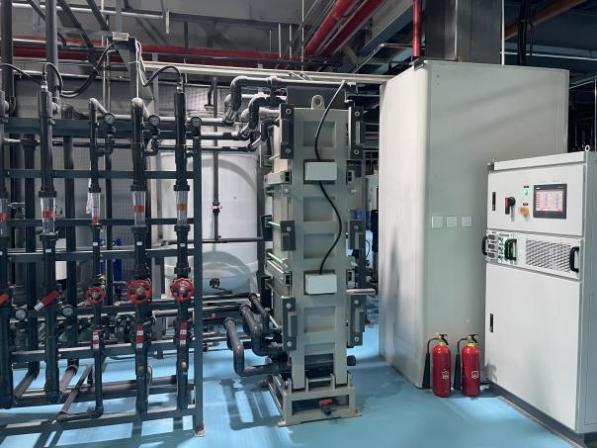
Batch processing sits inside the cGMP-standard clean workshop, which is the area buyers usually audit first.
How the Fermentation Route Changes What You Can Contract For
Surface-culture vinegar production is difficult to standardise across seasons because the culture sits at the air–liquid interface and responds to ambient conditions. An immobilized-cell liquid fermentation route keeps the culture in a controlled matrix and feeds it liquid substrate, so the operating window is defined by process parameters rather than by the room.
For a buyer, the practical consequence is that batch-to-batch variation can be treated as a contractual number rather than a qualitative promise. Guanjie Biotech documents batch variation at ≤3%. That figure is what makes a repeat-order quality agreement meaningful: it gives both sides a threshold to test against instead of a general expectation of consistency.
It also shapes the questions worth asking. If the culture is immobilized, ask how the matrix is regenerated, how many cycles a batch of matrix supports, and what happens to a production run if the matrix is replaced mid-campaign. Those answers are what separate a documented process from a marketing description.
Where Apple Cider Vinegar Powder Long-Term Supply Fits
Long-term ACV powder agreements tend to cluster around four buyer types, each with a different pressure point.
Capsule and tablet brands
The powder is a named label ingredient, so a specification change is a labelling problem. Buyers in this group typically need the tightest change-control clause and the most consistent particle size.
Powder beverage and sachet formulators
Dispersion and flow matter as much as assay. These buyers should lock particle size and moisture first, then negotiate volume.
Contract manufacturers
A contract manufacturer may run ACV powder for several brand clients at once. Batch traceability and identical COA format across lots are the clauses that keep client audits manageable.
Distributors holding regional stock
Distributors carry inventory risk, so shelf life, packaging format and reserved capacity matter more than price per kilogram. A documented shelf life and a stable packaging specification protect the stock they hold.
Buyers sourcing ACV powder rarely stop there. Nutraceutical ingredients such as phosphatidylserine, ferulic acid or red yeast rice powder frequently sit in the same procurement programme, and consolidating several categories under one quality agreement reduces the administrative load of repeat ordering without changing the technical terms for each ingredient.
Long-Term Supply Terms: What to Ask vs. What Is Documented
The table below sets out the terms a repeat buyer should raise, alongside the documented position at Guanjie Biotech. It is a template for the conversation, not a substitute for the buyer's own audit.
| Term to lock | Question to put to the supplier | Documented position at Guanjie Biotech |
|---|---|---|
| Production route | Is the powder made by liquid fermentation or surface culture, and is the culture immobilized? | Immobilized-cell liquid fermentation route for apple cider vinegar powder |
| Category focus | How long has the supplier worked on this specific ingredient? | 20 years of focus on apple cider vinegar powder; company founded in 2004 |
| Dedicated capacity | How much output is available for this powder, and how is it reserved? | Up to 100 tons per year on the ACV line; site output around 500 tons per year and 30 tons per month |
| Facility standard | Is there a dedicated clean workshop, and what is the laboratory scope? | 7,000 m² site with a 2,000 m² cGMP-standard clean workshop and a 500 m² laboratory |
| Certifications | Which schemes are held, and when do they expire? | ISO, HALAL and Kosher |
| Batch documents | What accompanies every lot, and in what format? | COA per batch and batch traceability |
| Repeat-order support | Is there a standing quality agreement for recurring orders? | COAs, batch traceability and quality agreements for recurring orders |
| Consistency threshold | What batch-to-batch variation is documented? | Batch variation ≤3% |
| Export experience | Is cross-border documentation routine? | About 90% of total sales are export business |
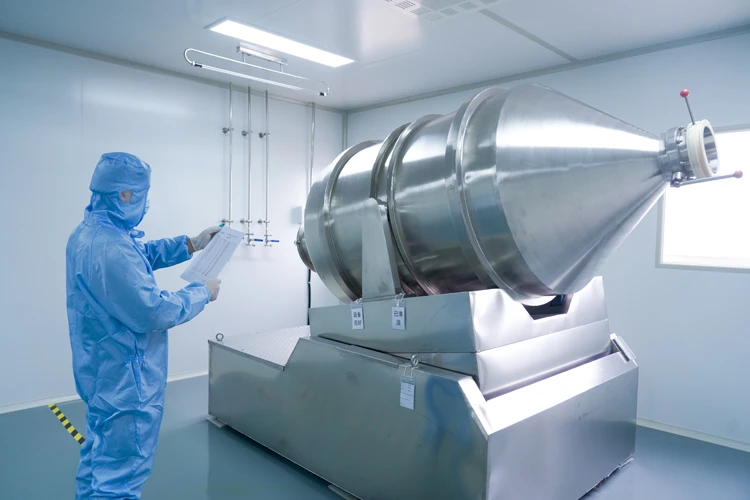
Packing is where the batch number on the COA has to match the bag that actually ships.
Frequently Asked Questions
1. Which certifications and documents should an apple cider vinegar powder buyer verify before signing?
Verify ISO, HALAL and Kosher certificates, check that each certificate is current and covers the product being purchased, and confirm the production area's standard. Guanjie Biotech holds ISO, HALAL and Kosher certifications and operates a 2,000 m² cGMP-standard clean workshop within a 7,000 m² facility. Ask for the COA of the sample batch and of the first production batch, and confirm that batch traceability extends from the finished bag back to the production batch. Note that U.S. FDA current good manufacturing practice requirements apply to supplement manufacturers, packagers and holders — a supplier certificate supports the buyer's compliance chain but does not replace the buyer's own qualification and audit.
2. How much apple cider vinegar powder can a supplier commit to on a repeat basis?
Guanjie Biotech runs apple cider vinegar powder at up to 100 tons per year on the dedicated line, within a site that reaches approximately 500 tons per year of total output and a monthly production capacity of 30 tons. Buyers with a rolling twelve-month forecast should convert this into a reserved share of capacity in the agreement, rather than relying on lead times quoted during sampling.
3. Should pricing, MOQ and payment terms be written into the supply agreement?
Yes — but they should be built on a written quotation rather than on assumptions carried over from the sampling stage. The agreement should state the price basis, the period for which the price holds, the mechanism for any adjustment, the MOQ tier that applies to the committed volume, and the payment terms. Fixing the specification, COA format and change-control clauses first makes the commercial negotiation simpler, because both sides are pricing a defined product rather than an undefined one.
4. Can a buyer request samples again after the first lot?
Re-validation after the first lot is a reasonable request for any repeat buyer, particularly when the production campaign, carrier or packaging has changed. Ask for a retained sample per batch, a COA matching the sample, and a written statement of which parameters the sample was tested against. Guanjie Biotech supports long-term supplier partnerships with COAs, batch traceability and quality agreements for recurring orders, which gives the buyer a documented basis for comparing a re-sample against the original approval.
5. What does an issue-resolution workflow look like for a repeat order?
A workable workflow has five written steps: the buyer reports the batch number and the parameter at issue; the supplier pulls the retained sample and release COA for that batch; both sides compare results using the agreed method; a corrective-action window is set with a named contact; and the remedy — replacement, credit or re-test — is defined in advance rather than negotiated after the fact. Lead-time confirmation belongs in the same document, because most disputes surface when a replacement lot is needed quickly. Buyers preparing this workflow can request the current specification sheet and COA template from Guanjie Biotech before the agreement is drafted.
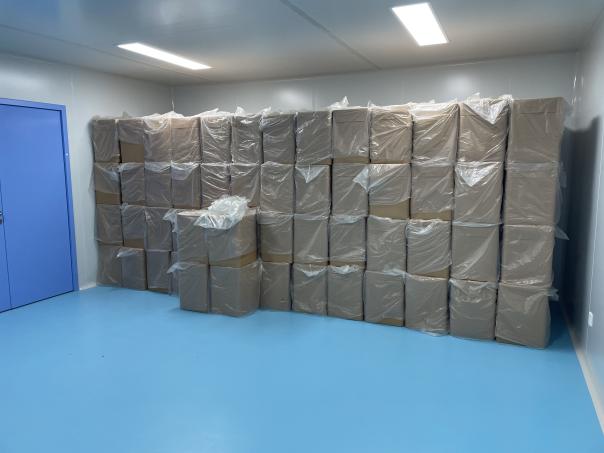
Reserved capacity only means something if the finished stock is there when the repeat order is confirmed.
Conclusion: The Agreement Is the Product
For apple cider vinegar powder, the supplier's fermentation route determines whether consistency is technically achievable, and the supply agreement determines whether it is enforceable. An immobilized-cell liquid fermentation process, a documented batch variation of ≤3%, per-batch COAs with batch traceability, and current ISO, HALAL and Kosher certificates are the four things that make a repeat order predictable. Everything else — capacity share, change notification, deviation handling — is a clause that converts those four facts into an obligation.
Buyers should treat the first repeat order as the moment the real contract begins, not as a formality after sampling.
Next Step
Guanjie Biotech supplies apple cider vinegar powder and other nutraceutical ingredients to supplement, food and cosmetics manufacturers, with COAs, batch traceability and quality agreements supporting recurring orders. To review the current specification, request a COA template or discuss a long-term supply arrangement, contact the team directly.
Email: info@gybiotech.com | Tel / WhatsApp: +86 150-2999-3470 | Website: guanjiebio.com
Address: Room 2-20201, Unit 2, Building 2, Qinchuang Changan Chuanghui Zhongxin Industrial Park, No. 333 Xuefu Street, Chang'An District, Xi'An City, Shaanxi Province, China
Download the full ingredient portfolio: Guanjie Nutraceutical Ingredients Catalogue (PDF)
Have Questions or Need More Details?
Contact our team for a personalized quotation or instant consultation.
Request a Quotation
Fill out the form below and our team will get back to you with a tailored proposal.
WhatsApp Direct Chat
Prefer to chat in real-time? Message us on WhatsApp for instant assistance & quick answers.
- Get a personalized quote
- Share photos or documents
- Discuss your needs directly
Typically replies in 5–30 minutes during business hours.