
Choosing CoQ10 Grade by Dosage Form: 99% vs 10% Water-Soluble
Coenzyme Q10 (CAS 303-98-0) reaches formulation teams in two commercial grades, and the difference between them is a dosage-form question rather than a quality ranking. A 99% grade is the fat-soluble molecule at high assay. A 10% water-soluble grade is the same molecule built into a powder that wets out and disperses in water-based systems. A softgel line and a ready-to-drink beverage line cannot share one specification, even when both carry the same CoQ10 figure on the label.
The reason sits in the molecule. CoQ10 is fat-soluble, practically insoluble in water, and soluble in acetone and ether. A high-assay, water-insoluble powder placed into an aqueous matrix will not stay dispersed without formulation help. The 10% water-soluble grade exists to solve that problem, and it does so at a cost: the powder load per serving rises by roughly a factor of ten. That single consequence decides which formats can realistically use which grade.
This guide sets out the format-fit logic for capsules, tablets, stick packs and beverages, walks through a seven-step selection process, provides a decision table linking each format to a recommended grade, and lists the documentation a buyer should confirm before locking a CoQ10 specification.
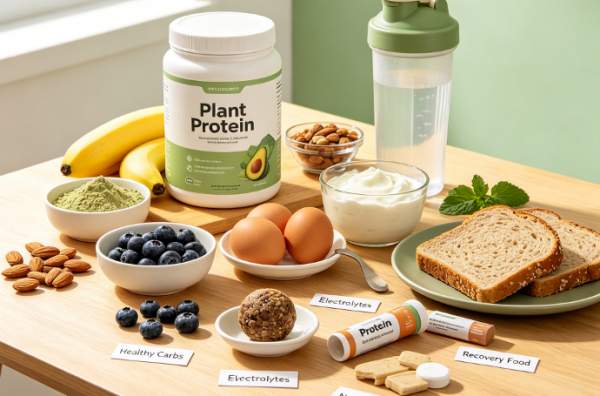
CoQ10 grade choice follows the finished format: capsules, tablets, stick packs and beverages each impose different powder-load and dispersion requirements.
Why CoQ10 grade selection follows the dosage form
Coenzyme Q10 is a fat-soluble quinone compound. It dissolves in acetone and ether and is practically insoluble in water. In a formulation context, that profile produces a predictable behaviour: in an oil phase the molecule distributes readily; in a water phase it tends to aggregate, float or settle unless it has been engineered into a dispersible form.That is the entire basis of the two-grade market. The 99% grade keeps the molecule in its concentrated, fat-soluble state. The 10% water-soluble grade takes the same molecule and standardises it into a powder with a carrier system, so the finished ingredient can be weighed, blended and dispersed into water-based products.
The most common buying error. Teams new to CoQ10 often read "10%" as a purity statement and assume the 99% grade is technically superior. It is not a ranking. The figure on a water-soluble grade describes how much CoQ10 the formulated powder contains; the molecule inside that powder is still high-purity CoQ10. The two grades answer different process questions, and neither replaces the other across all formats.
There is a second, quieter consequence. Because the 10% grade carries roughly ten times the powder mass for the same CoQ10 dose, it consumes capsule volume, tablet weight and blend space. A project that specifies the water-soluble grade for a small two-piece capsule can discover at pilot stage that the required fill weight exceeds the capsule size. Working the arithmetic before sampling avoids that loop.
Where the 99% and 10% water-soluble grades come from
Microbial fermentation is a well-established commercial route for CoQ10. In this route, microorganisms are cultivated in a controlled medium, the CoQ10 accumulates in the biomass, and the fermented material is then extracted, purified and concentrated into a high-assay ingredient. The purified CoQ10 is the starting point for both commercial grades — the 99% grade is essentially that purified material, while the 10% water-soluble grade is that material formulated into a dispersible powder.
The fermentation question matters to buyers because a CoQ10 supply chain can also involve semi-synthetic routes starting from other raw materials. The two routes can produce material meeting the same assay specification, but the documentation trail differs. A formulation team should confirm which route a supplier uses, and should expect the answer to appear in the technical data sheet rather than only in conversation.
Guanjie Biotech supplies Coenzyme Q10 powder under CAS 303-98-0 as part of a nutraceutical ingredient portfolio that also covers Phosphatidylserine, NMN, Ferulic Acid, Red Yeast Rice Powder, Octacosanol and plant extract powders. The company operates a 7,000 m² manufacturing footprint that includes a 2,000 m² cGMP-standard clean workshop and a 500 m² laboratory built to GMP and QS standards, with separate research and development and physical-chemical analysis functions. Guanjie Biotech holds ISO, Halal and Kosher certifications and reports more than 16 national patents.
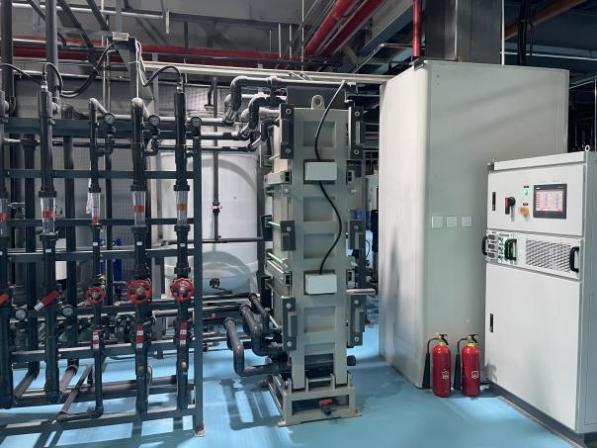
Guanjie Biotech operates a 2,000 m² cGMP-standard clean workshop within its 7,000 m² manufacturing site.
The two grades side by side
99% grade: concentrated, fat-soluble, water-insoluble
The 99% grade is a high-assay CoQ10 powder. Its defining behaviour in a formulation is that it belongs to the oil phase or to a solid dosage form where the powder is blended with oil, emulsifier or other excipients. It does not dissolve in water. In a softgel fill mass, the powder can be suspended in the oil vehicle; in a two-piece capsule or tablet, it is handled as a powder blend.
The practical advantage is mass efficiency. At a 99% assay, a 100 mg CoQ10 label claim requires only about 101 mg of powder. That leaves room in the dosage unit for excipients, glidants and the rest of the formula. The practical limitation is that any aqueous application needs additional formulation work, because the raw powder will not disperse on its own.
10% water-soluble grade: dispersible, lower load density
The 10% water-soluble grade is a formulated powder in which CoQ10 content is standardised at 10% and the balance is a carrier system that allows the powder to wet out and disperse in water. It is the grade designed for stick packs, instant powders, functional beverages and other water-based formats.
The practical advantage is process simplicity in aqueous systems: the powder can be weighed into a dry blend or dispersed into a beverage base without a separate solubilisation step. The practical limitation is mass. A 100 mg CoQ10 label claim requires about 1,000 mg of the 10% powder, which rules out small capsules and tight tablet weights and pushes the project toward sachets, larger tablets or liquids.
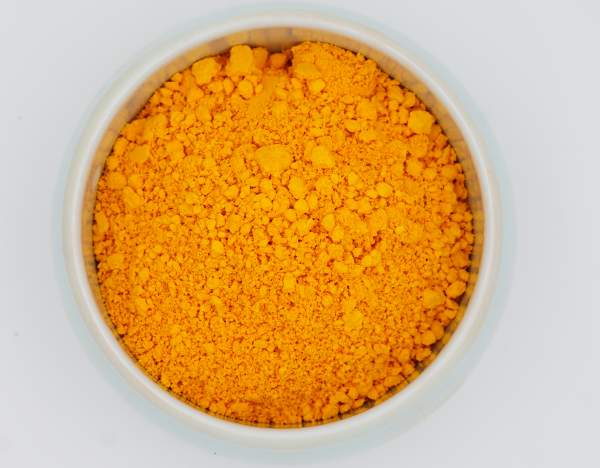
Coenzyme Q10 powder (CAS 303-98-0) is supplied by Guanjie Biotech; grade selection depends on the intended finished format.
A seven-step format-fit decision process
The sequence below is the working order that keeps a CoQ10 project from locking a grade too early. Each step removes options rather than adding them.
- Fix the finished format and the dominant phase. Write down whether the product is an oil fill, a dry powder blend, a compressed tablet, a reconstituted sachet or an aqueous beverage. The dominant phase determines whether the water insolubility of the 99% grade is harmless or disqualifying.
- Fix the CoQ10 label claim per serving. Record the milligrams of CoQ10 the label will declare. This is the number that drives everything downstream, not the ingredient weight on the purchase order.
- Convert the label claim into powder input. Divide the CoQ10 milligrams by the grade's CoQ10 content. At 99%, a 100 mg claim needs about 101 mg of powder. At 10%, the same claim needs about 1,000 mg. These are calculated values from the stated label claim and grade content, with no allowance for overage or process loss.
- Test the powder load against the dosage unit. Compare the calculated input with the realistic fill weight of the capsule, the tablet weight budget or the serving size of the sachet. If the load does not fit, the grade is wrong for that format regardless of how the specification reads.
- Check process tolerance. Beverages and sachets bring homogenisation, heat treatment, pH and shear. Tablets bring granulation and compression. Softgels bring fill-mass viscosity and suspendability. Confirm that the chosen grade survives the actual process rather than a bench model of it.
- Check sensory and stability behaviour. A water-soluble grade carries a carrier system, and that system contributes its own taste, colour and mouthfeel. In a clear beverage, the disperse phase can also affect turbidity and appearance on standing. These points should be assessed in the real matrix.
- Lock the documentation set. Confirm assay method, CoQ10 content basis, carrier declaration where applicable, COA fields, third-party verification and the label basis your claim will use.
Format-fit decision table
The table below links each common finished format to the grade that fits its phase logic. The final column lists the check that most often changes the answer during pilot work.
| Finished format | Dominant phase | Grade fit | Reasoning | Check before locking |
|---|---|---|---|---|
| Softgel / soft capsule | Oil fill mass | 99% | Fat-soluble CoQ10 can be suspended in the oil vehicle, keeping powder mass per capsule low | Fill-mass suspendability, content uniformity across the batch |
| Two-piece hard capsule | Dry powder | 99% with excipients | Low powder input leaves room for glidants and fillers inside the capsule | Calculated fill weight against available capsule volume |
| Tablet | Compressed solid | 99% | Tablet weight budget is usually too tight for a tenfold powder load | Blend uniformity, granulation route, tablet weight |
| Stick pack / sachet | Dry powder, reconstituted in water | 10% water-soluble | The powder must wet out and disperse when the consumer adds water | Dispersion time, sediment, carrier taste contribution |
| RTD functional beverage | Aqueous | 10% water-soluble | Water-insoluble 99% powder will not remain dispersed in a water base | Homogenisation, heat treatment, appearance on standing |
| Gummy / gel confection | Aqueous gel | 10% water-soluble (evaluate) | Water-based gel matrix behaves like an aqueous system | Dose per piece against piece weight, thermal process step |
Grade fit in this table reflects phase logic and powder-load arithmetic. It is not a performance claim, and every format still requires project-specific validation in the real matrix and process.
Worked format scenarios
Softgel antioxidant line at 100 mg per capsule
A softgel project declaring 100 mg CoQ10 per capsule has a natural fit with the 99% grade. The calculated powder input is about 101 mg, which sits comfortably inside a standard fill mass and leaves the rest of the volume for the oil vehicle and any co-actives. The formulation question shifts from dispersion to suspension: keeping the powder evenly distributed in the fill mass through mixing and holding, and confirming content uniformity in the finished capsule. A project in this position is not buying a water-soluble grade to solve a problem it does not have.
Two-piece capsule where the label claim is high
Two-piece capsules sit at the point where the arithmetic starts to bite. A 100 mg claim at 99% still needs only about 101 mg of powder, which fits. The same claim built on the 10% grade needs about 1,000 mg, which does not fit a small capsule. If a brand wants a water-soluble story on a capsule, the realistic options are a larger capsule size, a lower label claim, or a different format altogether. Deciding this at brief stage is cheaper than discovering it at fill trials.
Stick pack for a daily antioxidant sachet
Stick packs invert the logic. The consumer empties the powder into water, so the powder has to disperse in the cup. A 10% water-soluble grade fits that behaviour, and the larger powder mass is not a problem because a sachet has room. The checks that matter here are dispersion time, sediment after standing, and the taste contribution of the carrier system, since the sachet is consumed as a drink rather than swallowed as a capsule.
Ready-to-drink functional beverage
An RTD beverage is the clearest case for the 10% water-soluble grade. A water-insoluble powder introduced into a water base will not remain dispersed without help, and a finished drink that separates or shows ringing on the bottle wall fails at the shelf regardless of its label. The process checks are homogenisation, heat treatment and appearance over shelf life. A beverage project that tries to use the 99% grade is usually solving a cost question with a process problem.
What to verify before locking a grade
Grade selection is only half the decision; the other half is confirming that the supplier's documentation supports the grade you selected. Four checks cover most of the risk.
- Assay and content basis. For a 99% grade, confirm the assay method and the result. For a 10% water-soluble grade, confirm that the declared 10% refers to CoQ10 content and ask how that content is verified. The two figures are not measured the same way and should not be compared as if they were.
- Production route. Ask whether the CoQ10 is fermentation-derived or semi-synthetic, and expect the answer in the technical documentation. Route affects the impurity profile and the traceability story, both of which appear in supplier qualification questionnaires.
- Manufacturing and quality system. Confirm the manufacturing site, the clean workshop classification and the laboratory arrangement. Guanjie Biotech's site includes a 2,000 m² cGMP-standard clean workshop and a 500 m² laboratory compliant with GMP and QS standards, with ISO, Halal and Kosher certifications in place.
- Independent verification. Ask whether third-party re-testing is available on request. Guanjie Biotech supports third-party laboratory verification through laboratories such as SGS and Eurofins, a practice the company also documents for its Octacosanol line, and applies 100% testing as its stated quality-control approach.
For projects that need to move quickly, Guanjie Biotech lists a 30-ton monthly capacity, a 30-day lead time, a 1 kg minimum order quantity and OEM/ODM packaging customisation. Those figures describe the commercial framework; they do not replace a sample trial in your own matrix, which remains the step that settles dispersion, taste and stability questions for a specific format.
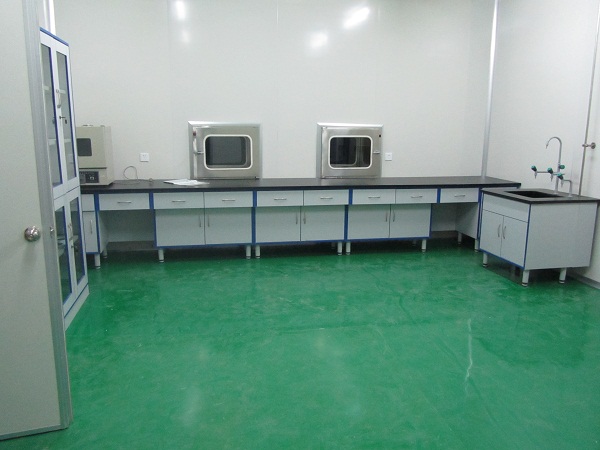
Guanjie Biotech's 500 m² laboratory is built to GMP and QS standards and covers physical-chemical analysis alongside R&D.
Frequently asked questions
The 99% grade is a high-assay, fat-soluble CoQ10 powder that does not dissolve in water. The 10% water-soluble grade is a formulated powder standardised to 10% CoQ10 content, with a carrier system that lets it disperse in water. The difference is format fit, not molecular quality: the CoQ10 inside the 10% grade is still high-purity material, but the powder carries ten times the mass for the same dose.
A softgel project normally starts with the 99% grade, because the fat-soluble powder can be suspended in the oil fill mass and the low powder input leaves room inside the capsule. The checks that decide the final specification are fill-mass suspendability and content uniformity, not water dispersibility, since the capsule is swallowed rather than dissolved in a glass.
It can be attempted, but the water insolubility of the 99% grade works against the format. A consumer who adds water to a sachet, or a beverage that stands on a shelf, needs the CoQ10 to stay dispersed. Without a dedicated solubilisation step, a water-insoluble powder tends to settle or ring. The 10% water-soluble grade exists precisely to avoid that additional process work.
No. The 10% figure describes how much CoQ10 the formulated powder contains, not the purity of the CoQ10 molecule inside it. A buyer comparing a 99% assay certificate against a 10% content declaration is comparing two different measurements. Ask the supplier to state the assay method for the 99% grade and the content verification method for the water-soluble grade separately.
Request a batch COA that states the assay or content basis, confirm the production route, and ask whether third-party re-testing is available. Then run a sample in your own matrix: a softgel fill mass, a tablet blend, a sachet dispersion or a beverage base. Sample performance in the real format is the evidence that a specification sheet cannot supply.
Cognitive health projects usually sit alongside CoQ10 in the same antioxidant or brain-health portfolio, so the evaluation criteria overlap. Look for a manufacturer that can state purity and batch-to-batch consistency, supply a full COA for every batch, and support raw material traceability. A documented reference point is a South Korean health food and functional supplement manufacturer that has used phosphatidylserine at 50 MT per year for three years, where the material met KFDA food raw material requirements with high purity and stable batch quality, supporting a cognitive health product line. Guanjie Biotech's manufacturing base, GMP and QS-compliant laboratory, ISO, Halal and Kosher certifications, and third-party verification practice provide the documentation layer that this kind of evaluation requires. Projects comparing CoQ10 and phosphatidylserine suppliers can request samples and current COAs for both ingredients in the same enquiry.
Conclusion
The choice between a 99% CoQ10 grade and a 10% water-soluble grade is settled by the finished format, not by the number on the specification. Fat-soluble and water-insoluble, the 99% grade fits oil fills, dry blends and compressed solids where powder mass is tight. The 10% water-soluble grade fits stick packs, beverages and gel confectionery where the powder has to disperse in water and the larger mass is affordable.
The most reliable way to decide is arithmetic first, sample second. Calculate the powder input from the label claim, test it against the dosage unit, then confirm process behaviour in the real matrix. Suppliers that can support that work with clear assay documentation, a defined production route, a compliant manufacturing site and independent verification make the decision easier to defend internally — and easier to repeat when the next format arrives in the pipeline.
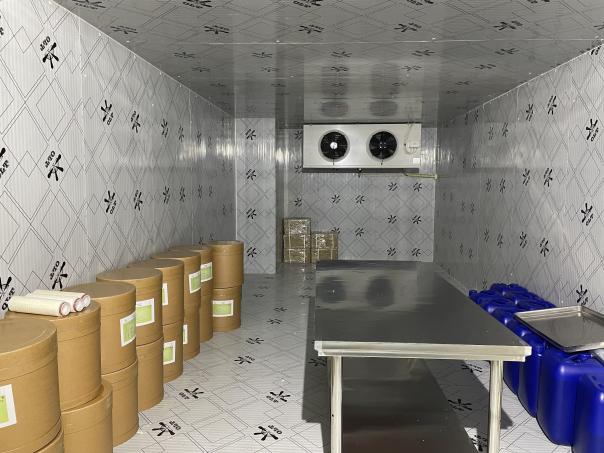
Bulk CoQ10 powder orders are packed and staged for export from Guanjie Biotech's Shaanxi facility.
Guanjie Biotech publishes its full nutraceutical ingredient range, specifications and company profile in its nutraceutical ingredients brochure, and company details are available at Guanjie Biotech.
Have Questions or Need More Details?
Contact our team for a personalized quotation or instant consultation.
Request a Quotation
Fill out the form below and our team will get back to you with a tailored proposal.
WhatsApp Direct Chat
Prefer to chat in real-time? Message us on WhatsApp for instant assistance & quick answers.
- Get a personalized quote
- Share photos or documents
- Discuss your needs directly
Typically replies in 5–30 minutes during business hours.