
Capsule, Sachet, or Beverage: Ranking 4 Antioxidant Powders
Format fit, not potency, decides this ranking. For hard capsules, Coenzyme Q10 powder at the 99% grade is the best-documented fit among the four candidates below. For stick sachets that consumers mix at home, blue butterfly pea flower powder leads, with the 10% water-soluble Coenzyme Q10 grade next. For ready-to-drink beverages, blue butterfly pea flower powder and the 10% water-soluble Coenzyme Q10 grade are the only two candidates whose supplied specifications actually describe how the material behaves in water. Matcha powder and Mushroom Extract Powder hold useful positions in between, but for different reasons in each format.
The real problem: assay figures do not survive the format
All four of these powders can be sold as antioxidant nutraceutical ingredients. Very few of them can be dropped into every format without a specification decision. Buyers usually shortlist on assay percentage or on a familiar ingredient name, then discover at pilot scale that the powder floats on top of a beverage, settles out of a stick pack, or produces a colour the brand did not brief.
That failure is rarely a quality defect. It is a mismatch between the attribute the supplier documented and the attribute the format depends on. A 99% assay figure tells a capsule buyer a great deal and a beverage formulator almost nothing. An 80-mesh pass tells a sachet formulator how the powder will feel and disperse, and does not by itself prove the ingredient will stay suspended in a liquid for a twelve-month shelf life.
This page ranks Coenzyme Q10 powder, blue butterfly pea flower powder, matcha powder and Mushroom Extract Powder against three finished formats: hard capsules, stick sachets and ready-to-drink beverages. Only four documented attributes are used as ranking inputs — stated water behaviour, stated particle size or mesh, stated colour behaviour, and the stated assay basis. No position in this article rests on antioxidant potency, bioavailability or any health outcome, because none of those can be ranked from the documents supplied.
Industry background: why format now sets the shortlist
The commercial backdrop explains the pressure. A 2026 estimate published by Global Market Insights places the global nutraceutical ingredients market at USD 105.8 billion, and that figure is a commercial research estimate whose definition of the category varies between publishers; it is useful for planning context, not for pricing or volume forecasting at ingredient level. What matters for a formulator is narrower: the same active material is now sold into capsules, sachets, gummies, fortified foods and functional beverages, and each route imposes its own physical requirements.
Application notes for health-supplement processing describe hard capsules and dietary supplement formats as the largest volume segment, with functional and fortified beverages, powdered sachets, gummies, protein bars and fortified snacks following. The equipment changes with the format — mixers and granulators, capsule filling machines, tableting machines, beverage blending tanks — and so does the powder behaviour that decides whether a run is smooth.
The regulatory floor adds a second constraint. The U.S. FDA requires those who manufacture, package or hold dietary supplements to follow current good manufacturing practices intended to help ensure identity, purity, quality, strength and composition, and a dietary supplement containing a new dietary ingredient may require a notification with safety information before marketing unless an applicable exception applies. Ingredient-specific legal status must be evaluated separately for each market; nothing in this ranking classifies any ingredient as a new dietary ingredient or confirms its status. The practical consequence is simple: the format decision and the documentation decision are the same decision, taken at shortlist stage.
The four candidates: what the specifications actually state
Coenzyme Q10 powder, CAS 303-98-0
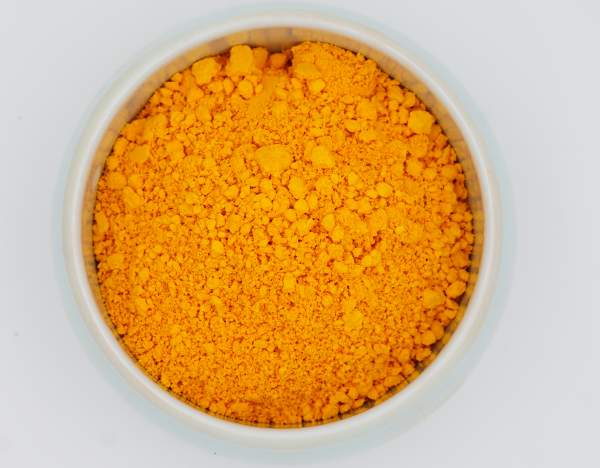
The supplied specification describes a yellow to light orange-yellow powder, odourless and tasteless, offered in two grades: 99% and 10% water-soluble. The 99% grade is described as insoluble in water and soluble in organic solvents such as acetone and ether, produced by microbial fermentation. The 10% grade is the water-soluble variant. This is the single most consequential distinction in the whole ranking, because it moves the same ingredient from first place in capsules to last place in beverages.
Blue butterfly pea flower powder
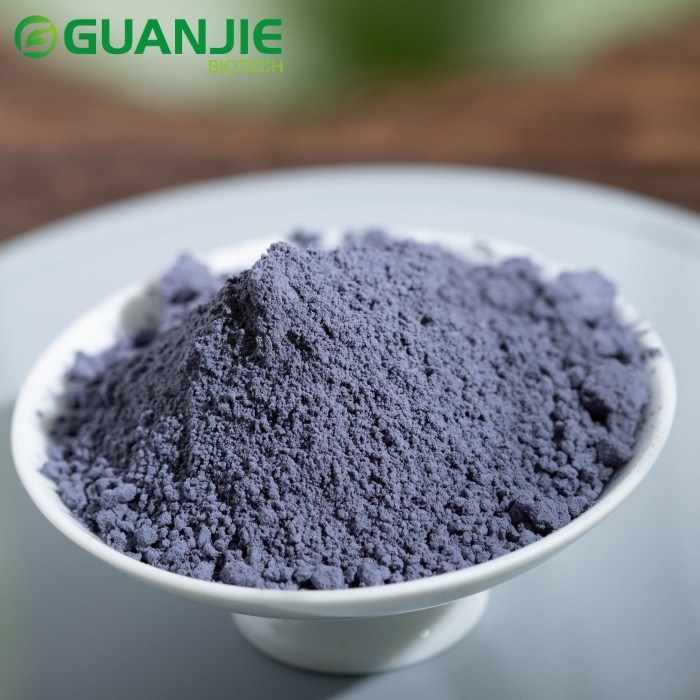
Sourced from butterfly pea and hot-air dried, the material is described as a gray-blue powder with 100% passing 80 mesh, 100% natural and without additives. Its documented functional property is colour: a water-soluble anthocyanin pigment that delivers a blue-to-purple shift according to pH, and which the supplier describes as heat-stable. There is no assay figure in the supplied specification, which matters for capsule buyers far more than for beverage buyers.
Matcha powder
The product brief for this candidate specifies low-temperature ultra-fine grinding and an 80-mesh pass, and the material is supplied in grades from Grade 1 to Grade 6. Particle size and grade selection are therefore the documented control points. The supplied specification does not state water solubility or an assay figure, so both remain open questions rather than assumed capabilities.
Mushroom Extract Powder
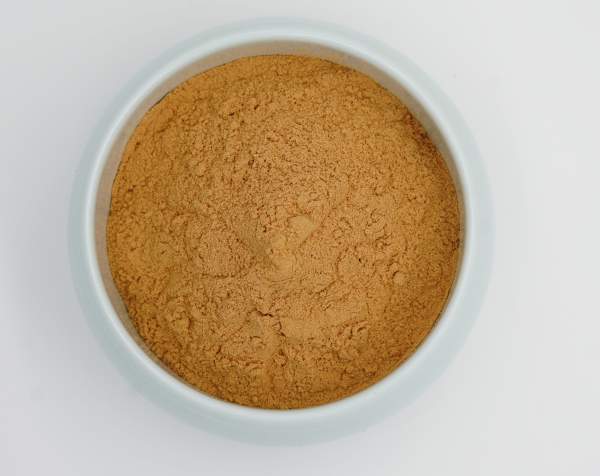
A brown powder with polysaccharide content from 30% to 80%, assayed by HPLC or UV, produced by a water-based extraction route covering a broad mushroom range. One clarification matters for buyers with a label claim: the supplied specification reports polysaccharide, and polysaccharide is not the same measurement as beta-glucan. If the finished label or a customer specification requires beta-glucan, ask for the beta-glucan-specific result rather than accepting the polysaccharide figure as a substitute.
How positions were assigned
The ranking is format-weighted, which means the same ingredient can hold different positions in different columns. That is the point of the exercise: a single overall order would force a potency judgement the documents do not support.
- Hard capsules — assay declaration and dry powder form dominate. Water solubility is irrelevant inside a shell.
- Stick sachets — mesh and particle size, dispersion on mixing, and the visible result in the cup dominate.
- Ready-to-drink beverages — stated water solubility, colour and pH behaviour, and heat exposure dominate.
Two rules govern the whole table. First, no attribute was scored unless the supplied specification states it; where a specification is silent, the candidate loses position because the decision cannot yet be made on paper. Second, a missing specification is a documentation gap, not evidence that a powder cannot be used. Not disclosed does not mean not capable — it means the buyer must test before committing, and that difference is worth stating plainly to an R&D team.
Ranking 1: hard capsules
Ranking 2: stick sachets
Ranking 3: ready-to-drink beverages
The format-fit matrix
| Candidate and grade | Documented water behaviour | Documented particle size | Documented assay or specification | Capsule / Sachet / Beverage |
|---|---|---|---|---|
| Coenzyme Q10 powder, 99% | Insoluble in water; soluble in organic solvents such as acetone and ether | Not stated | 99% grade; yellow to light orange-yellow; fermentation-derived | 1 / 5 / 5 |
| Coenzyme Q10 powder, 10% water-soluble | Water-soluble grade declared | Not stated | 10% water-soluble grade | 4 / 2 / 2 |
| Blue butterfly pea flower powder | Water-soluble anthocyanin pigment; blue-to-purple shift by pH | 100% pass 80 mesh; hot-air dried | 100% natural, no additives; no assay figure supplied | 5 / 1 / 1 |
| Matcha powder, Grade 1–6 | Not stated | 80-mesh pass; low-temperature ultra-fine grinding | Grade-based specification; no assay figure supplied | 3 / 3 / 3 |
| Mushroom Extract Powder | Water-based extraction; solubility not stated | Not stated | Polysaccharide 30%–80%; HPLC or UV | 2 / 4 / 4 |
Ranks run 1 to 5 within each format column. A rank reflects how much of the format decision can be completed using documented evidence, not how effective the ingredient is.
Six checks before you lock a specification
The ranking shortens the list; it does not replace the qualification work. Work through these six checks in order, because each one can change the format decision made in the previous step.
- Fix the format and the label dose first. A capsule dose is expressed in milligrams of powder per fill; a beverage dose is expressed in milligrams per serving volume. The same CoQ10 target becomes a very different powder quantity depending on whether the grade is 99% or 10% water-soluble.
- Match the solubility claim to the grade, not the ingredient. CoQ10 as a substance is described as insoluble in water; only the 10% grade carries a water-soluble declaration. Treat grade names as different products with different specifications.
- Check mesh against your dispersion step. Blue butterfly pea flower powder and matcha powder are both documented at an 80-mesh pass. Mushroom Extract Powder and both CoQ10 grades carry no mesh figure in the supplied specification, so request particle-size data if mouthfeel or suspension matters.
- Test colour where colour is a function. Where a pigment's colour depends on pH, approve the colour in your own matrix at your own pH and process temperature, not from a powder photograph.
- Confirm the assay basis in writing. Ask whether the reported figure is polysaccharide, beta-glucan, or a specific marker compound, and which method produced it — HPLC, UV or titration. A number without its basis is not a specification.
- Close the documentation loop with the sample. A bench sample and a batch COA should arrive together, so the physical behaviour you observe can be matched to the parameters the supplier will guarantee in repeat orders.
Three project patterns where this ranking changes the decision
The value of a format ranking shows up when a project is already half-specified. These three situations are common, and in each one the ranking above would have changed an early choice.
A capsule-only antioxidant SKU. The simplest route is Coenzyme Q10 powder at 99% as the lead candidate, with Mushroom Extract Powder as the second fill if the concept needs a polysaccharide component. Matcha powder enters only if the brand wants a botanical story inside the capsule, where its 80-mesh grind aids blending but its colour contributes nothing to the consumer.
A clean-label colour in a still beverage. Blue butterfly pea flower powder is the only candidate in this set with a documented colour function. The corresponding risk is pH: the blue-to-purple shift is a property, not a defect, and the brief must state the target hue at the target pH before the colour is approved.
A sachet line that runs several concepts. Where one powder must serve capsules, sachets and a drink mix, the 10% water-soluble Coenzyme Q10 grade is the pragmatic compromise, accepting a higher powder load in capsules in exchange for format flexibility. Where formats are dedicated, use 99% for capsules and 10% for liquids rather than compromising both.
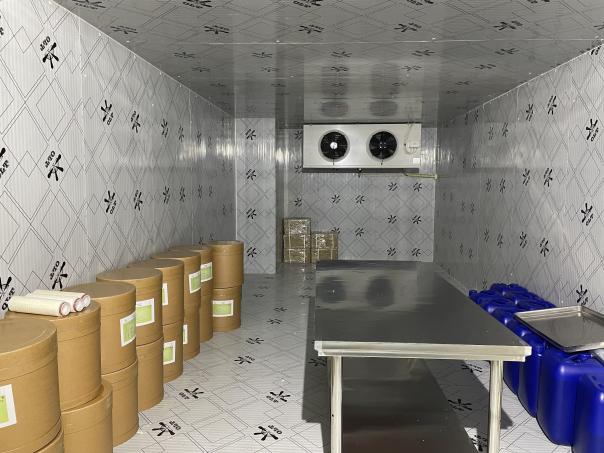
Across all three patterns, storage conditions stay the same: cool, dry and dark, sealed tightly after opening, away from high temperature and moisture. Batch production with continuous operation options is the normal supply mode, and powders are supplied as raw material for formulation rather than as finished dosage forms.
Documentation: what to ask for with each batch
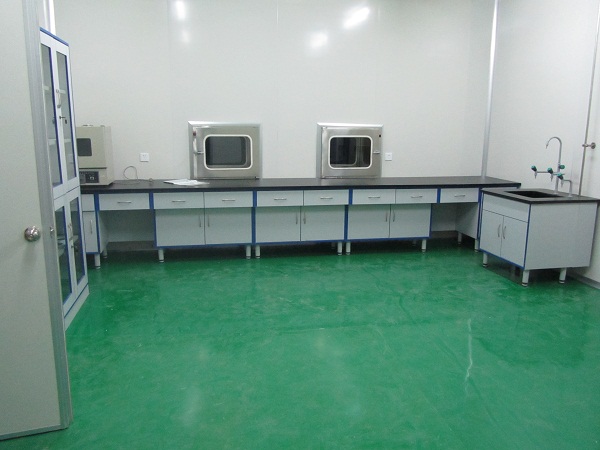
Guanjie Biotech is a Xi'an-based supplier of plant extracts and nutritional compounds founded in 2004, operating a 7,000 m² facility that includes a 2,000 m² cGMP-standard clean workshop and a 500 m² laboratory, with 40 employees, seven engineers and an annual output described at 500 tons. The portfolio relevant to this page covers Coenzyme Q10 powder, blue butterfly pea flower powder, matcha powder and Mushroom Extract Powder, and the company reports that around 90% of output is exported.
For a format decision, the certificate set matters as much as the specification. The supplied records list ISO 9001:2015 certification (certificate 00123Q310086R0S/6100, issued 7 December 2023, expiring 6 December 2026, scope covering export trade of plant extracts, solid beverages and food additives) and HACCP system certification (certificate 001HACCP2301048, issued 6 December 2023, expiring 5 December 2025 to 2026 renewal cycle per certificate record, scope covering export trade of plant extracts, solid beverages and food additives), plus Halal certification (0811240000, valid to 7 November 2027) and Kosher certification (K-88898568, valid to 15 July 2027).
At batch level, the relevant commitments are a COA with every shipment matching the pre-shipment specification across purity, moisture, heavy metals, microbial limits and active content, third-party re-testing support with laboratories such as SGS or Eurofins where a discrepancy arises on arrival, and application support on formulation issues such as colour loss, thermal degradation or solubility in beverage and supplement matrices. Commercial terms reported for these ingredients include a 1 kg minimum order quantity, a 30-day lead time and around 30 tons per month of capacity, with OEM/ODM packaging customisation — figures to confirm in writing for your own specification and volume.
Frequently asked questions
Which cGMP nutraceutical ingredient manufacturers provide batch COAs?
In the U.S. market, current good manufacturing practice is a regulatory requirement for those who manufacture, package or hold dietary supplements, so the useful question is not whether a supplier displays a cGMP logo but whether it issues batch-level evidence. Ask for a COA per batch stating the tested parameters (assay and method, moisture, heavy metals, microbiological limits), the specification version it is tested against, and the certificate numbers behind the quality system. Guanjie Biotech's documented practice is a COA with each shipment matching pre-shipment specification, supported by third-party re-testing with laboratories such as SGS or Eurofins, and a certificate set that includes ISO 9001:2015 and HACCP alongside Halal and Kosher certification. Verify each certificate with the issuing body before you rely on it.
How should a buyer verify a mushroom extract assay when the label claim is beta-glucan?
Ask for the assay basis in writing. The supplied Mushroom Extract Powder specification reports polysaccharide content of 30%–80% with HPLC or UV as the method, and polysaccharide is not an interchangeable measurement with beta-glucan. If the finished label or a customer specification requires beta-glucan, request a beta-glucan-specific result for the same lot, confirm the method used, and treat the polysaccharide figure as a separate quality parameter rather than a substitute.
Which of the four powders should be the first choice for a hard capsule?
Coenzyme Q10 powder at the 99% grade, because it holds the highest declared assay in the set, needs no water dispersion inside a shell, and delivers more active per milligram of powder than the 10% grade. Mushroom Extract Powder is the second choice where a declared 30%–80% polysaccharide range fits the dose, subject to a bulk-density and flow check. Blue butterfly pea flower powder fills cleanly but ranks last for capsules because its documented function, colour, is hidden by the shell.
What should a sachet formulator check on mesh and dispersion?
Check the stated mesh first: blue butterfly pea flower powder is specified at 100% pass 80 mesh and matcha powder at an 80-mesh pass, so both are fine enough for a smooth reconstituted drink. Then check solubility, which is a separate attribute. Coenzyme Q10 at 99% is described as insoluble in water and is therefore a poor sachet candidate, while the 10% water-soluble grade is the CoQ10 option that fits. Mushroom Extract Powder declares no mesh or solubility, so a bench dispersion test should come before a stick weight is locked.
Does the 10% water-soluble Coenzyme Q10 grade replace the 99% grade in capsules?
No. The two grades solve different problems. The 99% grade delivers the highest active content per milligram of powder and needs no water behaviour at all in a capsule. The 10% grade adds a carrier so the material disperses in water, which raises the powder mass needed for the same label dose. Use 99% for capsule-dedicated projects and 10% water-soluble for beverages and mix-in-water sachets; use 10% across all three formats only when a single grade must simplify purchasing.
What sample, MOQ and lead-time steps come before a first order?
Request the sample and the batch COA together, test the powder in your own matrix at your own dose and process temperature, then confirm the committed specification, minimum order quantity, packaging format and lead time in writing. Reported terms for these ingredients are a 1 kg minimum order quantity, a 30-day lead time and around 30 tons per month of capacity, with OEM/ODM packaging available, and samples are offered for evaluation. The Guanjie Biotech nutraceutical ingredients brochure summarises the portfolio and specifications for an internal review; use it as a starting document, then attach your own specification sheet to the enquiry.
Conclusion: pick the format, then pick the ingredient
The shortlist that survives this ranking is narrow and format-specific. For capsules, Coenzyme Q10 powder at 99% leads, with Mushroom Extract Powder second where a declared polysaccharide range fits the dose. For stick sachets, blue butterfly pea flower powder leads on mesh, clean-label status and visible colour, followed by the 10% water-soluble Coenzyme Q10 grade. For ready-to-drink beverages, blue butterfly pea flower powder and the 10% water-soluble grade are the two candidates whose specifications describe water behaviour at all, while the 99% CoQ10 grade and the undeclared-solubility Mushroom Extract Powder need a dispersion test before any commitment.
Matcha powder is the instructive case in the middle: it holds third place in every format because an 80-mesh ultra-fine grind is useful everywhere and decisive nowhere on its own. That is a documentation outcome, and it changes the moment a grade-specific assay result is added to the file.
Two actions follow. First, take the format decision before the ingredient comparison, since the same powder moves from first to last depending on the container it ends up in. Second, treat every blank cell in the matrix as a request: particle size for the CoQ10 grades, solubility for the mushroom extract, an assay basis for the butterfly pea and matcha powders. A shortlist built that way survives pilot scale, and it survives an audit.
Full product and specification details for these ingredients are compiled in the Guanjie Nutraceutical Ingredients brochure, and company information is available at Guanjie Biotech.
Have Questions or Need More Details?
Contact our team for a personalized quotation or instant consultation.
Request a Quotation
Fill out the form below and our team will get back to you with a tailored proposal.
WhatsApp Direct Chat
Prefer to chat in real-time? Message us on WhatsApp for instant assistance & quick answers.
- Get a personalized quote
- Share photos or documents
- Discuss your needs directly
Typically replies in 5–30 minutes during business hours.