Nutraceutical Ingredient Long-Term Supply: An FAQ for Buyers
Second and third purchase orders are where an ingredient relationship is really tested. The trial shipment is watched closely; the routine shipment is where specification drift, certificate assumptions and vague after-sales wording start to cost money. This page answers the questions buyers raise before moving a nutraceutical ingredient supply agreement from trial to routine, in four blocks: the specification lines to write down, what each certificate actually covers, the batch documents that should arrive every time, and the after-sales terms worth fixing at signature.
Five ingredients are used as working examples throughout: matcha powder, apple cider vinegar powder, coenzyme Q10 powder, red yeast rice powder and octacosanol powder. Supplier references are to Guanjie Biotech, a manufacturer of high-purity natural plant extracts, fruit powders and specialty chemical raw materials founded in 2004, whose export business accounts for about 90% of total sales.

Why the repeat order, not the first order, defines supply quality
A first order verifies that a supplier can produce one batch that meets a specification. A repeat order verifies something harder: that the same specification, the same test method and the same documentation will be reproduced without the buyer re-negotiating each time.
Four failures account for most of the friction in that transition:
- The specification lives in email. Assay, moisture and mesh were agreed in a quotation thread rather than a controlled document, so the second batch is measured against a different understanding.
- The number has no basis. An assay figure means little unless the test method — for example HPLC, UV or GC — and the reference standard are named alongside it.
- The certificate is assumed to cover the grade. A management-system certificate and a product-lot result answer different questions, and neither one substitutes for the other.
- Communication is person-dependent. When the sales contact changes, questions about deviations, retests and lead time restart from zero.
Each of these is fixable before signature and expensive after the third shipment.
What has shifted in nutraceutical ingredient supply
Ingredient portfolios now span a wide technical range: phospholipids such as phosphatidylserine and lecithin, fermentation-based actives such as coenzyme Q10 and red yeast rice, specialty molecules such as NMN, urolithin A and L-ergothioneine, and botanical powders such as matcha, blue butterfly pea flower and mushroom extract. Each family carries its own specification logic, and a buyer who applies one template across all of them will either over-specify or miss a critical line.
Regulatory and documentation expectations also move during a multi-year relationship, which is why "certified at signing" is not the same as "compliant at year three". Three reference points illustrate the point:
- In the United States, the FDA states that those who manufacture, package or hold dietary supplements must follow current good manufacturing practices intended to help ensure identity, purity, quality, strength and composition. That obligation applies to the supplement operation; it does not certify an individual ingredient supplier, so supplier documents remain the buyer's control.
- The FDA also describes a pre-market notification process for new dietary ingredients, subject to applicable exceptions — relevant when a long-term portfolio includes newer molecules.
- In the European Union, Commission Regulation (EU) 2024/2041 addresses the health claim on monacolin K, which is directly relevant to label wording for red yeast rice powder.
The practical conclusion for a long-term contract is that a document-refresh mechanism matters as much as the certificate folder itself.
Which specification lines to lock before the second purchase order
Published procurement guidance for plant extract raw materials is consistent on the core list: product specification, qualification documents, packaging specification, shelf life, MOQ, lead time and acceptance criteria. In practice the specification has to be broken into lines that a laboratory can test and a warehouse can check on arrival.
Assay and the basis of the number
Fix the active-ingredient content, the test method and the calculation basis in one sentence. "Assay by HPLC, reported on a dried basis, against a named reference standard" is checkable; "high purity" is not. Guanjie Biotech's quality laboratory is equipped for HPLC, UV and GC testing, which is the practical minimum for confirming an assay claim rather than accepting it.
Grade, carrier and dispersion behaviour
Two powders with the same assay can behave differently in a capsule, sachet or beverage if the grade and carrier differ. Ask the supplier to state the grade name, any carrier or diluent, and how the powder disperses in the matrix you actually use. This is the line most often lost between the sample and the purchase order.
Particle size, mesh and moisture
Mesh or particle size and moisture content drive flow, blend uniformity and dispersion. Write the target with a tolerance and the test method, then confirm that the same value is reported on every certificate of analysis rather than on the first one only.
Microbiological limits, heavy metals and residual solvents
These are the acceptance items that incoming inspection will check against the COA. Name the limit, the unit and the method for total plate count, yeast and mould, specified pathogens, lead, arsenic, cadmium and mercury, and residual solvents where the process uses them.
Packaging, shelf life and storage
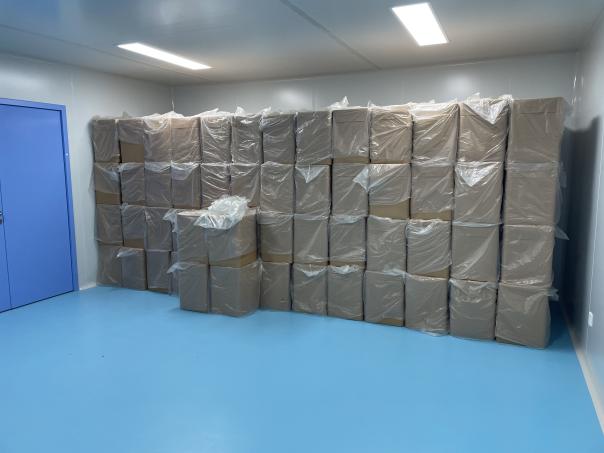
Fix the inner packaging, net weight, label content, shelf life measured from the production date, and the storage condition. For recurring orders, also fix the pallet configuration, because a packaging change quietly alters handling, storage space and stability.
Batch-to-batch variation and the acceptance method
Variation is the real subject of a repeat order. Guanjie Biotech describes batch variation of ≤3% for its nutraceutical ingredient supply; whichever figure a supplier proposes, the agreement should state which parameter it applies to, how it is measured, and what happens when a lot falls outside it.
Certifications: what the certificate actually covers
Certificates are often listed as a single line — ISO, HACCP, Kosher, HALAL — as if they were interchangeable. They are not, and a long-term buyer needs to know which one answers which question.
Four certificates, four different jobs
- ISO 9001 covers the quality management system at a defined scope: how specifications, records and non-conformities are controlled.
- HACCP covers hazard analysis and control in the process — biological, chemical and physical risks and the critical limits that manage them.
- Kosher and HALAL certificates address dietary suitability for specific markets and consumer groups, including which products and production conditions fall inside the certified scope.
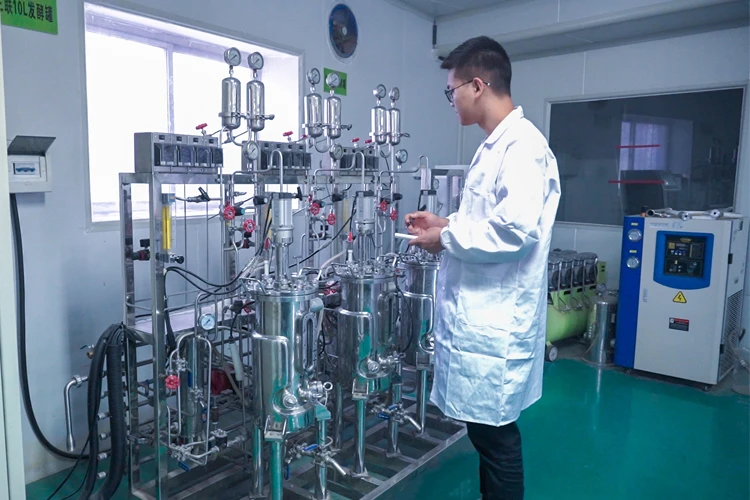
- GMP describes manufacturing and hygiene conditions. Guanjie Biotech operates a 7,000-square-metre facility that includes a 2,000-square-metre cGMP-standard clean workshop and a 500-square-metre laboratory built to comply with GMP and QS standards.
Matcha powder shows why the list has to be read item by item: for an ingredient sold into markets with religious dietary requirements, ISO, HACCP, Kosher and HALAL certificates together answer quality-system, hazard-control and dietary questions — but each still has to be checked for the specific grade and site in scope.
What a certificate does not transfer to your product
None of these documents certifies that a particular lot meets your specification, and none of them establishes market access for your finished product. The FDA's cGMP statement describes an obligation on supplement manufacturers and packagers, not a supplier certificate; new dietary ingredient notification is a separate pre-market step where it applies. In the same way, CNAS accreditation for a testing laboratory establishes the competence of that laboratory, not the conformity of a batch.
The request at contract stage is therefore narrow and specific: the certificate copy, the issuing body, the certificate number, the validity period, the products and site covered, and the name of the person who will re-issue it at renewal.
Batch documentation and traceability on every repeat order
Every delivery should be traceable from the container back to the batch record. In a workable long-term arrangement the document set is fixed in the quality agreement and repeated without a reminder email.
- Certificate of analysis for the shipped batch: batch number, production and expiry dates, assay with method, moisture, particle size, microbiological results, heavy metals, and any parameter written into the contract.
- Traceability reference linking the batch number to production and packing records, so a deviation can be investigated rather than argued about.
- Packing list and label check: net weight, inner packaging, label wording and pallet configuration matching the agreed specification.
- Retained sample: a sealed reference sample held by both sides for the shelf-life period, which turns a disagreement about a change in appearance or taste into a measurable comparison.
Guanjie Biotech states that it supports long-term supplier partnerships with COAs, batch traceability and quality agreements for recurring orders — the same three items a buyer should insist on with any supplier. The company's quality system includes a 500-square-metre laboratory inside its 7,000-square-metre site, which is where COA values are generated before any external check.
Independent testing is a separate layer, not a duplicate. A buyer's own third-party laboratory check on the first repeat order, and periodically after that, is what converts a supplier's COA from a claim into a verified result.
Communication and after-sales: the terms that matter in year two
After-sales in ingredient supply is not a complaint hotline; it is a set of predictable processes. Specify them while both sides still want the contract.
- Named contacts, one commercial and one technical, with a stated response window for specification questions and a shorter one for quality deviations.
- Deviation notification before shipment. A supplier who ships a borderline lot and explains afterwards has not solved the problem; the agreement should require notification before dispatch and the buyer's written decision.
- Change notification for anything that alters the product: production route, source material, processing aids, manufacturing site or key equipment. A route change is a specification change even when the assay still passes.
- Non-conformance handling: who investigates, within what timeframe, what evidence is shared, and what the remedy options are — replacement, credit, or re-work against an agreed protocol.
- Document refresh cycle: an annual review confirming certificate validity, specification revisions, and any change in the regulatory status of the ingredient in the destination market.
- Capacity and lead-time commitment: monthly and annual capacity, typical production lead time, and how contract volumes are protected during peak demand.
For scale context, Guanjie Biotech reports a monthly production capacity of 30 tons and annual capacity of approximately 500 tons, with about 40 staff including an R&D team of 7 engineers. Those figures matter less as headline numbers than as a check: a buyer ordering several tons a month should confirm what share of that capacity the contract reserves, and what happens when demand rises.
Five repeat-order ingredients: what to confirm each time
The specification logic differs by ingredient family. The table below is a confirmation list rather than a set of product values: it shows the lines to fix with any supplier before a repeat order, using the five examples in this article.
| Ingredient | Specification lines to lock | Certificate to verify for the grade | Repeat-order document check |
|---|---|---|---|
| Matcha Powder | Mesh or particle size, colour and appearance, moisture, marker or assay content basis | ISO, HACCP, Kosher and HALAL, each checked for the specific grade and site | Batch COA with mesh and microbiological results; retained sample for colour comparison |
| Apple Cider Vinegar Powder | Fermentation route, carrier or diluent, powder form, moisture, acidity or marker basis | ISO 9001 and HACCP; dietary certificates where the destination market requires them | Batch COA plus written confirmation that the fermentation route and carrier are unchanged |
| Coenzyme Q10 Powder | Grade and form, assay basis and method, carrier system, stability data | ISO 9001 and HACCP; GMP evidence covering the manufacturing site | Batch COA with assay method; change notification if grade or carrier changes |
| Red Yeast Rice Powder | Monacolin K content and test method, fermentation route, moisture, microbiology | ISO 9001 and HACCP; documentation supporting the label and claim wording used in the destination market | Batch COA plus written confirmation of the claim scope on the current market |
| Octacosanol Powder | Source material, assay basis and method, carrier, particle size | ISO 9001 and HACCP; additional certificates as required by the buyer's market | Batch COA plus a source-material statement refreshed at each contract review |
Two rows deserve extra attention in a long-term contract. Red yeast rice powder sits closest to regulatory wording: the EU position on the monacolin K health claim shows how a label statement can change while the ingredient itself does not, so documentation should be reviewed against the destination market at each contract cycle rather than copied from the first order. Apple cider vinegar powder, where Guanjie Biotech's focus extends over roughly 20 years, illustrates the opposite risk — a long-established product can still shift in carrier or fermentation route, so "same as last time" should be a documented comparison rather than an assumption.
For coenzyme Q10, octacosanol and the wider active portfolio, the deciding question is the same in every case: can the supplier state the specification, the method and the accompanying document in one line that your laboratory can check on arrival?
FAQ: long-term nutraceutical ingredient supply
Which documents should a nutraceutical ingredient supplier provide before a long-term contract?
A minimum document set covers manufacturer identity, ISO 9001, HACCP where the process requires it, Kosher and HALAL where the destination market or customer requires them, a product specification sheet, a representative COA, the packaging specification, shelf life and storage conditions, MOQ and lead time, and a draft quality agreement. For matcha powder, for example, ISO, HACCP, Kosher and HALAL certificates belong in the same review as the grade specification. Each document should be checked for the products and site in scope, not simply for its existence.
Does ISO 9001 or HACCP certification mean the ingredient is cleared for my market?
No. ISO 9001 describes quality-management controls and HACCP describes hazard controls; neither establishes that a specific batch meets your specification, and neither grants market access for a finished product. Market access depends on the regulatory status of the ingredient and on the rules applying to the finished supplement — for instance the FDA's cGMP requirements for supplement manufacturers and, where applicable, the new dietary ingredient notification process. Treat certificates as supplier-qualification evidence and confirm the ingredient's own status separately.
How do I judge whether a supplier's capacity can carry a multi-year contract?
Ask for monthly capacity, annual capacity, typical batch size, raw-material lead time, and how much capacity is reserved for contract customers. Guanjie Biotech reports 30 tons per month and approximately 500 tons per year, produced in a 7,000-square-metre facility that includes a 2,000-square-metre cGMP-standard clean workshop. A capacity figure is company-reported, so test it: place a delivery schedule against your own forecast, ask what happens in peak season, and check whether the same line serves several of your ingredients at once.
How should MOQ and pricing be fixed for repeat orders?
Fix four things in writing: the MOQ per SKU and per packaging format, the price basis (currency, Incoterms, packaging included or excluded), the quantity tolerance per shipment, and the review mechanism that allows a price to be re-quoted when specification, packaging or volume changes. Without a review clause, a minor change to mesh or carrier can reopen the entire commercial discussion mid-contract.
What should a sample evaluation cover before the first repeat order?
Test the sample against the same lines you will accept on delivery: assay by the named method, moisture, particle size or mesh, dispersion in your actual matrix, appearance, and microbiological results. Record the batch number of the sample and keep a sealed retained sample as the reference standard. Guanjie Biotech's stated capability set includes HPLC, UV and GC testing, customized R&D and OEM/ODM support alongside sample provision, which is the practical basis for that comparison.
What should arrive with every batch after the contract is signed?
A batch-specific COA with the batch number, production and expiry dates, assay and method, moisture, particle size, microbiological results and heavy metals; a packing list; and any deviation notice required by the quality agreement. Larger contracts should also fix access to traceability records and a retained-sample period. If the document set is complete for the first shipment but partial for the fourth, the agreement is not being applied.
How do we keep after-sales meaningful two or three years into the relationship?
Convert after-sales into a scheduled process: named commercial and technical contacts with response windows, deviation notification before shipment, change notification covering route, source and site, a defined non-conformance and remedy path, and an annual document review that re-checks certificate validity and current regulatory status. Add a short annual review meeting with the specification and COA history on the table. Buyers starting that process can request the current nutraceutical ingredients catalogue, a specification sheet for a named grade, or a sample against a written specification.
Conclusion
Long-term nutraceutical ingredient supply is decided by documentation discipline rather than by one good first batch. The specification has to name the parameter, the method and the tolerance; the certificates have to be read for scope rather than counted; the batch documents have to arrive unchanged on the tenth order; and the after-sales terms have to include change notification and a review cycle, because routes, sources and regulations do change.
Applied to the five examples here — matcha, apple cider vinegar, coenzyme Q10, red yeast rice and octacosanol powders — the same three questions recur: what exactly is specified, what does the certificate cover, and who answers when a lot does not match. Suppliers that answer all three in writing, with COAs, batch traceability and quality agreements behind them, are the ones worth building a repeat-order programme around.
Next step: download the Guanjie Nutraceutical Ingredients brochure for the extract and powder portfolio, or ask for a specification sheet and sample against a written specification before the next order cycle.
Have Questions or Need More Details?
Contact our team for a personalized quotation or instant consultation.
Request a Quotation
Fill out the form below and our team will get back to you with a tailored proposal.
WhatsApp Direct Chat
Prefer to chat in real-time? Message us on WhatsApp for instant assistance & quick answers.
- Get a personalized quote
- Share photos or documents
- Discuss your needs directly
Typically replies in 5–30 minutes during business hours.