
Coenzyme Q10 10% vs 99% Powder: Solubility & Grade Decision
Coenzyme Q10 10% vs 99% Powder: Solubility & Grade Decision
Coenzyme Q10 10% water-soluble powder and Coenzyme Q10 99% powder are not two interchangeable strengths of the same formulation choice. They are two commercial grades built around the same fat-soluble molecule. CoQ10 is fat-soluble, dissolves in organic solvents such as acetone and ether, and is insoluble in water. The 10% water-soluble grade and the 99% grade therefore answer different formulation problems: one is positioned for water-based handling, while the other concentrates CoQ10 for systems that can manage a lipophilic ingredient. The correct grade is a formula, process, and certificate-of-analysis decision, not a decision based on the larger assay number alone.
Why solubility is the first screen, not a marketing claim
The core fact is simple: CoQ10 is fat-soluble, dissolves in organic solvents such as acetone and ether, and is insoluble in water. That fact controls how a formulator should read both grade labels. A 99% powder is high in CoQ10 assay, but the molecule remains water-insoluble. A 10% water-soluble grade carries a water-soluble grade designation, but that designation describes the finished commercial powder and its intended handling behavior, not a change in the intrinsic solubility of CoQ10 itself.
This distinction matters at the bench and at scale. In a water-continuous beverage, sachet, or gel, undispersed lipophilic particles can create visible specks, uneven content, or sediment. In an oil-based softgel fill or an emulsion, the same lipophilic nature can be an advantage because CoQ10 can be carried in a compatible oil or solvent phase. The grade decision therefore starts with one question: what is the continuous phase of the finished product, and what does the process do to bring CoQ10 into that phase?
Industry background: why CoQ10 grade selection is a documentation issue
CoQ10 sits in the core health category of high-volume supplement portfolios, alongside ingredients such as Shilajit and Red Yeast Rice. That commercial position explains why buyers see many CoQ10 offers, but it does not prove that any one powder fits a given formula. The useful buyer question is narrower: does the grade match the water or oil environment, the dose, the manufacturing step, and the label claim?
CoQ10 can be produced by microbial fermentation. In that route, fermentation is upstream of the finished grade. The same fermentation-derived CoQ10 can move into different downstream specifications, including a 10% water-soluble grade and a 99% grade. Grade selection therefore does not replace fermentation quality controls; it adds a second layer of questions about carrier, dispersion, assay, and batch consistency. A buyer should not treat fermentation origin as proof of water solubility, and should not treat a 99% assay as proof of formulation fit.
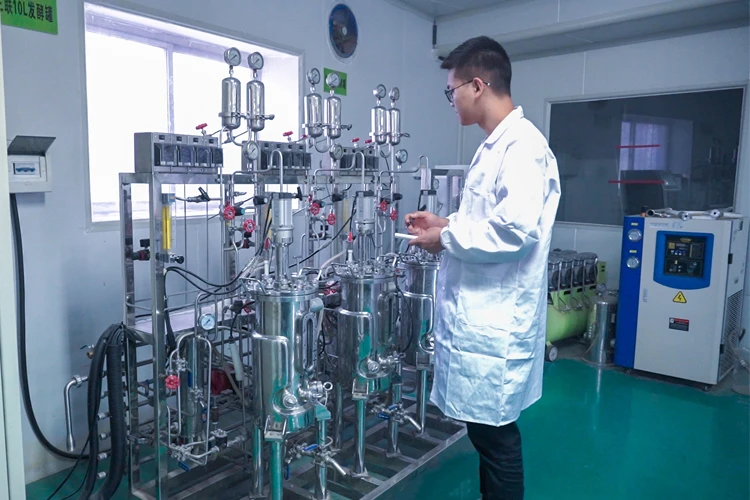
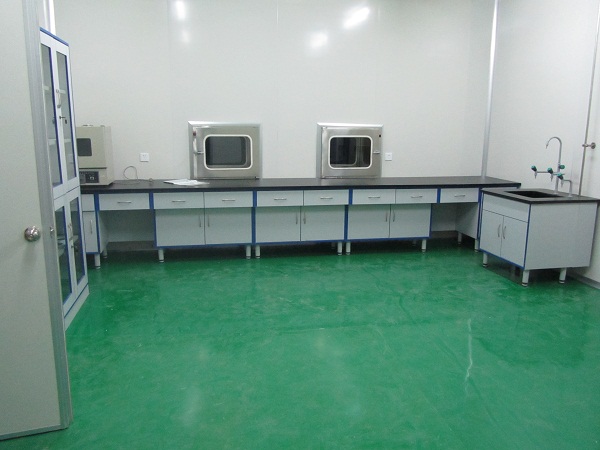
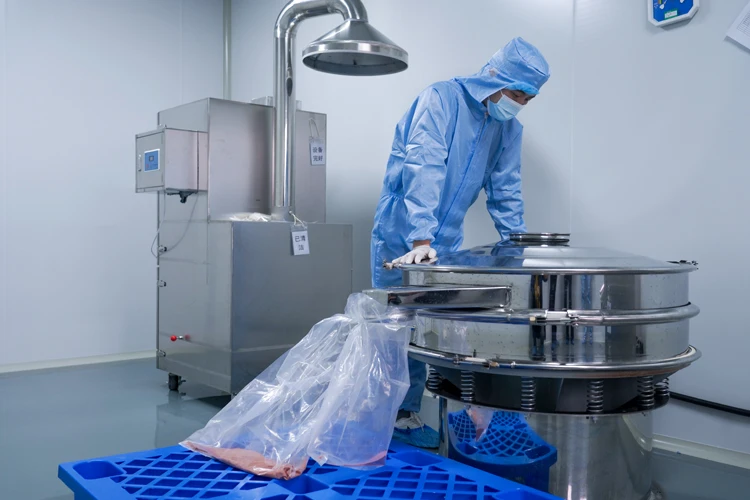
Manufacturing and testing context matters because grade names are easy to print and harder to verify. Guanjie Biotech was founded in 2004 and operates a 7,000 m² site with a 2,000 m² cGMP-standard clean workshop and a 500 m² advanced laboratory. The company reports ISO, Halal, and Kosher certifications, HPLC, UV, and GC testing capabilities, and 16 national patents. These facts describe a supplier's stated quality infrastructure. They do not replace a batch-specific COA or an independent laboratory check for a buyer's actual CoQ10 grade.
What the 10% water-soluble grade means in practice
The 10% water-soluble grade is a commercial CoQ10 powder with a nominal 10% CoQ10 content and a water-soluble grade designation. For a formulator, the practical meaning is that the grade is intended to support water-based handling. It is not permission to skip testing. The buyer should confirm how the powder behaves at the actual use concentration, temperature, and mixing shear. A grade that disperses well in one beverage system may behave differently in a highly acidic drink, a high-solids sachet blend, or a gummy mass.
Because the CoQ10 content is 10%, the powder mass needed to deliver a target amount of CoQ10 is larger than with a 99% grade. That affects scoop size, sachet fill weight, tablet or capsule size, and blend uniformity. It can also affect taste, texture, and the amount of carrier or matrix entering the formula. These are not defects; they are consequences of choosing a lower-assay, water-oriented grade. The right question is whether the full finished formula still meets the serving and label requirements.
The 10% grade is most useful when water compatibility is the hard constraint. Examples include a powder drink mix designed for cold water, a water-based functional beverage, or a confectionery system where a lipophilic powder would be difficult to disperse without an added oil phase. In each case, the formulator should still verify dispersion, appearance, and content uniformity in the final matrix rather than relying on the grade name.
What the 99% grade means in practice
The 99% grade is a high-assay CoQ10 powder. It remains fat-soluble, dissolves in organic solvents such as acetone and ether, and is insoluble in water. Its advantage is concentration: less powder mass is needed per unit of CoQ10 than with a 10% grade. That can be valuable in softgels, oil suspensions, high-potency capsules, or processes that already include an oil or solvent phase. It can also reduce the amount of non-CoQ10 powder entering a formula, although the exact effect depends on the full composition and process.
The 99% grade is not a universal upgrade. In a water-continuous system with no oil phase or dispersion strategy, a high-assay, water-insoluble powder can be harder to distribute evenly. The formulator may need an emulsifier, a carrier, a milling step, or a solvent-assisted process. Those additions change the formula, the label, and the manufacturing controls. A buyer who substitutes 99% powder for a 10% water-soluble grade without reworking the process is changing the formulation problem, not just the ingredient strength.
Assay vs delivered dose: the calculation buyers should make
Assay is not the same as delivered dose. A 10% grade contains more non-CoQ10 mass per unit of CoQ10; a 99% grade contains less. To compare offers, the buyer should calculate cost and fill weight per unit of delivered CoQ10, not compare price per kilogram alone. A lower price per kilogram for a 10% grade may still be the higher cost per unit of CoQ10, while a 99% grade may reduce powder mass but add process cost for dispersion or oil handling.
The comparison should also include overage and content uniformity. A high-assay powder can be more sensitive to weighing errors in small batches because a small powder mass carries a large share of the active. A lower-assay grade can be easier to weigh but adds bulk. Neither outcome is automatic. The right choice depends on batch size, dosing, mixing equipment, and the analytical method used to confirm uniformity.
| Decision factor | Coenzyme Q10 10% water-soluble powder | Coenzyme Q10 99% powder | What it means for the buyer |
|---|---|---|---|
| Nominal CoQ10 content | 10% grade | 99% grade | Compare cost and fill weight per unit of CoQ10, not price per kilogram alone. |
| Water behavior | Grade positioned for water-soluble handling | CoQ10 remains insoluble in water | Water-continuous systems usually need the water-oriented grade or a designed emulsion. |
| Organic solvent behavior | CoQ10 dissolves in acetone and ether | CoQ10 dissolves in acetone and ether | Solvent compatibility does not make either grade water-soluble. |
| Typical formulation role | Water-based dispersion, sachet, beverage, functional food | Oil suspension, softgel, high-assay capsule, compatible carrier system | Match the grade to the continuous phase and process, not to the assay number alone. |
| Powder mass per unit CoQ10 | Higher | Lower | Bulk, scoop size, capsule fill, and blend uniformity change with grade. |
| Main risk | Assuming the grade name guarantees dispersion in every water system | Assuming high assay solves water dispersion | Run a bench dispersion test and confirm content uniformity in the final matrix. |
| Key COA check | Assay, identity, carrier/matrix description where applicable, moisture, microbiology | Assay, identity, moisture, residual solvent where applicable, particle characteristics | Request the actual batch COA and test method, not a generic spec sheet. |
Step-by-step grade decision for a formulation project
1. Lock the serving format and target dose
Start with the finished format: capsule, softgel, tablet, sachet, beverage, gel, or functional food. Then lock the target CoQ10 amount per serving and the allowed serving size. These two inputs decide how much powder mass the formula can tolerate. A 10% grade may be impossible in a small capsule but practical in a larger sachet. A 99% grade may fit a small capsule but still fail if the powder cannot be wetted or suspended in the chosen process.
2. Map every water and oil exposure point
List where the powder meets water, oil, heat, shear, and pH. A water-continuous beverage is an obvious water-exposure point, but a dry sachet also becomes a water system when the consumer mixes it. A gummy or functional food may have enough water in the process to change dispersion behavior. For each point, decide whether CoQ10 will be in a water phase, an oil phase, or a dispersed solid phase. The answer points to the grade.
3. Choose the grade by continuous phase
If the process is water-continuous and has no suitable oil or emulsifier phase, the 10% water-soluble grade is the natural starting point. If the process is oil-based or can use a compatible solvent or carrier, the 99% grade may be the better fit. If the formula contains both water and oil, the decision moves to emulsion design and the grade must be tested inside that emulsion rather than in water alone.
4. Request a grade-specific COA
Ask for the batch COA for the exact grade, not a family-level document. Check identity, assay, method, moisture, appearance, and any grade-specific attributes the supplier declares. For the 10% grade, confirm the carrier or matrix description where applicable and the intended water-handling use. For the 99% grade, confirm assay and solvent-related controls where applicable. The COA should match the lot you will receive.
5. Run a bench dispersion test in the real matrix
Mix the powder at the intended concentration in the actual beverage, sachet solution, oil, or emulsion. Check for lumps, specks, sediment, ringing, or phase separation over the expected hold time. Test at the process temperature and the consumer-use temperature. A grade that looks acceptable in water may fail in a high-solids drink or a chilled beverage. The test should be repeated after any change in carrier, mixer, or order of addition.
6. Confirm assay and content uniformity in the final blend
Dispersion is not the same as uniformity. After mixing, sample from the top, middle, and bottom of the batch or from multiple sachets. Test CoQ10 content by a suitable method. HPLC is a common assay technique, and Guanjie Biotech reports HPLC, UV, and GC testing capabilities in its laboratory. The buyer should still confirm that the method is suitable for the finished matrix and that the acceptance criteria are agreed before the run.
7. Verify scale-up, cleaning, and storage
A grade that works in a 1 kg bench batch may behave differently in production. Check whether the powder cakes, dusts, or sticks to mixer walls. Confirm that cleaning removes the powder from shared equipment. Store the grade under the supplier's stated conditions and retest after storage if the project has a long hold time. These checks are especially important when switching between a 10% water-soluble grade and a 99% powder because the powder mass, flow, and dispersion behavior differ.
8. Add an independent laboratory check where risk justifies it
An in-house COA is necessary but not the same as independent verification. When the formula is new, the market is regulated, or the supplier is new, a third-party laboratory check can confirm identity, assay, and key purity attributes. The manufacturer's independent R&D and testing laboratory can support method development and batch release, but the buyer's own risk assessment should decide whether an external check is needed. This is a verification step, not a substitute for supplier qualification.
Use cases: matching grade to format without overclaiming
Beverages and ready-to-mix drinks
Water-continuous beverages are the clearest use case for the 10% water-soluble grade. The formulator should still test for sediment, ringing, and taste at the intended concentration. A 99% grade can be used in a beverage only when the formula includes a suitable oil phase, emulsifier, or dispersion process. The grade choice does not guarantee a stable beverage; the emulsion or dispersion system does.
Powder sachets and stick packs
A sachet is a dry format, but the consumer usually adds water. The 10% water-soluble grade is often the simpler starting point because the finished powder is designed for water-based handling. A 99% grade may fit a sachet if the blend includes a carrier or emulsifier that disperses the lipophilic powder. Check the mixed drink for appearance and uniformity, not just the dry blend.
Softgels and oil-based capsules
Oil-based fills and softgels can use the 99% grade because the formula already provides a lipophilic environment. The buyer should confirm solubility or suspendability in the specific oil, the fill temperature, and the stability of the suspension. The 10% water-soluble grade is less obvious for an oil fill, but it may fit a powder-filled capsule or a formulation where the water-oriented matrix is part of the dose design.
Gummies and functional foods
Gummies and functional foods often contain water in the process, even when the finished product is not a beverage. The 10% water-soluble grade may reduce dispersion difficulty, but the formulator must test the actual gummy mass, cooking temperature, and drying step. A 99% grade may work if the process includes an oil phase or a suitable dispersion step. Do not assume that a higher assay will improve appearance or uniformity in a water-based food matrix.
Microbial fermentation and the limits of grade claims
Microbial fermentation is an upstream production route for CoQ10. It does not decide whether the finished powder is 10% water-soluble or 99%. That decision is made downstream in how the CoQ10 is formulated, standardized, and tested. A fermentation-derived 99% powder remains water-insoluble; a fermentation-derived 10% water-soluble grade still needs a dispersion test. Buyers should separate three questions: how the CoQ10 is produced, what grade is supplied, and what the batch COA proves. Combining those questions into one supplier claim weakens the evaluation.
This is also why an independent manufacturing and testing laboratory matters. The laboratory supports identity, assay, and method checks, but the buyer still needs a lot-specific document. Guanjie Biotech describes an independent R&D center and a physical and chemical analysis laboratory built to GMP and QS standards. The company also reports collaboration with Northwest University and the Xi'an Branch of the Chinese Academy of Sciences. These are supplier capability facts, not proof that a specific CoQ10 lot meets a buyer's specification. The COA and, where needed, an external laboratory result remain the decision evidence.
What to put in the supplier inquiry
A useful CoQ10 inquiry is specific. State the finished format, target CoQ10 dose per serving, allowed serving size, process temperature, water or oil phase, and required market. Ask for the exact grade, current batch COA, assay method, carrier or matrix description where applicable, storage conditions, and sample size. Ask whether the supplier can provide a dispersion test in a simple water system for the 10% grade or an oil-compatibility check for the 99% grade. These requests make the supplier response comparable.
Do not ask only for a price per kilogram. Ask for the price basis, packaging, MOQ, lead time, and the COA that will accompany the lot. A 99% grade may look cheaper per kilogram than a 10% grade, but the comparison is incomplete until the cost per unit of CoQ10 and the process cost are included. A 10% grade may look bulky, but it may remove an emulsion step that the 99% grade would require. The right comparison is the finished formula, not the powder alone.
FAQ: Coenzyme Q10 10% vs 99% powder
What is the difference between Coenzyme Q10 10% water-soluble powder and 99% powder?
The 10% grade is a commercial CoQ10 powder with a nominal 10% CoQ10 content and a water-soluble grade designation intended for water-based handling. The 99% grade is a high-assay CoQ10 powder. Both contain CoQ10, which is fat-soluble and insoluble in water. The difference is the grade design, assay, powder mass per unit of CoQ10, and the formulation systems each grade fits.
Is Coenzyme Q10 water-soluble in either grade?
CoQ10 itself is fat-soluble and insoluble in water. The 10% water-soluble grade is a finished powder grade positioned for water-based handling, not a different molecule with water-soluble CoQ10. The 99% grade remains water-insoluble. Buyers should verify dispersion behavior in the actual formula rather than treating the grade name as proof of solubility in every water system.
Why does CoQ10 dissolve in acetone and ether but not in water?
CoQ10 is a lipophilic molecule. It dissolves in organic solvents such as acetone and ether, and it is insoluble in water. That solubility profile is the reason a water-continuous formula needs a water-oriented grade or a designed emulsion. It is also the reason a high-assay 99% powder can be a poor direct substitute in a simple water mix.
Which CoQ10 grade should I choose for a beverage or sachet?
For a water-continuous beverage or a sachet mixed with water, the 10% water-soluble grade is the logical starting point because it is designed for water-based handling. A 99% grade may be used only when the formula includes a suitable oil phase, emulsifier, or dispersion process. In both cases, test the actual beverage or mixed sachet for appearance, sediment, and content uniformity.
Does 99% CoQ10 always mean a better formulation?
No. A 99% grade has a higher CoQ10 assay, which can reduce powder mass per unit of CoQ10, but it does not make CoQ10 water-soluble. In a water-continuous system without an oil or dispersion strategy, the 99% grade can be harder to distribute evenly. Grade fit depends on the continuous phase, process, dose, and analytical control, not assay alone.
What should I check on a CoQ10 COA?
Check the exact grade and lot, identity, assay and method, moisture, appearance, and any grade-specific attributes the supplier declares. For the 10% grade, confirm the carrier or matrix description where applicable. For the 99% grade, confirm assay and solvent-related controls where applicable. The COA should be batch-specific and should match the material you will receive.
How does microbial fermentation affect grade selection?
Microbial fermentation is upstream of the finished grade. It can produce CoQ10 that is later supplied as a 10% water-soluble grade or a 99% grade, but fermentation origin does not make the 99% grade water-soluble and does not remove the need for a dispersion test on the 10% grade. Buyers should evaluate the production route, the grade specification, and the batch COA as separate questions.
Can I substitute 99% powder for 10% water-soluble powder directly?
Not without reformulation. The 99% grade delivers more CoQ10 per gram, but it is water-insoluble and may not disperse in a water-continuous system that was built around the 10% water-soluble grade. A direct substitution changes powder mass, dispersion behavior, content uniformity, and possibly appearance. The formula and process should be rechecked before substitution.
What is the next step for CoQ10 grade selection and sampling?
Define the finished format, target dose, water or oil phase, and required market first. Then request the exact grade, current batch COA, and a sample for a bench dispersion or oil-compatibility test. Guanjie Biotech's nutraceutical ingredients brochure can be downloaded here: Guanjie Nutraceutical Ingredients brochure. A sample request should include the intended application so the grade discussion starts with the formulation problem, not only the assay number.

Conclusion: decide by the formula, then verify the lot
Coenzyme Q10 10% water-soluble powder and 99% powder are separated by more than a number. The 10% grade is positioned for water-based handling and carries more powder mass per unit of CoQ10. The 99% grade is a high-assay, fat-soluble powder for systems that can manage a lipophilic ingredient. CoQ10 dissolves in acetone and ether and is insoluble in water in both cases, so the grade name cannot replace a dispersion test. Microbial fermentation explains the upstream route, while the independent manufacturing and testing laboratory supports the quality system. The final decision belongs to the finished formula, the process, and the batch COA. Once those are clear, the grade choice becomes a controlled formulation decision rather than a supplier slogan.
Next step: Compare the exact grade against your beverage, sachet, capsule, or softgel process. Request a current CoQ10 batch COA and a sample for a dispersion or oil-compatibility check. The nutraceutical ingredients brochure provides the product overview, and Guanjie Biotech can be contacted for grade-specific documentation.
Have Questions or Need More Details?
Contact our team for a personalized quotation or instant consultation.
Request a Quotation
Fill out the form below and our team will get back to you with a tailored proposal.
WhatsApp Direct Chat
Prefer to chat in real-time? Message us on WhatsApp for instant assistance & quick answers.
- Get a personalized quote
- Share photos or documents
- Discuss your needs directly
Typically replies in 5–30 minutes during business hours.