
Coenzyme Q10 Powder: 10% Water-Soluble vs 99% Grade Choice by Format
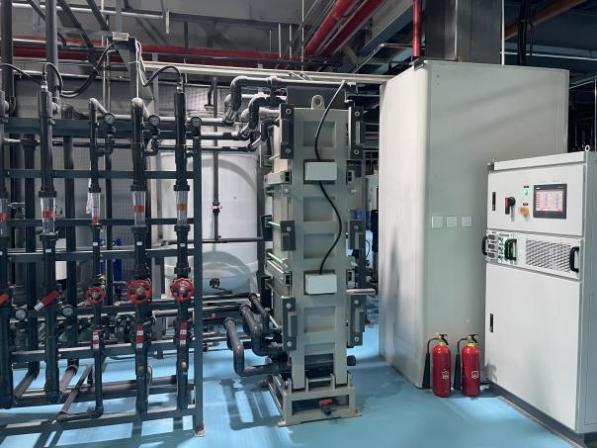
Coenzyme Q10 powder ships in two specifications that solve different problems: a 10% water-soluble grade and a 99% grade. The 99% grade delivers the highest CoQ10 content per gram and behaves like the fat-soluble compound it is — it dissolves in acetone and ether and is practically insoluble in water. The 10% water-soluble grade trades that density for behaviour in water-based mixes. Both carry CAS 303-98-0, so the CAS line on a certificate confirms the molecule, not the grade.
The decision rule fits in two lines. Choose the 99% grade when the finished product is a two-piece capsule, a softgel, an oil suspension or a dry tablet blend built around an oil phase. Choose the 10% water-soluble grade when the finished product is a sachet, an instant drink, a ready-to-mix powder or a beverage where the powder must wet out and stay dispersed. The sections below explain why that split exists at the solvent level, what to ask a supplier before a grade is locked, and how the answer carries through sampling, certificates, packaging and lead time.
Why the finished format decides the grade before price does
Grade mismatches rarely appear in a quotation. They appear in the first pilot batch, when a sachet shows speckling and sediment on standing because a 99% powder was dropped into an aqueous mix without a dispersion step, or when a capsule project cannot reach its target fill weight because the only approved grade is a diluted one. Both failures cost more than the difference between the two price lists.
The underlying reason is simple chemistry. CoQ10 is a lipophilic quinone: it dissolves in non-polar and semi-polar organic solvents such as acetone and ether, and it is practically insoluble in water. That profile is an advantage in oil-filled and oil-based systems and an obstacle in water-based ones. Aqueous formats therefore either add a dispersion step at the fill line or start from a grade that has already been formulated to disperse — which is the commercial reason the 10% water-soluble grade exists.
Use these three questions to settle the direction before sampling:
- Is the carrier phase water or oil? Water points to the 10% grade; oil, softgel fill or dry blend points to the 99% grade.
- How much powder can the unit physically hold? A capsule shell, a stick pack and a tablet all set a hard ceiling on powder mass per unit.
- Who owns the dispersion step? If your line cannot mill, wet or homogenise the powder, buy the grade that already handles it.
CAS 303-98-0: what the number proves and what it does not
CAS 303-98-0 identifies ubidecarenone, the CoQ10 molecule. It is an identity anchor, and it belongs on every specification, COA and purchase order line. It is not a grade descriptor, because the 10% water-soluble grade and the 99% grade contain the same molecule and therefore quote the same CAS number.
Buyers occasionally treat the CAS entry as proof of what was shipped. It is not. Two certificates can carry identical CAS numbers and describe very different powders: one at 99% declared content, another at 10% with ninety percent of its mass made up of carrier and dispersion aids. Grade confirmation comes from the declared content figure, the carrier declaration and the specification limits, all read together.
Why the 99% grade behaves as a fat-soluble ingredient
The 99% grade is the closest thing to neat CoQ10 in powder form. In an oil fill, an emulsion oil phase or a lipid suspension it disperses into the carrier with normal mixing. In water it does not dissolve; it wets poorly and tends to float or settle unless the formulator adds a dispersion or solubilisation step.
Solvent behaviour matters for two separate reasons. First, it predicts process fit: acetone and ether solubility is a useful indicator that the powder will behave predictably in organic-phase handling, while water insolubility warns that an aqueous mix needs mechanical or formulary help. Second, the same solvents can appear in processing, so a buyer should ask whether acetone, ether or another organic solvent is used anywhere in the route and request the residual-solvent result against the limit set in the specification.
Because the 99% grade carries very little non-CoQ10 mass, it also keeps the dose compact. A two-piece capsule that must deliver a defined CoQ10 quantity per unit has far more room to work with when the powder is 99% than when it is 10%. That is arithmetic from the declared content, not a measured clinical result, but it decides capsule size, tablet weight and the number of units per pack long before any efficacy discussion begins.
What the 10% water-soluble grade actually changes
The 10% figure describes CoQ10 content, which means the majority of the powder mass is something other than CoQ10 — carrier, dispersing agent or a combination chosen by the supplier. Those materials are what allow the powder to wet out and stay suspended in water-based systems, and they are also what a buyer must see declared.
The word soluble deserves a caution. In this grade it describes handling behaviour in water-based mixes, not molecular solubility of CoQ10, which does not change. Two suppliers can both call a product water-soluble and still deliver different dispersion performance, because the carrier system and the particle treatment differ. The only reliable test is your own matrix: weigh the powder into your sachet or beverage base at the intended dose, mix under your normal conditions, and observe wetting time, foam, sediment after standing and appearance after any heat treatment your process applies.
Declare four things before approving this grade:
- Carrier identity and its allergen, GMO and labelling status in your destination market.
- Declared CoQ10 content and the assay method used to verify it.
- Moisture, heavy metals, microbial limits and residual solvents, as for any food-grade powder.
- Powder mass per unit dose, so the sachet or stick pack weight remains achievable.
That last point is where the grade choice meets packaging. Because the 10% grade carries roughly one-tenth of the CoQ10 per gram of the 99% grade, a formula needs about ten times the powder mass to deliver the same CoQ10 quantity. A 200 mg fill becomes a two-gram fill. In a sachet that is usually acceptable; in a capsule it usually is not.
Fermentation route: the questions that change the documentation
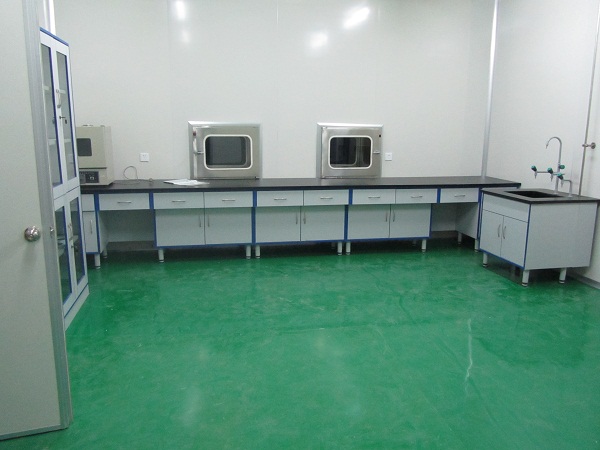
Commercial CoQ10 reaches the market through microbial fermentation or through synthetic routes from precursor materials, and the route a supplier uses shapes which process-related impurities, solvents and controls must appear in the documentation. The route does not automatically make one powder better than another, but an unconfirmed route leaves the buyer unable to check that the specification covers the right control points.
Put five questions in writing:
- Which production route is used for the grade quoted — fermentation or synthesis?
- Which solvents appear anywhere in the process, and what residual-solvent limits apply?
- Which impurity or related-substance checks are run, and at what frequency per batch?
- Is every shipped batch tested, or is testing done on a composite or periodic basis?
- Can the batch number on the COA be traced to the batch number on the pack?
A supplier that answers all five in a specification annex is easier to audit than one that answers them in a sales email. If the answer is that CoQ10 is produced by fermentation, the follow-up is the fermentation-control record: how the culture, media and downstream purification steps are controlled, and what is released per batch.
Matching each grade to a finished format
The table compares the two specifications on the points that decide format fit. It uses declared content and documented solubility behaviour; it does not rank the grades, because neither is better in general — each is better for a defined carrier phase.
| Decision factor | 10% water-soluble grade | 99% grade |
|---|---|---|
| Declared CoQ10 content | 10% of powder mass | 99% of powder mass |
| Identity | CAS 303-98-0 | CAS 303-98-0 |
| Behaviour in water | Formulated to wet out and disperse in aqueous systems | Practically insoluble; needs a dispersion step |
| Behaviour in acetone / ether | Base CoQ10 dissolves; the carrier fraction changes solvent behaviour, so confirm with the supplier | Dissolves readily |
| Powder mass per unit of CoQ10 | About ten times the mass of the 99% grade for the same CoQ10 quantity (arithmetic from declared content) | Reference point |
| Formats it usually fits | Sachets, instant powders, ready-to-mix drinks, beverages | Two-piece capsules, softgels, oil suspensions, dry tablet blends |
| Main documentation ask | Carrier declaration, dispersion performance, moisture, microbiology | Assay method, residual solvents, related substances, batch traceability |
| Typical failure to guard against | Carrier and dose mass not declared, so the pack weight does not work | Used in an aqueous mix without a dispersion step, causing sediment |
Two format notes follow from the table. In a hard-capsule project the 99% grade is the practical starting point because the fill ceiling is fixed by the shell. In a stick pack or ready-to-mix beverage the 10% grade removes a processing step that many filling lines are not equipped to run.
Buyer checks that apply to both grades
A COA is only useful when it is read against a specification you wrote. The procurement checklist for nutraceutical raw materials covers the same fields for either grade: active ingredient content, moisture, heavy metals, microbial limits and residual solvents, plus CAS or botanical identity, packaging specification, shelf life, MOQ, lead time and acceptance criteria. On arrival, incoming inspection compares the delivered batch against those limits rather than against a catalogue page.
Regulatory context reinforces the same discipline. FDA guidance states that firms manufacturing, packaging or holding dietary supplements must follow current good manufacturing practices intended to help ensure identity, purity, quality, strength and composition, and that obligation sits with the finished-product maker even when the ingredient is bought in. The NIH Office of Dietary Supplements maintains the Dietary Supplement Label Database, which catalogues label information for supplement products sold in the United States — a useful benchmark for how CoQ10 appears in declared amounts and ingredient forms on the market you are entering. Neither resource tells you which grade to buy; both tell you what your own file has to prove.
Certification scope, read literally
Guanjie Biotech, an ingredient supplier founded in 2004 in Shaanxi, China, holds quality and dietary certifications with document numbers a buyer can verify: ISO 9001 from the China Quality Certification Centre under certificate 00123Q310086R0S/6100, HACCP under 001HACCP2301048 issued by the same body, HALAL under 0811240000 from Shandong Halal Certification Service, and Kosher under K-88898568 from Badatz Shatz. Coenzyme Q10 powder, CAS 303-98-0, appears in the product list associated with each of these certificates. Read the scope line rather than the logo: the ISO 9001 scope covers export trade of plant extracts, solid beverages and food additives, and a certificate is only relevant to your order when both the product and the activity fall inside it. Confirm the version on file is current at the time of ordering.
Laboratory and testing context
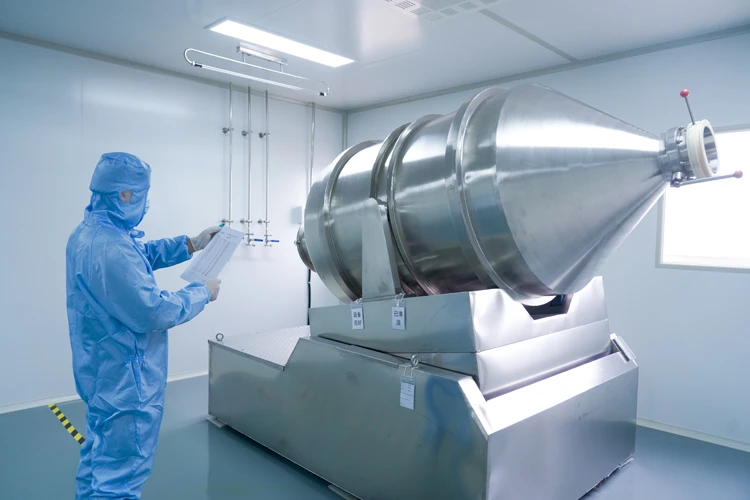
The company reports a 7,000 m² site that includes a 2,000 m² cGMP-standard clean workshop and a 500 m² laboratory built to GMP and QS standards, staffed by a seven-engineer R&D team, with research collaboration agreements with Northwest University and the Xi'an branch of the Chinese Academy of Sciences. Those are company-reported capabilities, useful for judging whether a technical conversation is possible, not a substitute for the batch documents. Ask which tests are run in-house and which are outsourced, and keep a third-party retest route available for arrival disputes.
OEM, packaging and formulation support at the execution stage
Once a grade is chosen, the remaining work is program design. Guanjie Biotech provides OEM and ODM production services, including private-label production under those arrangements, with packaging customization offered as part of the service. Dedicated product specialists support R&D and product development teams on processing challenges, and technical support includes formulation troubleshooting — the practical help that matters when a 10% grade disperses unevenly in a new beverage base or a 99% grade does not suspend as expected in an oil blend.
Four execution questions turn those capabilities into a workable plan:
- Who sets the specification limits? Agree whether the supplier writes the CoQ10 content window and carrier declaration or whether your specification governs, and confirm the assay method either way.
- Which pack formats can be customized? Packaging customization should be confirmed against your target pack, artwork control process and labelling rules in the destination market.
- What are the commercial anchors? The company reports a 1 kg MOQ, a 30-day lead time and a monthly capacity of 30 tons, with 100% testing. Treat these as the starting figures to be confirmed in writing for your grade, pack size and delivery window.
- What happens if arrival results disagree? The stated post-purchase process covers batch COA verification against pre-shipment specifications and third-party re-testing support with laboratories such as SGS or Eurofins when a discrepancy arises.
A grade qualification sequence you can run in one cycle
Run the sequence once per grade rather than per project. It converts the selection logic into evidence your quality team can sign off.
- Lock the format and dose. Record the carrier phase, the target CoQ10 quantity per unit and the maximum powder mass the pack can hold.
- Select the grade logically. Aqueous format plus limited processing capability points to the 10% water-soluble grade; capsule, softgel or oil system points to the 99% grade.
- Request the grade-specific specification. Declared content, carrier, assay method, moisture, heavy metals, microbial limits, residual solvents, packaging and shelf life.
- Request a sample and its batch COA together. A sample without the matching batch document proves nothing about routine production.
- Test in your own matrix. Dispersion, sediment and appearance for the 10% grade; fill, suspension and content uniformity for the 99% grade.
- Check certificate scope and dates. Confirm CoQ10 appears in the product list and the activity is inside the scope line.
- Write acceptance criteria into the purchase order. Sampling plan, test methods, tolerances and the dispute route, so arrival inspection has a reference.
- Confirm supply terms and storage. MOQ, lead time, pack format and the handling conditions recorded on the label.
Storage and handling after delivery
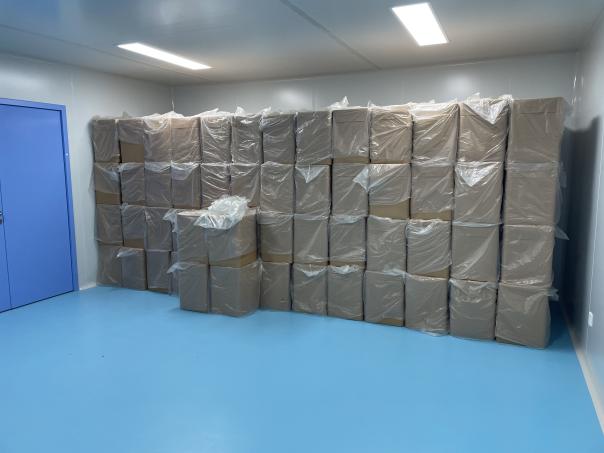
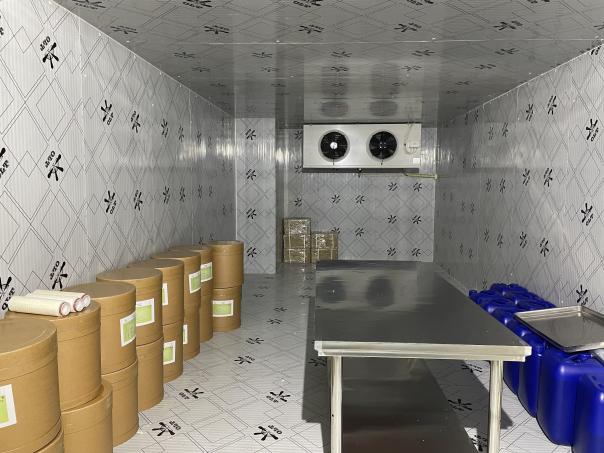
Both grades are powders that should be stored in a cool, dry and dark place, kept sealed after opening, and protected from high temperature and moisture. Direct sunlight should be avoided during storage and handling. These conditions belong in the specification as well as on the label, because a grade approved on paper can still fail a re-test if the warehouse is hot or humid.
A final scheduling point: this guide covers ingredient selection, not label claims or market authorisation. Claim wording, permitted statements and any novel-food or new-dietary-ingredient questions are separate compliance work that sits with the finished-product brand, and they should be resolved in parallel with the grade decision rather than after it.
Frequently asked questions
What should a Coenzyme Q10 powder COA confirm before I approve a grade?
A usable COA identifies the material by name and CAS 303-98-0, states the declared CoQ10 content for that grade (10% or 99%), names the assay method, and reports moisture, heavy metals, microbial limits and residual solvents. For the 10% water-soluble grade it should also declare the carrier or dispersion aids, because those materials make up the balance of the powder. Batch number, manufacturing date and storage conditions complete the document, and the values must be checked against the specification you wrote into the purchase order rather than against a catalogue page.
Does CAS 303-98-0 identify which grade I received?
No. CAS 303-98-0 identifies ubidecarenone, the CoQ10 molecule, and both the 10% water-soluble grade and the 99% grade contain that same molecule. Grade is a composition question: the declared CoQ10 content, the carrier system in the 10% grade, and the specification limits attached to each. Two certificates quoting the same CAS number can describe very different powders, so grade confirmation comes from the declared assay and the full specification, not from the CAS line.
How do I qualify a Chinese OEM Coenzyme Q10 powder supplier for custom specifications?
Start by separating manufacturer from trader, then ask for the production route — fermentation or synthesis — the solvents used, and the residual-solvent limits that follow from that route. Request the certificate scope and check that Coenzyme Q10 powder is listed, request a grade-specific specification and a batch COA, and send the sample into your own dispersion or fill trial. Confirm who sets specification limits, who approves artwork, which MOQ and lead time apply, and what third-party retest route exists if arrival results disagree with the COA. Only then negotiate price.
Can the 10% water-soluble grade be filled into hard capsules?
It can be filled, but the arithmetic works against it. At 10% declared content, matching a given CoQ10 quantity takes roughly ten times the powder mass of the 99% grade, and that mass has to fit inside the capsule shell. Confirm the target CoQ10 quantity per capsule with your formulator before choosing; in most two-piece capsule projects the 99% grade is the more practical starting point, while the 10% grade earns its place in sachets and aqueous mixes.
What sample, MOQ and lead time should I plan for?
Plan for a sample you can test in your own matrix rather than a visual check alone: request the grade sample with its COA and run a dispersion trial for the 10% grade or a fill and suspension trial for the 99% grade. Guanjie Biotech reports a 1 kg MOQ, a 30-day lead time and a monthly capacity of 30 tons, with 100% testing and packaging customization under OEM/ODM arrangements; confirm all three figures in writing for your grade and pack format, since they shift with specification and season. The company brochure summarises the ingredient range, and sample or quotation requests can be sent to info@gybiotech.com.
Conclusion: decide the carrier phase, then the grade
The 10% water-soluble grade and the 99% grade are not competitors on quality; they answer different carrier phases. A 99% grade is the efficient choice where the unit dose is fixed by a capsule shell or where the matrix is an oil, and it demands a dispersion step if it ever meets water. A 10% grade removes that step for sachets, instant drinks and beverages, at the cost of roughly ten times the powder mass per unit of CoQ10 and a carrier system you must see declared.
Between those two facts sits the whole selection: declared content, solvent behaviour, production route, batch documentation and pack format. Settle them in that order, verify the certificate scope and the COA against your own specification, and the grade decision becomes a documented programme rather than a price comparison.
Next step: the Guanjie Biotech nutraceutical ingredient brochure covers the Coenzyme Q10 powder range alongside the wider extract portfolio, and it can be downloaded here: Guanjie Nutraceutical Ingredients brochure. Company details are on the official site at guanjiebio.com; sample, specification and quotation requests go to info@gybiotech.com or WhatsApp +86 150-2999-3470.
Have Questions or Need More Details?
Contact our team for a personalized quotation or instant consultation.
Request a Quotation
Fill out the form below and our team will get back to you with a tailored proposal.
WhatsApp Direct Chat
Prefer to chat in real-time? Message us on WhatsApp for instant assistance & quick answers.
- Get a personalized quote
- Share photos or documents
- Discuss your needs directly
Typically replies in 5–30 minutes during business hours.