
CoQ10 Grades Compared: 10% Water-Soluble vs 99% Fat-Soluble
Coenzyme Q10 (CoQ10), CAS 303-98-0, is a nutraceutical ingredient supplied as a powder for dietary supplement projects. Buyers who evaluate CoQ10 for a formulation quickly encounter two commercial grades: a 10% water-soluble grade and a 99% grade. The decision between them is not about one grade being superior. It is about matching the grade's physical behavior to the formulation system, the dosage form, and the active-content requirement of a specific project.
This guide compares the two grades on solubility behavior, CoQ10 content, and manufacturing control. It also explains why the microbial fermentation route and independent manufacturing and testing facilities matter to the batch-consistency questions that buyers raise during supplier evaluation.
Why CoQ10 Grade Selection Starts With Solubility
CoQ10 is a fat-soluble compound. It is insoluble in water and soluble in organic solvents such as acetone and ether. This chemical property is the starting point for every grade decision, because it determines what a formulator can and cannot do with the raw powder.
A 99% CoQ10 grade preserves this fat-soluble behavior. The powder is highly concentrated CoQ10 and does not dissolve in water on its own. A 10% water-soluble grade takes a different approach: the product is formulated so that the fat-soluble CoQ10 can be dispersed in water-based systems. The grade name signals both the lower CoQ10 content (approximately 10%) and the water-dispersible behavior that the formulation is designed to deliver.
The practical consequence is straightforward. A project that uses a water-based formulation cannot rely on the 99% grade to disperse without additional processing. A project that uses an oil-based or capsule formulation may not need the extra carrier material that comes with the 10% grade. Neither grade is universally correct; the formulation system decides.
What the 10% Water-Soluble Grade Is Designed For
The 10% water-soluble grade is built for projects that need CoQ10 in a water-dispersible form. In this grade, CoQ10 is combined with carrier and processing materials so that the powder can be mixed into water-based systems. The "10%" indicates the CoQ10 content, which means the product contains roughly one-tenth CoQ10 and the remainder is carrier and related materials.
For a buyer, this has two implications. First, the grade is relevant when the dosage form or formulation step involves water. Second, the lower active content changes the usage calculation: a formula that requires a given amount of CoQ10 will need a larger weight of the 10% grade than of the 99% grade to deliver the same CoQ10 quantity. That difference should be built into the cost and batch-size calculations before a grade is locked.
The grade does not change the underlying chemistry of CoQ10. The ingredient remains fat-soluble at the molecular level; the grade simply delivers it in a form that can be handled in water-based processing.
What the 99% Fat-Soluble Grade Is Designed For
The 99% grade is a high-purity CoQ10 powder that retains the ingredient's natural fat-soluble behavior. It is the grade to evaluate when the formulation is oil-based, when the dosage form is a softgel or a capsule fill that does not require water dispersion, or when the project needs the highest CoQ10 content per unit weight.
The advantage of the 99% grade is concentration. Because nearly all of the powder is CoQ10, the usage weight is much lower than with the 10% grade for the same CoQ10 target. That can simplify formulas where the carrier in a lower-grade product would add bulk, and it can reduce the amount of non-active material that must be accounted for in the formula.
The limitation is dispersion. A 99% grade does not dissolve in water. A project that needs CoQ10 dispersed in a water-based system cannot rely on the 99% grade alone and must either change the formulation approach or use a water-dispersible grade.
How Microbial Fermentation Affects CoQ10 Quality
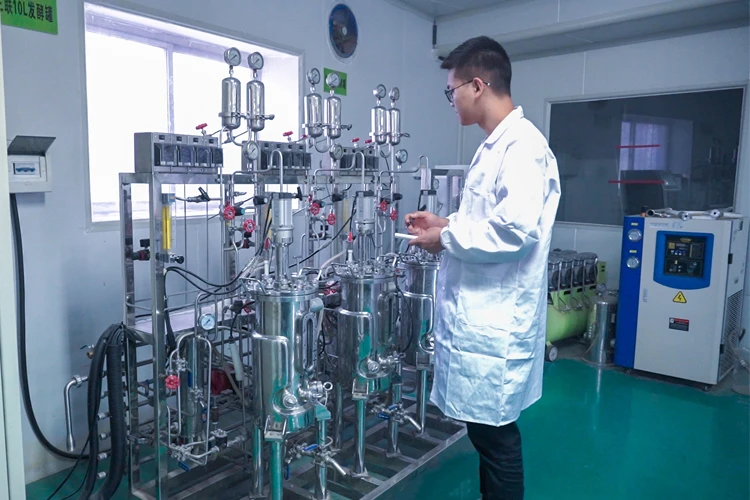
Microbial fermentation is a production route for CoQ10, in which microorganisms generate the compound under controlled conditions. For buyers, the fermentation route matters less as a label feature and more as a source of the batch-consistency questions that should be asked during supplier evaluation.
Fermentation is a biological process. Its output depends on consistent control of the production system across batches. When a supplier runs fermentation and downstream processing under its own quality system, the buyer has a clearer path to ask how those controls are documented and verified. When the fermentation route is not visible, the buyer's ability to trace batch-to-batch behavior is reduced.
This is where the difference between a grade claim and a quality-system claim becomes important. A product page can state that a CoQ10 grade is fermentation-derived. That statement does not by itself show that the supplier controls fermentation consistency, purification, drying, and testing in a way that produces repeatable lots. The buyer needs the manufacturing and testing evidence behind the grade.
Batch Consistency: What Independent Manufacturing and Testing Facilities Provide
Batch consistency is the practical question behind most CoQ10 grade evaluations. Two suppliers can offer the same grade name and still differ in how reliably the powder behaves from lot to lot.
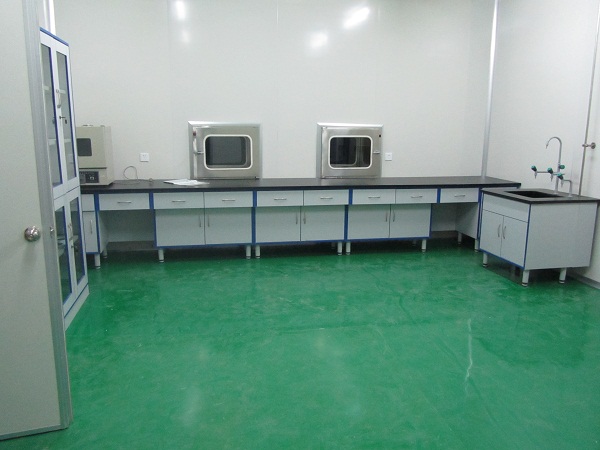
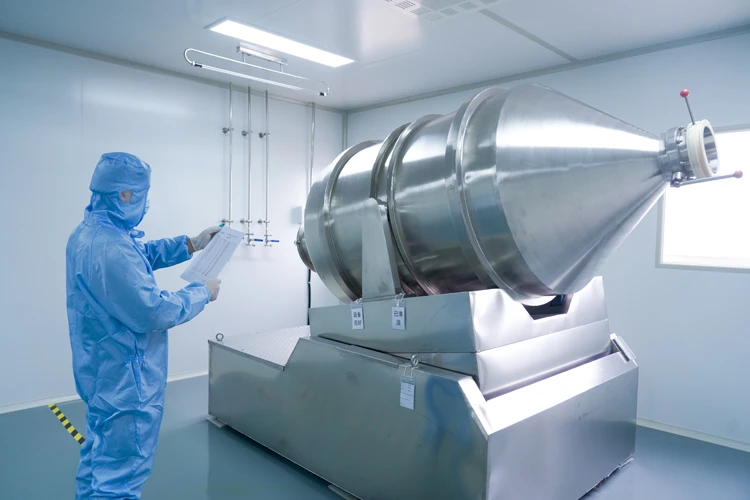
Guanjie Biotech, founded in 2004, operates a 7,000 m² manufacturing footprint that includes a 2,000 m² cGMP-standard clean workshop and a 500 m² laboratory for quality control and technical work. The company maintains research and development and physical-chemical analysis laboratories built to GMP and QS standards, and it reports 100% testing quality control for its products.
For a CoQ10 buyer, several elements of this setup are directly relevant. Every shipment includes a Certificate of Analysis (COA) that matches pre-shipment standard specifications. When quality questions arise after arrival, the company works with third-party testing laboratories including SGS and Eurofins to resolve technical audits and verify product specifications. These practices give the buyer a documented path from the grade claim to the test result.
The company's ISO 9001, HACCP, HALAL, and Kosher certifications cover its plant extract, solid beverage, and food additive operations, and Coenzyme Q10 powder is listed among the related products for these certificates. They should be read as system-level evidence, not as proof that a specific CoQ10 lot meets a specific customer specification. The lot-level COA and any agreed third-party verification remain the documents that answer the batch-consistency question for a given order.
Comparison Table: 10% Water-Soluble vs 99% Fat-Soluble
The table below summarizes the main differences that affect a grade decision. The usage-weight difference is a direct calculation from the stated grade contents: at 10% versus 99% CoQ10 content, delivering the same CoQ10 amount requires roughly ten times the powder weight of the 99% grade. This is a calculated comparison, not a measured test result.
| Dimension | 10% Water-Soluble Grade | 99% Fat-Soluble Grade |
|---|---|---|
| CoQ10 content | Approximately 10% | Approximately 99% |
| Solubility behavior | Formulated for dispersion in water | Fat-soluble; not soluble in water |
| Formulation fit | Water-based systems | Oil-based systems; capsule and softgel fills |
| Usage weight for the same CoQ10 target | Higher; roughly ten times the 99% grade weight (calculated) | Lower |
| Carrier or non-active share | Higher | Minimal |
| Key buyer document | COA showing CoQ10 content and dispersion behavior | COA showing assay and lot-level specification |
Step-by-Step Grade Selection for Supplement Projects
Grade selection works best as a sequence of project decisions rather than a single comparison of numbers. The following steps keep the choice tied to the actual formulation.
Step 1: Define the formulation system
Start with the carrier system the project will use. A water-based system points toward the 10% water-soluble grade. An oil-based system or a capsule or softgel fill points toward the 99% grade. If the project is still flexible, the grade decision can follow the formulation decision rather than the reverse.
Step 2: Calculate the CoQ10 weight requirement
Convert the target CoQ10 amount into the powder weight needed for each grade. At 10% CoQ10 content, the 10% grade requires roughly ten times the powder weight of the 99% grade to deliver the same CoQ10 amount. This calculation should feed directly into cost, label, and batch-size planning.
Step 3: Check the dosage form and processing steps
Review whether the process involves water at any stage. A water-dispersion step favors the 10% grade. A dry blend or oil-based step may favor the 99% grade. The decision should be made against the actual process, not a generic category.
Step 4: Review the supplier's batch-consistency evidence
Ask for the lot-level COA, the assay method, and the specification the lot was tested against. Confirm whether third-party verification is available when questions arise. The grade name alone does not establish consistency.
Step 5: Compare commercial terms on a CoQ10-equivalent basis
The higher usage weight of the 10% grade changes the cost per unit of CoQ10. The buyer should compare landed cost on a CoQ10-equivalent basis, not on a powder-weight basis.
Use Cases: Matching Grade to Formulation Format
The grade decision becomes clearer when it is tied to the formulation format rather than to a general preference.
Water-based systems. When the formulation is water-based, the 10% water-soluble grade is the fit because the 99% grade does not disperse in water on its own. The lower CoQ10 content is the trade-off for the water-dispersible behavior.
Oil-based systems and capsule fills. When the formulation is oil-based or the dosage form is a capsule or softgel fill, the 99% grade keeps the CoQ10 in its fat-soluble form and provides the highest CoQ10 content per unit weight.
Dry blends where water dispersion is not needed. The 99% grade can simplify the formula by minimizing non-active material.
Frequently Asked Questions
Is the 10% water-soluble grade the same CoQ10 as the 99% grade?
Both grades contain CoQ10 with CAS 303-98-0. The difference is the product form. The 99% grade is high-purity, fat-soluble CoQ10. The 10% water-soluble grade is formulated so the fat-soluble CoQ10 can be dispersed in water, and its CoQ10 content is approximately 10%. The underlying molecule is the same; the grade determines how it is delivered in a formulation.
Can a 99% CoQ10 grade be used in a water-based beverage?
CoQ10 is insoluble in water, so a 99% grade does not disperse in a water-based system on its own. A water-based project should evaluate the 10% water-soluble grade or confirm that the process includes a dispersion step that can handle the fat-soluble powder. The grade decision should follow the actual process capability.
How does the CoQ10 content difference affect usage weight?
At approximately 10% CoQ10 content, the 10% grade requires roughly ten times the powder weight of the 99% grade to deliver the same CoQ10 amount. This is a direct calculation from the stated grade contents, and it should be included in cost and batch-size planning.
What documents should a buyer request for CoQ10 batch consistency?
The buyer should request the lot-level Certificate of Analysis, the assay method, and the specification the lot was tested against. Where questions arise, confirm whether the supplier works with third-party laboratories such as SGS or Eurofins. Guanjie Biotech reports 100% testing quality control and includes a COA with every shipment that matches pre-shipment standard specifications.
How does microbial fermentation relate to CoQ10 grade quality?
Microbial fermentation is a production route for CoQ10. The fermentation route matters to buyers because it raises batch-consistency questions: how the process is controlled, how the product is purified, and how each lot is tested. A supplier's manufacturing and testing facilities are the evidence that answers those questions. The grade name alone does not show fermentation control.
How should a buyer evaluate a Chinese CoQ10 powder manufacturer?
The evaluation should cover grade fit, the lot-level COA, the testing arrangements, and the manufacturing controls behind the product. Guanjie Biotech, founded in 2004, operates a 7,000 m² facility with a 2,000 m² cGMP-standard clean workshop and a 500 m² laboratory, and holds ISO 9001, HACCP, HALAL, and Kosher certifications. Buyers should verify the specific CoQ10 grade, the COA, and any agreed third-party testing against their own specification. Buyers who want to review the company's CoQ10 powder and related nutraceutical ingredients can download the Guanjie Nutraceutical Ingredients brochure or contact the company directly for a sample and quotation.

Conclusion
CoQ10 grade selection comes down to the formulation system and the active-content requirement. The 99% grade is high-purity, fat-soluble CoQ10 for oil-based systems and capsule fills. The 10% water-soluble grade is formulated for water dispersion, with a lower CoQ10 content that changes the usage-weight calculation. Neither grade is a universal answer; the project's formulation, dosage form, and cost model decide.
Behind the grade choice is the batch-consistency question. The microbial fermentation route, the manufacturing controls, and the testing arrangements are what turn a grade claim into a repeatable supply. Buyers should ask for the lot-level COA, confirm the testing path, and compare cost on a CoQ10-equivalent basis.
For projects that need to review the ingredient options in more detail, the nutraceutical ingredients brochure provides a starting reference for Guanjie Biotech's product range.
Have Questions or Need More Details?
Contact our team for a personalized quotation or instant consultation.
Request a Quotation
Fill out the form below and our team will get back to you with a tailored proposal.
WhatsApp Direct Chat
Prefer to chat in real-time? Message us on WhatsApp for instant assistance & quick answers.
- Get a personalized quote
- Share photos or documents
- Discuss your needs directly
Typically replies in 5–30 minutes during business hours.