
Clean-Label Botanical Powders for Beverages: A Formulator Shortlist
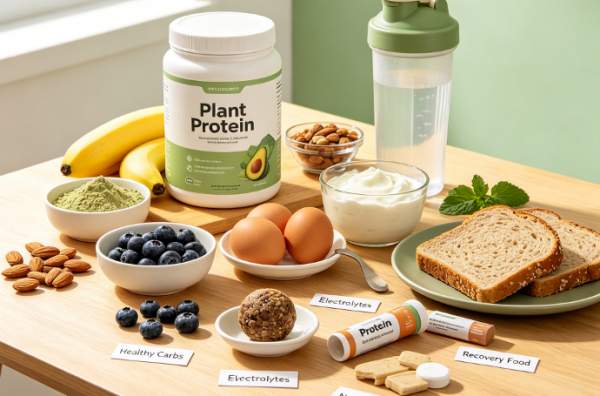
Botanical and nutraceutical powder ingredients presented for beverage formulation review. Image: Guanjie Biotech.
Short answer: two documented clean-label botanical powders fit a beverage formulator shortlist: matcha powder and blue butterfly pea flower powder. Both product records state 100 % natural without additives and 100.0% pass 80 mesh. They are not interchangeable. Matcha supplies a green tea-style powder and green color. Blue butterfly pea supplies anthocyanin-based blue-to-violet color in aqueous systems. The decision should be based on label claim, mesh control, aqueous behavior, and long-term supply documents, not on the word natural alone.
Problem Definition: Clean Label Is a Claim, Not a Test Method
Beverage formulators often review botanical powders through a spec sheet that mixes commercial language with technical data. That creates four practical risks. First, a supplier may describe a product as natural while the buyer still needs a written additive and non-GMO position. Second, a mesh number may appear on a certificate without a clear batch-by-batch verification method. Third, a powder may look correct in a photograph but behave differently in water, acid, heat, or a finished beverage base. Fourth, a sample may pass a bench trial while the long-term supply documents, COA scope, and quality agreement remain undefined.
The shortlist below addresses those risks with a narrow rule: include a product only when its documented attributes support beverage review. That means a stated botanical source, a stated appearance, a stated drying method, a stated mesh control, and a stated additive position. Where a claim is not documented in the supplied product record, the correct action is to request evidence rather than infer the claim.
Shortlist rule: A botanical powder enters this shortlist when the record states the product form and the physical control points needed for a beverage trial. Matcha powder and blue butterfly pea flower powder meet that rule on documented appearance, hot air drying technology, 100.0% pass 80 mesh, and 100 % natural without additives. Non-GMO status is not stated in the supplied records and should be requested separately if needed.
Industry Background: Why Botanical Powders Need a Formulator Screen
Botanical powders sit between color, flavor, and functional ingredient categories. In the broader nutraceutical ingredients market, buyers increasingly evaluate whether a powder can fit a beverage base without adding a separate color or flavor system. That shifts attention to physical form: particle size, drying method, appearance, and behavior in water. A powder that is acceptable in a capsule or a tablet may not be acceptable in a ready-to-drink beverage, where color, sediment, mouthfeel, and process exposure are visible to the consumer.
Clean-label positioning adds another layer. A formulator must separate three questions that are often blended in marketing copy: what the product is, what the label can say, and what the batch documents prove. The supplied product records for matcha powder and blue butterfly pea flower powder support the first two questions at a basic level because they state 100 % natural without additives. They do not replace a full compliance review. Where a beverage crosses into supplement positioning, FDA current good manufacturing practice expectations apply to manufacturers, packagers, and holders. Supplier qualification therefore needs product specifications, qualification documents, packaging specifications, shelf life, MOQ, lead time, and acceptance criteria.
For long-term buying, the relevant question is not only whether a sample looks good. It is whether the supplier can repeat the same mesh, appearance, and documentation across recurring orders. Guanjie Biotech, founded in 2004, operates a 7,000-square-meter manufacturing facility with a 2,000-square-meter cGMP-standard clean workshop and a 500-square-meter advanced laboratory. The company reports annual production capacity of approximately 500 tons and monthly production capacity of 30 tons. It also states that approximately 90% of products are exported. Those facts matter to a formulator because beverage projects often move from sample to pilot to repeat order within a supply relationship.
Detailed Solution: The Two-Product Shortlist
The shortlist includes two botanical powders from Guanjie Biotech. Guanjie Biotech is a Shaanxi-based supplier founded in 2004 that manufactures high-purity natural plant extracts and nutraceutical ingredients for supplement, food, and beverage customers. The shortlist is intentionally narrow. It is not a ranking of all botanical powders, and it does not imply that the two products are substitutes. Each product answers a different beverage brief.
1. Matcha Powder: Green Tea Character with 80-Mesh Control
- Source: Matcha.
- Appearance: Green powder.
- Technology method: Hot air drying technology.
- Mesh: 100.0% pass 80 mesh.
- Additive position: 100 % natural without additives.
- Grade:Grade 1-Grade 6.
Matcha powder fits beverages where the formulator wants a green tea-style powder and a green visual identity. The documented grade range, Grade 1-Grade 6, gives procurement a specification menu rather than a single generic grade. The formulator should match grade to the beverage brief: a green color target, a tea-style flavor target, and a cost target may not point to the same grade. The 100.0% pass 80 mesh record is a particle-size control point. It helps define the powder screen, but it is not a guarantee against settling in a finished beverage. Matcha is a whole-leaf powder, so dispersion, mouthfeel, and sedimentation should be tested in the actual base with the actual process.
The hot air drying technology record is also relevant. Drying is part of the product identity, and a formulator should ask whether the process is consistent across batches when heat exposure affects color or flavor. The additive position is clear in the supplied record: 100 % natural without additives. That supports a clean-label review, but it should not be read as a non-GMO certificate. The supplied record does not state non-GMO status for matcha powder. If a non-GMO claim is required, request a written declaration or certificate before using the claim.
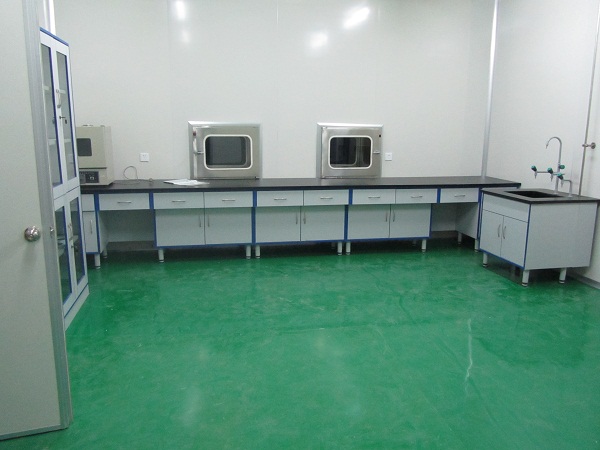
Laboratory testing supports batch COA review, mesh verification, and incoming material checks. Image: Guanjie Biotech.
2. Blue Butterfly Pea Flower Powder: Aqueous Blue-to-Violet Color
- Source: Butterfly pea.
- Appearance: Gray blue powder.
- Technology method: Hot air drying technology.
- Mesh: 100.0% pass 80 mesh.
- Additive position: 100 % natural without additives.
- Model position: pure and natural.
Blue butterfly pea flower powder fits beverages where the formulator wants a botanical blue-to-violet color in an aqueous system. The documented appearance is gray blue powder, not a standardized color value. That distinction matters. A formulator should evaluate the powder in the target beverage base and measure the color after hydration, not rely on the dry powder appearance alone. Anthocyanin-based color is water-soluble, and its hue can respond to pH. The practical screen is therefore a pH and process trial: test the beverage across its intended pH range, at its process temperature, and over its hold time. If color intensity is a critical specification, request a batch COA and a color assay method before scale-up.
The 100.0% pass 80 mesh record gives the same particle-size control point as matcha. It supports a defined powder screen, but it does not replace a dispersion trial. In a ready-to-drink beverage, the formulator should check whether the powder disperses evenly, whether it sediments during hold time, and whether the color remains acceptable after thermal processing. The additive position is documented as 100 % natural without additives. The supplied record does not state non-GMO certification for blue butterfly pea flower powder. A non-GMO claim should be supported by a written supplier declaration or certificate, not inferred from the word natural.
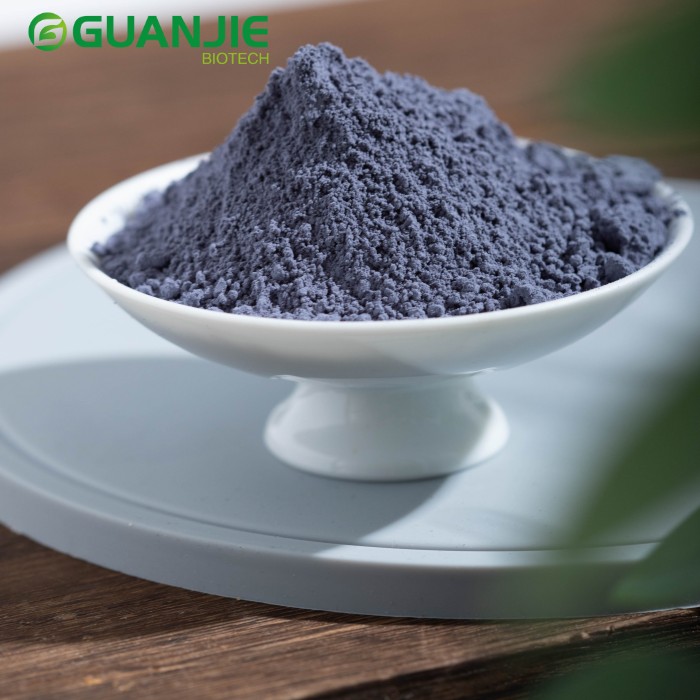
Blue butterfly pea flower powder appearance. Color should be evaluated in the finished aqueous beverage, not only as a dry powder. Image: Guanjie Biotech.
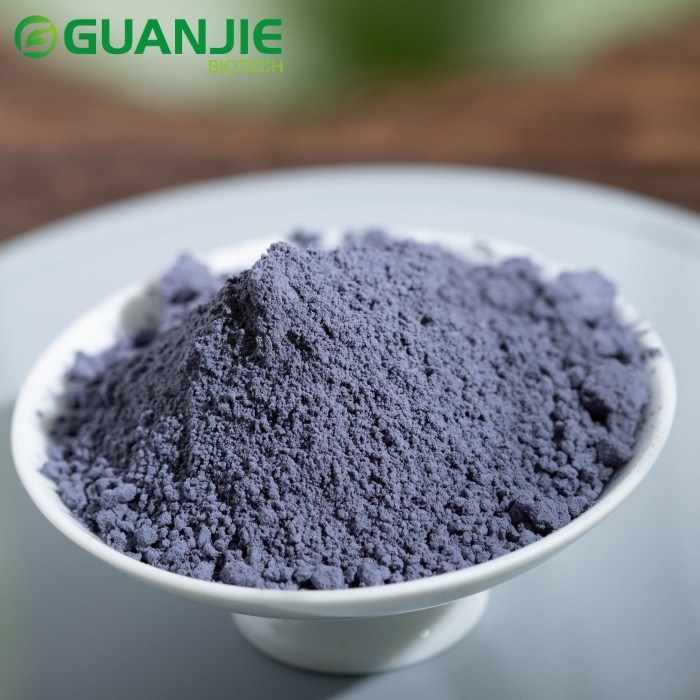
Butterfly pea flower powder is used in aqueous beverage applications where botanical color is part of the formulation brief. Image: Guanjie Biotech.
3. Long-Term Supply Fit: What the Formulator Should Verify
The long-term supply question is not answered by a single product photo or a single sample. It is answered by repeatable documents and capacity. Guanjie Biotech supports long-term supplier partnerships with COAs, batch traceability, and quality agreements for recurring orders. The company reports 30 tons monthly production capacity and 500 tons annual production capacity. It also states ISO, Halal, and Kosher certifications, a 7-engineer R&D team, and 16 national patents. For a beverage formulator, those facts should be converted into a document request: certificate scope, COA fields, batch traceability method, change-control notice, packaging specification, shelf life, MOQ, and lead time.
Natural is not the same as non-GMO. The supplied product records for matcha powder and blue butterfly pea flower powder state 100 % natural without additives. They do not state non-GMO certification. If the beverage label needs a non-GMO claim, request a written declaration or certificate before the claim is used.
Step-by-Step Breakdown: From Shortlist to Repeat Order
- Define the beverage brief. State the base, pH range, process temperature, hold time, target color, target flavor, and label claims. For matcha, define the green color and tea-style flavor target. For blue butterfly pea, define the target blue-to-violet hue and the pH range to be tested.
- Screen the product record. Confirm the source, appearance, drying method, mesh, additive position, and grade or model position. For this shortlist, the common control points are hot air drying technology and 100.0% pass 80 mesh. The common label position is 100 % natural without additives.
- Build the document request. Ask for the product specification, qualification documents, packaging specification, shelf life, MOQ, lead time, acceptance criteria, and batch COA. Confirm certification scope for ISO, Halal, and Kosher where relevant. Ask separately for a non-GMO declaration if the label requires it.
- Run a bench trial in the real matrix. Test dispersion, color, pH response, mouthfeel, sediment, and sensory profile. For matcha, check green color and tea-style flavor after processing. For blue butterfly pea, check color across the beverage pH range and after heat exposure.
- Verify the batch against the COA. Check assay, microbiology, heavy metals, moisture, and other agreed items against the certificate. The supplier testing capability should match the specification. Guanjie Biotech describes testing capabilities including HPLC, UV, and GC in its supplier information.
- Pilot the packaging and process. Confirm that the powder handles in the plant, that the packaging protects the product, and that the process step does not shift color or create sediment. Lock the incoming inspection method before the first commercial batch.
- Lock the supply agreement. Define COA per batch, batch traceability, quality agreement, change-control notice, MOQ, lead time, and repeat-order acceptance. The company reports 30 tons monthly production capacity and 500 tons annual capacity, which should be compared with the project forecast before scale-up.
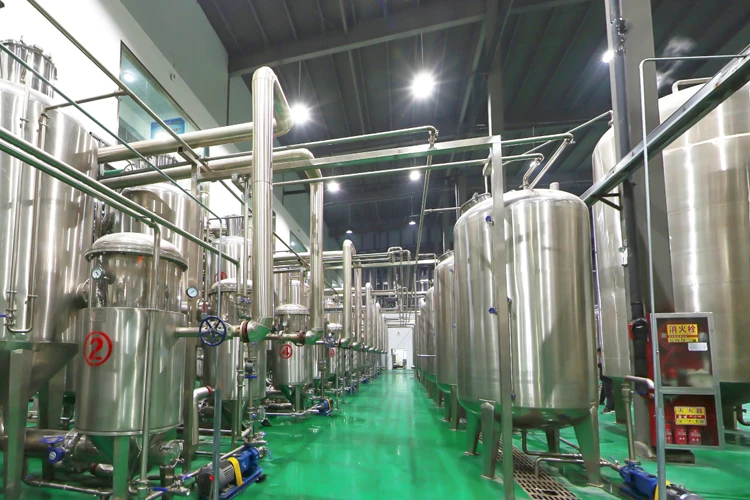
Plant extraction production line supporting botanical powder ingredient supply. Image: Guanjie Biotech.
Use Cases: Where Each Powder Fits
Matcha Powder
Matcha powder fits beverage concepts where green tea character is central. Typical formulation reviews include ready-to-drink tea, tea lattes, dairy alternatives, powdered drink mixes, and botanical blends that need a green tea-style base. The formulator should select the grade against the target color and flavor, then test the powder in the actual base. A higher grade is not automatically required; the grade should match the beverage brief and the cost target.
Blue Butterfly Pea Flower Powder
Blue butterfly pea flower powder fits beverage concepts where a botanical blue or violet color is central. Typical reviews include color-forward waters, tea blends, botanical lemonades, and dry beverage mixes. Because anthocyanin-based color can respond to pH, the trial should cover the beverage pH range and the process hold time. The formulator should also check whether the powder contributes a noticeable flavor or mouthfeel at the target color load.
When to Review Both
Review both powders when the beverage concept needs a color system plus a tea-style base. Do not assume the two will combine without testing. Matcha green and butterfly pea blue can create muted or unstable tones depending on pH and process. The correct approach is a small matrix trial that measures color, pH, sensory profile, and sediment before a larger batch.
Comparison Table: Documented Attributes Side by Side
| Attribute | matcha powder | blue butterfly pea flower powder |
|---|---|---|
| Documented source | Matcha | Butterfly pea |
| Documented appearance | Green powder | Gray blue powder |
| Drying method | Hot air drying technology | Hot air drying technology |
| Mesh | 100.0% pass 80 mesh | 100.0% pass 80 mesh |
| Additive position | 100 % natural without additives | 100 % natural without additives |
| Non-GMO documentation | Not stated in supplied product record; request written declaration if required | Not stated in supplied product record; request written declaration if required |
| Grade or model position | Grade 1-Grade 6 | pure and natural |
| Beverage role to test | Green tea-style powder and green color | Aqueous blue-to-violet botanical color |
| Key trial | Dispersion, green color, tea-style flavor, sediment | pH response, color intensity, sediment, sensory contribution |
| Long-term supply check | COA, batch traceability, quality agreement, grade consistency | COA, batch traceability, quality agreement, color consistency |
The table is a documented-attribute comparison, not a claim that one product is better. The correct choice depends on the beverage brief. Matcha is the stronger fit when green tea character and green color are central. Blue butterfly pea is the stronger fit when aqueous blue-to-violet color is central. Both require a sample trial and a document review before scale-up.
FAQ
Are these botanical powders documented as non-GMO or additive-free?
The supplied product records for matcha powder and blue butterfly pea flower powder state 100 % natural without additives and 100.0% pass 80 mesh. They do not state non-GMO certification. If a non-GMO claim is required, request a written supplier declaration or certificate before the claim is used.
What does 80-mesh control mean for beverage formulation?
Both shortlisted products are documented as 100.0% pass 80 mesh. For a formulator, this is a particle-size control point that should be verified batch by batch against the COA and a sample dispersion trial. It does not replace testing for sedimentation, mouthfeel, or color strength in the final beverage.
How should a formulator test water-soluble pigment behavior?
For blue butterfly pea flower powder, the relevant screen is color behavior in the actual aqueous matrix. Anthocyanin-based color can respond to pH, so bench trials should cover the beverage pH range, process temperature, and hold time. Matcha should be tested for green color, tea-style flavor, and dispersion or settling under the same process.
What drives budget and MOQ for these powders?
Budget is quote-based rather than list-priced. Cost drivers include grade or specification, mesh and testing scope, packaging, MOQ, certification and documentation requirements, and lead time. Buyers should compare quotations on the same specification, COA scope, and delivery terms.
How can a buyer validate a sample and secure long-term supply?
Start with a sample and batch COA, then check appearance, mesh, dispersion, color, sensory profile, microbiology, heavy metals, and other agreed items. For recurring orders, Guanjie Biotech supports long-term supplier partnerships with COAs, batch traceability, and quality agreements; the company reports 30 tons monthly production capacity and 500 tons annual capacity. To request a sample or quotation, contact info@gybiotech.com or use the brochure link below.
Conclusion: Choose the Powder That Matches the Beverage Brief
The shortlist is deliberately simple. Matcha powder is the fit when the beverage needs a green tea-style powder and green color, with Grade 1-Grade 6 as the documented grade range. Blue butterfly pea flower powder is the fit when the beverage needs an aqueous blue-to-violet botanical color, with pure and natural as the documented model position. Both records state 100 % natural without additives and 100.0% pass 80 mesh. Neither record states non-GMO certification, so that claim should be handled as a separate document request.
For long-term supply, the buying decision should move from sample to evidence. Request the specification, COA scope, certification documents, non-GMO declaration if needed, packaging specification, shelf life, MOQ, lead time, and acceptance criteria. Confirm batch traceability and a quality agreement for recurring orders. Guanjie Biotech reports 30 tons monthly production capacity, 500 tons annual production capacity, approximately 90% export share, ISO, Halal, and Kosher certifications, a 7-engineer R&D team, and 16 national patents. Those facts support a supplier review, but they do not replace a beverage-specific trial.
Request a Sample or Quotation
For a beverage formulation trial, request a sample of matcha powder or blue butterfly pea flower powder together with the current batch COA. Confirm the grade, mesh, additive position, packaging, MOQ, lead time, and any non-GMO documentation required by the label.
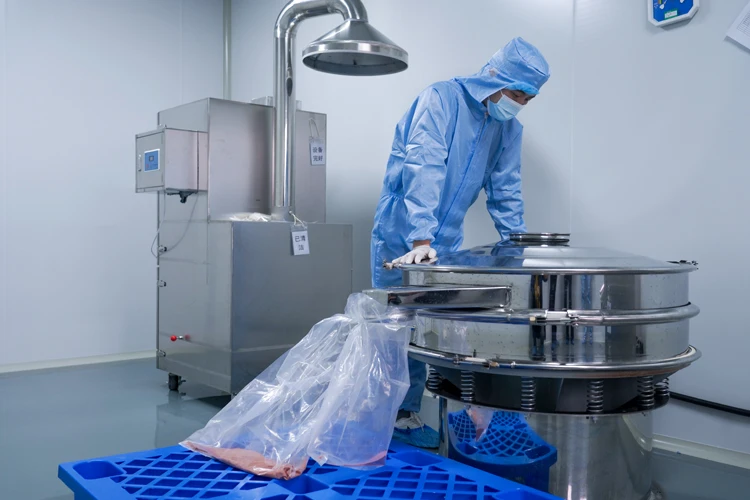
Packing workshop supporting botanical powder orders. Image: Guanjie Biotech.
Guanjie Biotech
Email: info@gybiotech.com
Tel / WhatsApp: +86 150-2999-3470
Website: https://www.guanjiebio.com/
Address: Room 2-20201, Unit 2, Building 2, Qinchuang Changan Chuanghui Zhongxin Industrial Park, No. 333 Xuefu Street, Chang'An District, Xi'An City, Shaanxi Province, China.
Download the product brochure: Guanjie Nutraceutical Ingredients brochure.
Have Questions or Need More Details?
Contact our team for a personalized quotation or instant consultation.
Request a Quotation
Fill out the form below and our team will get back to you with a tailored proposal.
WhatsApp Direct Chat
Prefer to chat in real-time? Message us on WhatsApp for instant assistance & quick answers.
- Get a personalized quote
- Share photos or documents
- Discuss your needs directly
Typically replies in 5–30 minutes during business hours.