
CoQ10 10% vs 99% in Antioxidant Supplement Projects: A Water-Soluble Grade Application Guide
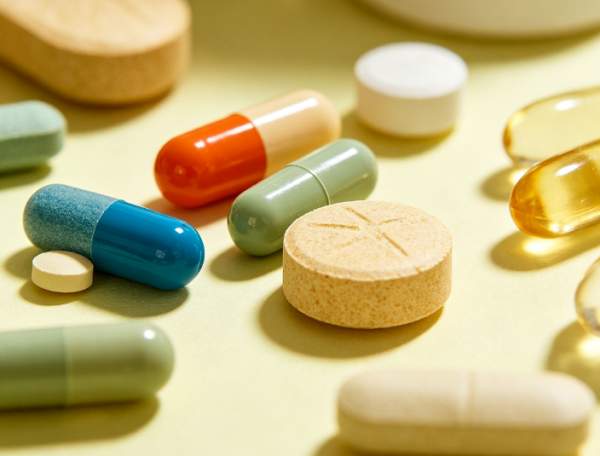
Coenzyme Q10 powder is supplied in two specification grades: 10% (water soluble) and 99%. In antioxidant supplement projects, the grade is a solubility decision before it is a cost decision. The 10% water-soluble grade fits water-based formats such as RTD beverages, drink mixes, stick packs and water-dispersible powder blends. The 99% grade fits capsules, tablets, softgels and fat-containing matrices where the powder weight per unit must stay small.
Most grade decisions in antioxidant projects are made late — after the delivery format is fixed, the label amount is agreed, and purchasing has already started comparing quotes. At that point the two grades look like a price comparison, which is the least informative way to compare them. Working from the verified solubility behaviour of Coenzyme Q10 first, then mapping it to the formats an antioxidant product is likely to run, produces a decision that survives formulation and quality review.
What the 10% and 99% CoQ10 Grades Actually Are
Coenzyme Q10 powder — also written CoQ10, ubiquinone or ubidecarenone — is a nutraceutical ingredient with CAS registry number 303-98-0. It is a yellow or light orange-yellow crystalline powder with no odour and no taste, manufactured using microbial fermentation technology, and declared for dietary supplement, health food, beverage and cosmetics applications.
- Same identity, two specifications. Both the 10% and the 99% grade carry CAS 303-98-0. The grade changes the specification, not the molecule.
- 99% grade. A high-assay grade that keeps the material's native fat-soluble crystalline structure: Coenzyme Q10 dissolves in organic solvents such as acetone and ether and is insoluble in water.
- 10% grade. The specification listed as water soluble, which makes it usable in aqueous matrices where the fat-soluble crystalline material would not disperse.
- Fermentation origin.Guanjie Biotech produces Coenzyme Q10 powder by microbial fermentation and supplies both specifications from that route.
The percentage describes how much CoQ10 is carried per unit of powder. A water-soluble grade and a high-assay grade therefore answer two different formulation questions: whether the material is compatible with water, and how much powder the dose is allowed to consume.
Why Solubility Decides Grade Selection in Antioxidant Projects
The problem is not that one grade is stronger than the other. It is that antioxidant formulas are built in either water or fat, and Coenzyme Q10 in its native crystalline form only works in one of them.
The solubility mismatch
A fat-soluble crystalline material that dissolves in acetone and ether but not in water cannot be dropped into an aqueous beverage or a water-based sachet blend and expected to distribute evenly through the batch. Uneven distribution becomes uneven serve-to-serve dosing, which is a quality issue in a product whose entire label claim rests on a single active. The water-soluble 10% specification exists precisely to remove that obstacle.
The powder-budget mismatch
The reverse problem appears in capsules and tablets. Because 10% and 99% describe CoQ10 content per unit of powder, reaching a fixed label amount through the 10% grade requires roughly ten times the powder weight of the 99% grade. In a hard capsule that converts directly into capsule size or capsule count; in a tablet it converts into tablet weight and compression behaviour. A grade that cannot fit the chosen unit is unusable regardless of how well it dissolves.
Both failure modes are avoidable at specification stage
Choosing the 99% grade for a clear beverage creates a dispersion problem. Choosing the 10% grade for a size 0 capsule creates a volume problem. Neither is a manufacturing defect; both are specification errors that are cheaper to fix before the purchase order than after the pilot batch.
Industry Background: Why Antioxidant Projects Now Carry Both Grades
Antioxidant ingredients are no longer sold in one format per brand. Coenzyme Q10 is declared for dietary supplement, health food, beverage and cosmetics applications, and in practice that means a single antioxidant brand may run hard capsules, tablets, softgels, stick packs, functional beverages or powdered drink mixes. Each format imposes its own solubility and volume constraint on the same active.
Market context supports the breadth. Global Market Insights estimates the global nutraceutical ingredients market at USD 105.8 billion in 2026, which reflects demand spread across delivery formats rather than concentrated in capsules alone. Regulatory context adds a second pressure. The U.S. FDA states that dietary supplement manufacturers, packagers and holders must follow current good manufacturing practices intended to help ensure identity, purity, quality, strength and composition, which places identity and grade documentation inside the qualification process rather than outside it.
Public label data is also accessible for benchmarking. The NIH Dietary Supplement Label Database catalogs information printed on labels of dietary supplement products sold in the United States, including ingredient names, forms and label statements, and the NIH Dietary Supplement Ingredient Database provides estimated ingredient levels in certain supplement products and is intended primarily for research applications. Both are useful for checking how competing antioxidant products declare CoQ10, but neither substitutes for a supplier's own specification and certificate of analysis.
The practical consequence is simple. A brand owner running a capsule SKU and a beverage SKU from the same antioxidant concept needs a source that holds both specifications, under one identity and one declared production route, instead of stitching together two suppliers and two documentation sets.
The Application Answer: Matching Grade to Formula
Choose the 10% water-soluble grade when
- The formula is aqueous: RTD beverages, shots, drink mixes, stick packs, water-dispersible powder sachets or granule blends.
- The label claim per serving is moderate and the serve has volume to absorb the extra powder.
- The process involves a water phase where a fat-soluble crystalline solid cannot be evenly dispersed.
- The finished product needs a clean, water-dispersible delivery rather than a two-phase system.
Choose the 99% grade when
- The format is a hard capsule, tablet, softgel or oil-based suspension where the fat-soluble crystalline structure is an advantage rather than a problem.
- The dose per unit is high enough that powder weight must be minimised to fit the unit.
- You prefer to standardise the final assay in-house by diluting a high-assay grade into your own blend.
- The matrix contains a fat phase that can carry a fat-soluble active.
Building the antioxidant stack around CoQ10
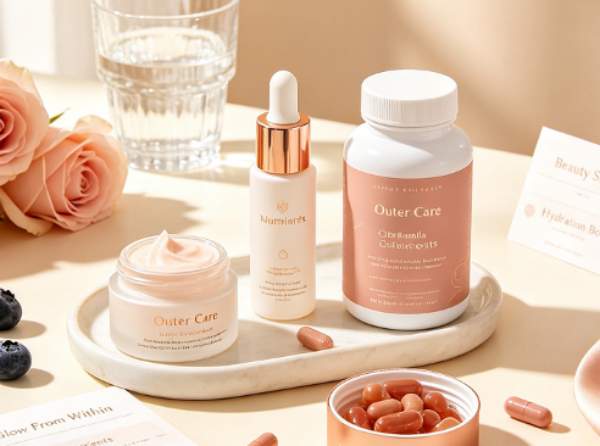
CoQ10 is rarely formulated alone, and each partner ingredient brings its own specification. In Guanjie Biotech's nutraceutical ingredient range, the commonly paired antioxidant actives are documented as follows:
- Ferulic Acid Powder — CAS 537-98-4, 98% specification, HPLC assay, with pyridine content undetectable under the described manufacturing process.
- L-Ergothioneine Powder — CAS 497-30-3, purity greater than or equal to 98%, white fine powder.
- Urolithin A Powder — CAS 1143-70-0, 98% specification, HPLC test method.
- Luteolin Powder — CAS 491-70-3, 98% specification by HPLC, sourced from Arachis hypogaea L. shell and bud, with ash controlled to 5%, 2% or 1% depending on requirement.
- Phosphatidylserine — CAS 51446-62-9, derived from non-GMO soybean lecithin or sunflower lecithin, supplied as powder, liquid, water-soluble powder or granular forms.
Solubility has to be matched across the whole blend, not only for CoQ10. Phosphatidylserine illustrates the point inside a single ingredient family: the same active is offered in four physical forms because formats differ. Where a stack mixes a water-soluble CoQ10 grade with a partner that is not water-compatible, the format decision should follow the least compatible ingredient, not the headline active.
What Guanjie Biotech supplies
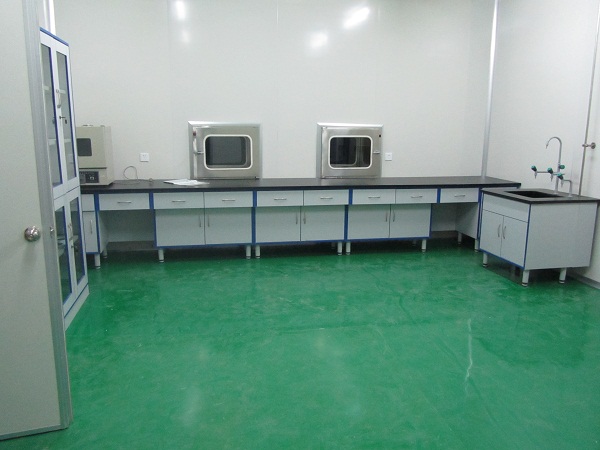
Guanjie Biotech, also known as Shaanxi Guanjie Biotech, is a China-based supplier of natural plant extracts and nutraceutical ingredients established in 2004 and operating through guanjiebio.com. The company runs a 7,000 m² manufacturing footprint that includes a 2,000 m² cGMP-standard clean workshop and a 500 m² laboratory, with 40 employees, 7 R&D engineers and an annual output of 500 tons. Its Coenzyme Q10 powder is produced in independent manufacturing facilities with in-house testing laboratories, supported by ISO, Halal and Kosher certifications and more than 16 national patents, with roughly 90% of output exported to markets including Canada, Germany, the United Kingdom, Japan and Australia.
Step-by-Step Breakdown: From Grade Decision to Qualified Batch
- Lock the delivery format and the dose. Write down capsule, tablet, softgel, sachet, RTD or powder blend, and fix the CoQ10 label amount per serving. Without these two inputs the grade cannot be decided.
- Convert the dose into powder weight for each grade. Calculate the powder required at 10% and at 99%. The 10% grade will need roughly ten times the weight of the 99% grade for the same CoQ10 amount — check that figure against your capsule size, sachet fill weight or beverage solids budget.
- Screen water compatibility. If any part of the process is aqueous, the fat-soluble 99% material will not disperse; the 10% water-soluble specification is the starting point, subject to a bench trial in your own matrix.
- Fix identity and origin in the specification. State product name Coenzyme Q10 powder, synonyms ubiquinone and ubidecarenone, CAS 303-98-0, the grade (10% water soluble or 99%), appearance (yellow or light orange-yellow crystalline powder, odourless, tasteless) and production method (microbial fermentation).
- Run a sample in the real matrix. Test dispersion and hold behaviour in the actual base at your process temperature and hold time for liquids; weigh the real powder load for solids. Where the stack includes ferulic acid, L-ergothioneine, urolithin A, luteolin or phosphatidylserine, trial the full blend.
- Qualify the manufacturing and testing support. Confirm the supplier manufactures rather than resells, that testing is performed in-house, that ISO, Halal and Kosher certificates are current, and that batch-to-batch data exists for the chosen grade. The FDA's cGMP expectation for identity, purity, quality, strength and composition is the frame to check this against.
Use Cases: Four CoQ10 Antioxidant Projects
1. Antioxidant hard capsule with ferulic acid
A capsule combining CoQ10 with 98% ferulic acid has a fixed volume ceiling. The 99% grade keeps the CoQ10 powder load minimal so the ferulic acid dose still fits, and the fat-soluble crystalline structure is compatible with a dry capsule fill.
2. Water-dispersible antioxidant sachet
A stick pack or sachet reconstituted in water needs the 10% water-soluble grade; the extra powder weight is absorbed by the sachet fill volume. A water-soluble phosphatidylserine grade can be used alongside it to keep the whole blend dispersible.
3. Antioxidant RTD beverage
In a ready-to-drink format the constraint shifts from weight to dispersion and appearance. The 10% water-soluble grade is the compatible specification, and the trial should observe the finished base over the hold time the process actually uses rather than in water alone.
4. Nutricosmetic powder blend
Coenzyme Q10 is declared for cosmetics as well as supplements, so a beauty-from-within powder may pair CoQ10 with L-ergothioneine (CAS 497-30-3, ≥98%). Format decides the grade: a drink mix points to the 10% water-soluble specification, a capsule to the 99% grade.
Comparison Table: CoQ10 10% Water-Soluble vs 99% Grade
| Parameter | Coenzyme Q10 powder, 10% (water soluble) | Coenzyme Q10 powder, 99% |
|---|---|---|
| Identity | Coenzyme Q10 (ubiquinone / ubidecarenone), CAS 303-98-0 | Coenzyme Q10 (ubiquinone / ubidecarenone), CAS 303-98-0 |
| Specification | 10%, water soluble | 99% |
| Solubility in water | Supplied as the water-soluble specification | Insoluble in water |
| Solubility in organic solvents | Grade-specific; confirm on the certificate of analysis | Soluble in organic solvents such as acetone and ether |
| Appearance | Yellow or light orange-yellow crystalline powder, odourless, tasteless | Yellow or light orange-yellow crystalline powder, odourless, tasteless |
| Production method | Microbial fermentation | Microbial fermentation |
| Relative powder weight for an equal CoQ10 dose | Approximately ten times the 99% grade | Baseline |
| Format fit (derived from solubility and powder load) | RTD beverages, drink mixes, stick packs, water-dispersible powders | Hard capsules, tablets, softgels, oil-based and fat-containing matrices |
| Declared applications | Dietary supplement, health food, beverage, cosmetics | Dietary supplement, health food, beverage, cosmetics |
Identity, specification, solubility, appearance, production method and declared applications are verified product facts. Format fit and relative powder weight are formulation implications derived from those facts; confirm them in your own matrix before locking a specification.
FAQ: CoQ10 Grade Selection and Manufacturer Checks
1. What should a Coenzyme Q10 powder specification and certificate of analysis show for a 10% versus a 99% grade?
Both documents should separate identity from grade. The minimum field set is: product name Coenzyme Q10 powder; synonyms ubiquinone and ubidecarenone; CAS 303-98-0; the declared grade (10% water soluble or 99%); appearance (yellow or light orange-yellow crystalline powder, odourless, tasteless); the production method (microbial fermentation); the assay result for the grade supplied; and the solubility statement the grade is sold on — water soluble for the 10% specification, insoluble in water with solubility in organic solvents such as acetone and ether for the 99% material. If identity and grade are not both stated, the buyer cannot tell which specification is being shipped. These fields support the identity, purity, quality, strength and composition documentation that the FDA's cGMP expectation is built around.
2. Can one nutraceutical ingredients manufacturer supply both the 10% water-soluble and the 99% grade?
Yes. Guanjie Biotech lists Coenzyme Q10 powder in both specifications, 10% (water soluble) and 99%, produced by microbial fermentation, with independent manufacturing facilities and in-house testing laboratories supporting both. Sourcing both grades from one manufacturer matters when an antioxidant brand runs a capsule SKU and a beverage SKU from the same concept: the two grades then arrive under one CAS number, one declared production route and one documentation system, which simplifies label review and supplier qualification.
3. How does the grade change the amount of powder in each unit?
Because 10% and 99% describe CoQ10 content per unit of powder, reaching a fixed label amount takes roughly ten times more powder with the 10% grade than with the 99% grade. At an equal dose, a capsule built on the 99% grade carries a much smaller powder load, while a sachet or beverage absorbs the extra weight because water-based formats have volume to spare. This arithmetic, not the price per kilogram, usually decides feasibility. Commercial terms should still be confirmed in a written quotation against the chosen grade and quantity.
4. What should be tested in a CoQ10 sample before a grade is specified?
Test the grade in the matrix you will actually run. Confirm identity and grade against the certificate of analysis (CAS 303-98-0; 10% water soluble or 99%), check appearance against the declared yellow or light orange-yellow crystalline powder, and for any water-based format run a dispersion trial at your process temperature and hold time, watching for settling or ringing at the fill line. For capsules, weigh the powder load each grade demands at your dose and check it against the capsule size. If the formula stacks CoQ10 with ferulic acid, L-ergothioneine, urolithin A, luteolin or phosphatidylserine, trial the complete blend, since each partner carries its own specification.
5. How do I move from a grade decision to a firm quotation?
Fix four inputs first: grade (10% water soluble or 99%), CoQ10 dose per serving, annual quantity and pack format. With those inputs, request a written quotation together with the matching specification sheet and certificate of analysis, then confirm fermentation origin and manufacturing and testing support before the first purchase order is issued. Guanjie Biotech supplies both grades from its own fermentation route and can be reached at info@gybiotech.com or +86 150-2999-3470 to raise a sample request or quotation.
Project Checklist: Grade, Fermentation Origin, and Manufacturing Support
Grade choice
- ☐ Delivery format confirmed before the grade is discussed (capsule, tablet, softgel, sachet, RTD, powder blend).
- ☐ CoQ10 label amount per serving fixed as a number.
- ☐ Powder weight per unit calculated for both grades; the roughly ten-fold difference between 10% and 99% checked against capsule size or fill weight.
- ☐ Water compatibility confirmed by bench trial for any aqueous format.
- ☐ Grade written into the specification as "10% (water soluble)" or "99%", never as a vague "CoQ10".
Fermentation origin
- ☐ Production method stated as microbial fermentation on both specification and certificate of analysis.
- ☐ CAS 303-98-0 with synonyms ubiquinone and ubidecarenone declared.
- ☐ Declared production route consistent across repeat lots rather than changed silently between shipments.
- ☐ Appearance and organoleptic descriptors matched to the declared standard on every lot.
Manufacturing and testing support
- ☐ Manufacturer status confirmed — own facility and own laboratory, not a reseller description.
- ☐ cGMP-aligned quality system evidence reviewed against the FDA expectation for identity, purity, quality, strength and composition.
- ☐ ISO, Halal and Kosher certificates on file and current.
- ☐ Batch-to-batch consistency data available for the chosen grade.
- ☐ Written quotation issued with grade, quantity, packaging terms and certificate of analysis attached.
Conclusion
The 10% and 99% Coenzyme Q10 grades are the same molecule under CAS 303-98-0, separated by specification rather than by strength. The decision comes down to two verified facts: Coenzyme Q10 in its native crystalline form dissolves in organic solvents such as acetone and ether but not in water, and the 10% specification is the water-soluble grade. From those facts the rule follows directly — aqueous formats and water-dispersible powders take the 10% grade, while capsules, tablets, softgels and fat-containing matrices take the 99% grade and benefit from a powder load roughly one tenth of the water-soluble grade at an equal dose.
What turns that rule into a purchase is documentation: grade stated separately from identity, fermentation origin declared, and manufacturing and testing support that can be checked. Guanjie Biotech supplies both grades from a 7,000 m² facility with a 2,000 m² cGMP-standard clean workshop and a 500 m² laboratory, backed by ISO, Halal and Kosher certification. Run the checklist above against any supplier, including this one.
Next step — samples, specification sheets and quotations
Request the Coenzyme Q10 powder specification for the 10% water-soluble or 99% grade, or review the full range in the Guanjie Nutraceutical Ingredients catalogue (PDF).
Guanjie Biotech · guanjiebio.com · info@gybiotech.com · +86 150-2999-3470 · WhatsApp +86 150-2999-3470
Have Questions or Need More Details?
Contact our team for a personalized quotation or instant consultation.
Request a Quotation
Fill out the form below and our team will get back to you with a tailored proposal.
WhatsApp Direct Chat
Prefer to chat in real-time? Message us on WhatsApp for instant assistance & quick answers.
- Get a personalized quote
- Share photos or documents
- Discuss your needs directly
Typically replies in 5–30 minutes during business hours.