
CoQ10 Powder Grade Selection: 10% Water-Soluble vs 99% Assay
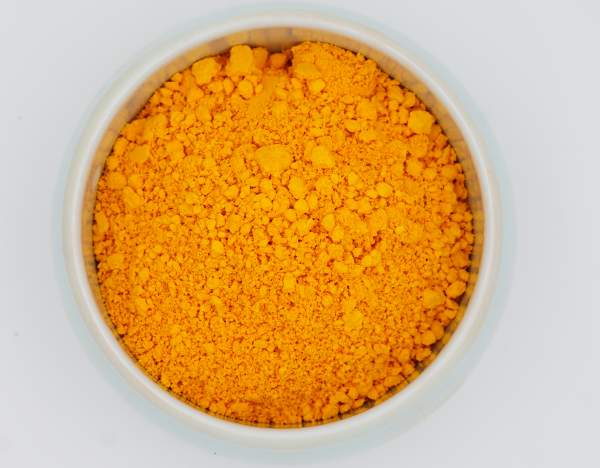
Coenzyme Q10 powder (CAS 303-98-0) is supplied as a 99% specification and as a 10% water-soluble grade; the grade decision starts with solubility, not with price.
Coenzyme Q10, CAS 303-98-0, is a fat-soluble compound. It dissolves in acetone and ether and is insoluble in water — a property that settles most grade-selection questions before price is even discussed. Commercial CoQ10 powder is offered as a 99% specification and as a 10% water-soluble specification, and buyers at the decision and execution stage are usually weighing exactly these two options against each other.
The selection rule is format-driven. A grade that disperses cleanly in a stick pack can be a poor fit for a softgel filling, and a high-purity powder that behaves well in an oil system can fail in a ready-to-mix beverage. This guide sets out the solubility, assay, and production-route parameters that should drive the choice, and the documentation that should accompany it once the choice is made.
Short answer
99% grade: choose it when the formula gives CoQ10 a lipid vehicle — oil suspensions, softgel fillings, emulsion systems, or capsule blends built around a fat-soluble active.
10% water-soluble grade: choose it when the finished product is water-based — stick packs, sachets, ready-to-mix powders, functional beverages, and fortified drinks.
Both grades: confirm the assay by HPLC, confirm the microbial fermentation route, and qualify each batch through COA review covering assay, microbiology, and heavy metals before committing to a repeat order.
Problem Definition: Why “99% vs 10%” Is Not a Purity Question
Procurement teams frequently compare CoQ10 quotations on a single visible number. That comparison breaks down for three structural reasons, and each one causes avoidable rework when it is discovered late.
The two grades are not the same product category. The 99% specification describes a high-purity CoQ10 powder. The 10% water-soluble specification describes a formulated grade in which CoQ10 is presented in a water-dispersible system at a declared 10% content. Comparing them on the headline percentage is like comparing a pure solvent with a prepared solution: the number is real, but it does not measure the same thing.
Water insolubility is intrinsic, not a defect. CoQ10 dissolves in acetone and ether and is insoluble in water. No grade changes that chemistry. What a water-soluble grade changes is how the material behaves in a water-based matrix — the formulation does the dispersing work, not the molecule. Buyers who expect a “more soluble” version of the 99% powder are looking for a specification that does not exist; what exists is a formulated grade designed for that matrix.
A single assay figure hides the production route and the test scope. Two suppliers can both quote 99% while differing in fermentation route, downstream processing, carrier system, assay method, and the panel of tests behind the certificate of analysis. Those differences do not appear in the headline number, but they determine whether the batch behaves the same way next quarter.
The practical consequence: grade selection has to be resolved against the finished dosage form first, and against price second. Reversing that order is the most common cause of failed dispersion trials, label-content mismatches, and mid-project grade switches.
Industry Background: Where CoQ10 Powder Sits in Nutraceutical Formulations
CoQ10 is one of the established antioxidant actives in the nutraceutical ingredients portfolio, and it appears across nearly every supplement format. In Guanjie Biotech’s own ingredient-selection framework — which weighs market demand, scientific backing, stability, and supplier reliability — CoQ10 is named alongside NMN and Alpha GPC as one of the three recommended starting ingredients for antioxidant dietary supplement formulas.
The format spread is what makes grade selection a live question rather than a theoretical one. CoQ10 is formulated into hard capsules, tablets, softgels, and powder sachets; into functional and fortified beverages; into functional foods and confectionery such as gummies and fortified snacks; into nutricosmetics and personal care; and into sports and performance nutrition products. Each of those categories imposes a different dispersion requirement on the same molecule.
The wider market context supports the level of attention. The global nutraceutical ingredients market was estimated at USD 105.8 billion in 2026 according to Global Market Insights, with growth driven by exactly this kind of multi-format ingredient. When an ingredient is used across capsules, sachets, and beverages simultaneously, suppliers and buyers end up managing more than one specification — which is why the portfolio approach matters more than a single SKU.
Regulatory expectations raise the stakes on documentation. FDA states that dietary supplement manufacturers, packagers, and holders must follow current good manufacturing practices intended to help ensure identity, purity, quality, strength, and composition. That requirement does not certify any particular supplier, but it does explain why grade, assay method, and batch documentation are treated as one decision rather than three.
Detailed Solution: Selecting a CoQ10 Grade on Solubility, Assay, and Route
1. Solubility: Start From the Fat-Soluble Baseline
CoQ10 is fat-soluble. It dissolves in acetone and ether and is insoluble in water. Every formulation decision follows from that baseline: if the continuous phase of the product is water, the CoQ10 needs a delivery strategy, and the 10% water-soluble grade is the specification built for that case. If the continuous phase is lipid — an oil fill, an emulsion, an oil-based suspension — the 99% grade fits the existing vehicle and no dispersion system has to be engineered around it.
The selection test should be run in the buyer’s own vehicle, not in water alone. A grade that disperses in a simple aqueous solution may still sediment in a beverage with a different pH, solids load, or mineral content. A short bench trial using the intended matrix, the intended dosage, and the intended process conditions resolves more than any specification sheet.
2. Assay: What 99% and 10% Actually Describe
The 99% figure describes CoQ10 content in a high-purity powder. The 10% figure describes the declared CoQ10 content of a water-soluble grade, where the remaining mass is the carrier system that makes aqueous dispersion possible. Both numbers are legitimate; they measure different things.
This matters for dosing arithmetic. A formula built on the 10% water-soluble grade carries proportionally more material per unit of CoQ10, which affects stick-pack fill weight, excipient balance, and sensory load. A formula built on the 99% grade needs a vehicle and a dispersion step to place the same CoQ10 content into a water-based product. Cost-per-kilogram comparisons that ignore declared content and carrier mass are not comparable figures.
Assay verification should be method-explicit. Request the analytical method behind the certificate — HPLC is the standard technique for this type of quantification, and HPLC, UV, and GC testing capability is the relevant lab question to ask a supplier. A certificate that states a result without a method cannot be reproduced during incoming inspection.
3. Production Route: Microbial Fermentation
These CoQ10 grades are produced by microbial fermentation rather than by extraction from biological tissue. The route matters to buyers for two reasons: fermentation consistency drives batch-to-batch uniformity, and fermentation capability signals whether the supplier controls the upstream step or only blends and packages downstream.
Guanjie Biotech, founded in 2004 and based in Xi’an, Shaanxi Province, China, operates a 7,000-square-meter manufacturing facility that includes a 2,000-square-meter cGMP-standard clean workshop and a 500-square-meter advanced laboratory, with total annual production capacity of approximately 500 tons and a monthly production capacity of 30 tons. The company employs approximately 40 staff, including an R&D team of 7 engineers, and operates a dedicated R&D laboratory and a physical and chemical analysis laboratory built to GMP and QS standards. It also cooperates with Northwest University on a master’s experimental base and holds a strategic partnership with the Xi’an Branch of the Chinese Academy of Sciences.
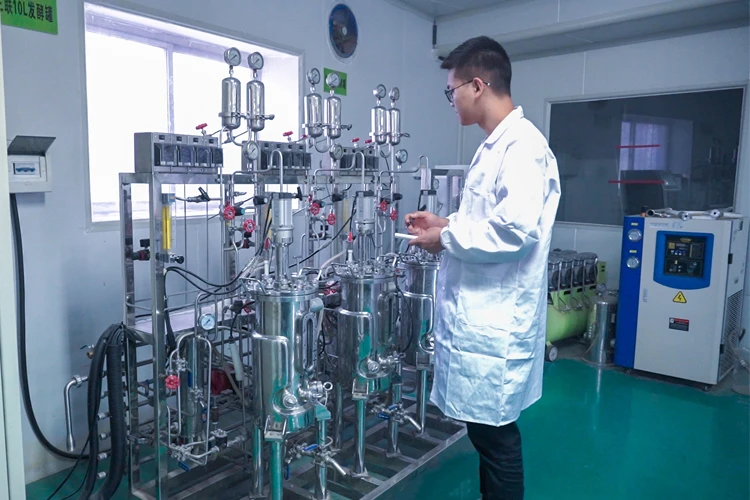
CoQ10 for these grades is produced by microbial fermentation; confirming which production steps are controlled in-house is part of grade qualification.
4. Laboratory Capability: Manufacturing and Independent Testing
Two laboratory functions should be distinguished during supplier qualification. The first is production quality control, which releases or holds a batch. The second is the analytical work behind the certificate of analysis, which the buyer will later replicate during incoming inspection. A supplier that operates independent manufacturing and testing laboratories can answer method questions directly; a supplier that outsources both can still be qualified, but the buyer needs to know which party signs the result.
Ask for three things: the assay method and its detection basis, the batch-to-batch variation the process is designed to hold, and the list of tests behind each certificate. Guanjie Biotech states a batch variation of ≤3% for its nutraceutical ingredients, supported by HPLC testing and a documented certificate of analysis per batch.
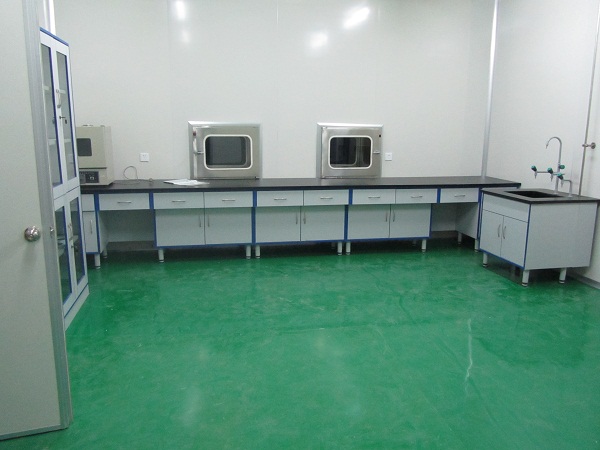
Assay, microbiology, and heavy metals are the three certificate items incoming inspection most often repeats.
5. Documentation: The Layer That Decides Long-Term Fit
Once the grade is fixed, the remaining risk sits in documentation and repeatability. The qualification set that buyers should confirm before ordering includes product specifications, qualification documents, packaging specifications, shelf life, MOQ, lead time, and acceptance criteria; suppliers should hold complete food-related certifications, and incoming inspection should check assay, microbiology, heavy metals, and other certificate items against the delivered batch.
A practical document request combines the specification sheet (active ingredient content, moisture, heavy metals, microbial limits, residual solvent, CAS and botanical name, packaging, shelf life) with the certification set (ISO9001, HACCP, Kosher, HALAL, CNAS) and the commercial terms (origin, batch COA, MOQ, lead time). Guanjie Biotech holds ISO, Halal, and Kosher certifications, and supports long-term supplier partnerships with COAs, batch traceability, and quality agreements for recurring orders.
Step-by-Step Breakdown: Six Steps From Inquiry to Qualified Supply
Step 1 — Define the finished matrix before naming a grade
Write down the continuous phase (water, oil, emulsion), the target CoQ10 content per serving, the process temperature profile, and the packaging format. This single page determines whether the 10% water-soluble or the 99% grade is even eligible.
Step 2 — Fix the grade definition in writing
State the grade, the declared CoQ10 content, the CAS number (303-98-0), the assay method, and the carrier expectation on the specification sheet. A grade name alone is not a specification; without declared content and assay method, two quotations are not comparable.
Step 3 — Run a dispersion trial in your own vehicle
Test the sample at the intended dosage in the intended matrix. For the 10% water-soluble grade, check dispersion and settlement over the intended hold time. For the 99% grade, check dissolution in the lipid vehicle and stability of the resulting system. A trial in water alone answers the wrong question.
Step 4 — Verify the production route and the site
Confirm that the material is produced by microbial fermentation, and confirm which steps — fermentation, downstream processing, blending, packaging — take place in the supplier’s own facility. Capacity figures are only meaningful when they are attached to a defined process scope: 30 tons per month and 500 tons per year describe a production base, not a specific grade’s monthly availability.
Step 5 — Qualify on documents, not on the quotation
Collect the certificate of analysis for the actual batch, the certification set, the specification sheet, and the packaging and shelf-life statement. Then repeat assay, microbiology, and heavy metals at incoming inspection and compare against the certificate. Any gap found here is cheaper than a gap found after a production run.
Step 6 — Convert the grade into a repeatable agreement
For recurring orders, lock batch traceability, a quality agreement, COA delivery with each lot, and the acceptance criteria in writing. This is the step that turns a successful sample into a stable supply line — and the step most often skipped when a project moves quickly from trial to launch.
Use Cases: Matching Grade to Finished Format
- Hard capsules and tablets. A dry blend tolerates the 99% grade where the formula includes a lipid-compatible carrier or the process accepts a suspended fat-soluble powder. If the blend is purely aqueous in behaviour, the 10% water-soluble grade removes the dispersion step from the equation.
- Softgels and oil suspensions. Lipid-filled systems are the natural home of the 99% grade: the fill itself provides the vehicle, and the higher declared content keeps capsule size manageable.
- Powder sachets and stick packs. Reconstitution is the deciding test. The 10% water-soluble grade is designed for the moment the consumer adds water, and it reduces the risk of visible residue at the bottom of the sachet.
- Functional and fortified beverages. Water-based continuous phase, long hold times, and clarity expectations make this the clearest case for the 10% water-soluble grade; a 99% grade would require an emulsification step the format may not support.
- Functional foods and gummies. Water activity, process temperature, and matrix solids determine the choice. Where the process is largely aqueous, the water-soluble grade is the realistic starting point; where the matrix is fat-based, the 99% grade fits without additional engineering.
- Nutricosmetics and sports nutrition. Both categories span multiple formats, so the grade follows the specific delivery system — sachet and beverage concepts toward the water-soluble grade, oil-based and softgel concepts toward the 99% grade.
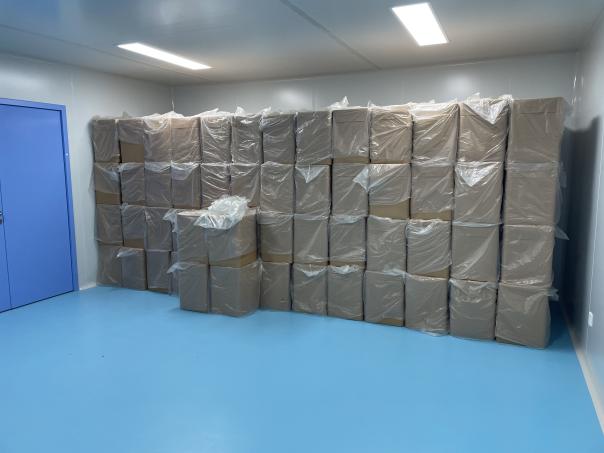
Batch traceability and lot-level certificates are the practical link between a grade decision and a repeatable supply agreement.
Comparison Table: 10% Water-Soluble vs 99% Coenzyme Q10 Powder
| Selection parameter | 10% water-soluble grade | 99% grade |
|---|---|---|
| CAS number | 303-98-0 | 303-98-0 |
| What the percentage describes | Declared CoQ10 content of a formulated, water-dispersible grade | CoQ10 content of a high-purity powder |
| Intrinsic solubility | CoQ10 is fat-soluble; dissolves in acetone and ether, insoluble in water | CoQ10 is fat-soluble; dissolves in acetone and ether, insoluble in water |
| Behaviour in water-based matrices | Designed for dispersion; reduces the need for a separate dispersion step | Requires a dissolution or emulsification step in the buyer’s process |
| Typical finished formats | Sachets, stick packs, ready-to-mix powders, functional beverages, fortified drinks | Softgels, oil suspensions, emulsion systems, capsule and tablet blends built on a lipid vehicle |
| Dosing arithmetic | More material per unit of CoQ10 because of carrier mass | Less material per unit of CoQ10 |
| Assay verification | Confirm declared content by HPLC against the certificate | Confirm declared content by HPLC against the certificate |
| Production route | Microbial fermentation | Microbial fermentation |
| Documentation to qualify | COA covering assay, microbiology, heavy metals; certification set; packaging and shelf life | COA covering assay, microbiology, heavy metals; certification set; packaging and shelf life |
FAQ: CoQ10 Grade Selection and Long-Term Supply
1. What documents and compliance items should accompany a CoQ10 powder batch?
Each batch should arrive with a certificate of analysis covering assay, microbiology, and heavy metals, alongside the specification sheet stating active ingredient content, moisture, residual solvent, CAS number, packaging, and shelf life. The supplier should hold complete food-related certifications — the qualification set buyers commonly request is ISO9001, HACCP, Kosher, HALAL, and CNAS. Incoming inspection should repeat assay, microbiology, and heavy metals and compare the results against the certificate. Note that FDA good manufacturing practice requirements describe what manufacturers, packagers, and holders must follow to help ensure identity, purity, quality, strength, and composition; they do not by themselves verify any individual supplier, which is why the batch documents and certificates still have to be checked.
2. Can one supplier support both the 10% water-soluble and the 99% grade?
Yes, and this is often the practical reason to consolidate. Both grades are produced by microbial fermentation and differ in how the material is presented — the 99% specification as a high-purity powder, the 10% specification as a formulated water-dispersible grade. Guanjie Biotech operates a 7,000-square-meter facility with a 2,000-square-meter cGMP-standard clean workshop and a 500-square-meter advanced laboratory, runs a dedicated R&D laboratory and a physical and chemical analysis laboratory built to GMP and QS standards, and holds ISO, Halal, and Kosher certifications. Testing capability covers HPLC, UV, and GC, which is the relevant question when you need the assay method behind a certificate explained rather than just quoted.
3. What drives the cost difference between the two grades?
Four drivers dominate, and only one of them is the headline percentage. First, declared content: a 10% grade carries proportionally more carrier mass per unit of CoQ10, so the two grades cannot be compared on price per kilogram alone. Second, testing scope: the panel behind the certificate — assay method, microbiology, heavy metals, residual solvent — determines analytical cost. Third, packaging and lot size, since smaller, more frequent lots cost more per kilogram than a single consolidated lot. Fourth, lead time and MOQ flexibility, which affect how much working capital sits in inventory. Guanjie Biotech offers flexible MOQs alongside its standard production capacity of 30 tons per month, which allows a buyer to run a trial lot without committing to a full production volume.
4. How should a sample be evaluated before the first order?
Evaluate the sample against the matrix, not against the specification sheet. Request the sample together with its batch certificate, then run three checks: dispersion or dissolution at the intended dosage in the intended vehicle; assay confirmation by HPLC against the declared content; and a repeat check on a second lot to observe batch-to-batch behaviour. Guanjie Biotech states a batch variation of ≤3%, which gives a reference point for how much drift to expect between lots. If the sample passes all three checks, the grade is technically qualified; if it passes only the first, the supplier still needs a documentation conversation.
5. How is continuity handled for repeat orders?
Continuity is a documentation practice as much as a capacity question. For recurring orders, Guanjie Biotech supports long-term supplier partnerships with COAs, batch traceability, and quality agreements, and roughly 90% of its products are exported, so export documentation is a routine part of its order flow. Buyers should confirm lead time, MOQ, acceptance criteria, and the certificate format in writing before the first repeat order, and keep lot-level traceability so that any deviation can be traced to a batch rather than to a shipment. To start a qualification, request a CoQ10 sample or a written quotation for the grade you need — the 10% water-soluble grade for aqueous formats, or the 99% grade for lipid-based systems.
Next Step: Sample, Quotation, or Full Catalog
Guanjie Biotech supplies Coenzyme Q10 powder in 10% water-soluble and 99% specifications alongside a wider nutraceutical ingredients portfolio that includes NMN, Alpha GPC, Phosphatidylserine, Ferulic Acid, Red Yeast Rice Powder, and plant extract powders. Share your finished format, target CoQ10 content, and expected annual volume, and the technical team will confirm grade fit and issue the matching specification and certificate set.
Website: guanjiebio.com | Email: info@gybiotech.com | WhatsApp: +86 150-2999-3470
Download the product brochure: Guanjie Nutraceutical Ingredients (PDF)
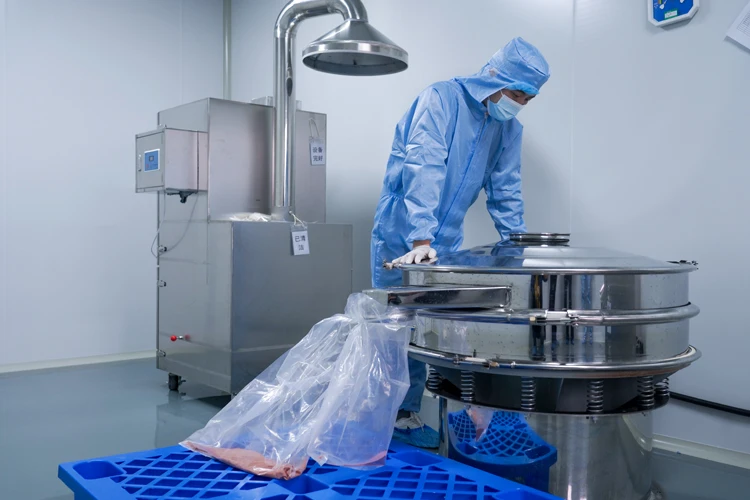
Sample dispatch and repeat orders follow the same lot-traceable documentation flow.
Conclusion: Decide the Matrix First, the Grade Second
The 10% water-soluble and 99% CoQ10 specifications are not two quality levels of the same product. They are two answers to different formulation questions. CoQ10 remains fat-soluble across both — it dissolves in acetone and ether and is insoluble in water — so the grade decision is really a decision about the continuous phase of the finished product and the process steps available to handle it.
For aqueous formats, the 10% water-soluble grade removes a dispersion problem the format cannot easily solve. For lipid-based systems, the 99% grade delivers more CoQ10 per gram and fits the vehicle already in the formula. In both cases, the decision is only complete when the assay method, the microbial fermentation route, and the batch documentation have been verified — because those three items determine whether the second order behaves like the first.
Buyers who sequence the work correctly — matrix definition, grade definition, dispersion trial, route verification, document qualification, and a written supply agreement — end up with a specification they can defend to their own quality team. Buyers who sequence it backwards usually end up reformulating.
Have Questions or Need More Details?
Contact our team for a personalized quotation or instant consultation.
Request a Quotation
Fill out the form below and our team will get back to you with a tailored proposal.
WhatsApp Direct Chat
Prefer to chat in real-time? Message us on WhatsApp for instant assistance & quick answers.
- Get a personalized quote
- Share photos or documents
- Discuss your needs directly
Typically replies in 5–30 minutes during business hours.