
Long-Term Matcha Powder Supply: FAQ on Mesh, Testing, and Certifications
Long-term matcha powder supply is not decided by the first sample. It is decided by what a supplier can repeat in month twelve, when the grade, the mesh, the test reports and the certificates all have to match the specification that was signed at the start. Four items carry most of that risk: particle size (a documented 100.0% pass 80 mesh), the drying and grinding route (hot air drying, with grinding temperature controlled), the per-batch test panel and its reports, and the certification set (ISO, Halal and Kosher, plus HACCP where the buyer’s market requires it).
Guanjie Biotech (Shaanxi Guanjie Biotech) is a China-based manufacturer of high-purity natural plant extracts, fruit powders and specialty chemical raw materials, founded in 2004 and exporting around 90% of its output. Its matcha powder is documented as Grade 1 to Grade 6, green powder, produced with hot air drying technology, 100.0% pass 80 mesh, and 100% natural without additives. This article answers the questions buyers raise when they move from a trial order to a twelve-month agreement.
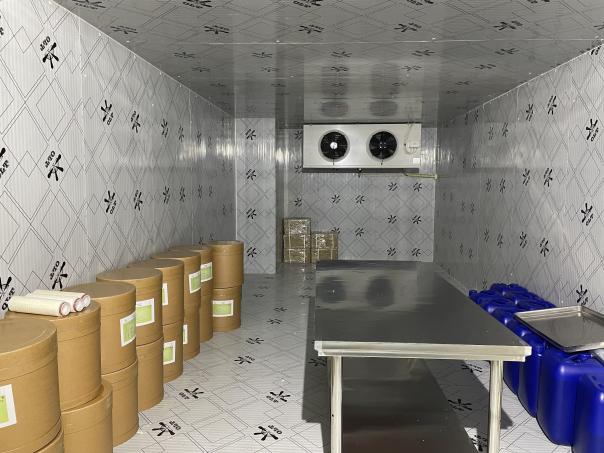
Why Long-Term Matcha Supply Fails After the First Batch
Most matcha supply problems appear after qualification, not during it. The first drum is usually the best drum a buyer will receive: it is produced, sampled and discussed while both sides are paying close attention. Drift begins when the relationship moves to routine purchase orders and the specification lives in an email thread rather than in a controlled document.
Three failure patterns account for most of that drift.
- Specification by grade name only. “Grade 1” or “Grade 3” is a commercial label, not a test method. Two suppliers can both ship a “Grade 2” matcha with different particle-size distributions, different colour targets and different moisture limits. A grade label without a mesh figure, a test panel and a colour reference leaves the buyer with nothing to reject against.
- Quiet shrinkage of the test scope. The qualification COA often carries heavy-metal and pesticide-residue results, while later COAs list only appearance, mesh and assay. Nothing in the product has necessarily changed; the paperwork has. For a buyer whose own quality system depends on that document, the gap is a real compliance exposure.
- Certificate drift. Certificates expire, certification scope changes, or the certificate on file covers a different production site than the one shipping the goods. A PDF in a shared folder is not evidence that the certificate is still valid on the shipment date.
The decision a buyer faces is therefore not “which matcha is best”. It is “which supplier can document the same matcha repeatedly, and which one will tell me in advance when something changes”. That is a documentation and process question, and it can be evaluated before a single container is booked.
The Matcha Market Context Buyers Are Actually Buying Into
Matcha has shifted from a café ingredient to a formulated ingredient. A market research estimate recorded in the verified data set for this article projects the global matcha market growing from USD 3.91 billion in 2026 to USD 5.35 billion by 2031, at a compound annual growth rate of 6.47%. Growth of that kind changes the buyer’s job: when matcha appears in functional beverages, fortified foods and capsule blends rather than only in a latte, the specification has to behave like an ingredient specification, not like a food-service one.
The regulatory backdrop reinforces the same point. FDA regulations require those who manufacture, package or hold dietary supplements to follow current good manufacturing practices that help ensure the identity, purity, quality, strength and composition of dietary supplements. That obligation does not stop at the buyer’s factory gate. A supplement manufacturer’s own GMP position depends on ingredient documentation it can defend during an audit, which is why mesh, test reports and certificates move from “nice to have” to contractual terms.
The supplier landscape is fragmented and its vocabulary is not standardised. Grade numbering is a supplier convention, not an industry one. Mesh is declared by some suppliers as a minimum pass rate and by others as an average particle size. Certificate sets vary from a full food-safety package to a single quality certificate. None of this makes the market unusable, but it does mean that a buyer comparing quotations is usually comparing three different definitions. The fix is to normalise the definitions before comparing commercial terms.
What a Documented Matcha Powder Specification Should Contain
Guanjie Biotech documents its matcha powder against four anchors: a grade range of Grade 1 to Grade 6; a green powder appearance; a technology method of hot air drying technology; a mesh specification of 100.0% pass 80 mesh; and a composition statement of 100% natural without additives. Each anchor answers a different buyer question, and each one needs a verification step attached to it.
Particle size: what “100.0% pass 80 mesh” commits the supplier to
Mesh is a sieve designation, and the number alone is not a specification. “100.0% pass 80 mesh” means that the entire tested sample passes through the stated sieve, with no retained fraction. That is a stronger commitment than “80 mesh”, which in commercial use often describes an average or a typical result. For a buyer, the practical questions are which sieve standard was used, how the sample was prepared, and how much material was tested. A pass rate measured on a small scoop and a pass rate measured on a full production lot are not the same claim.
Particle size matters downstream because it drives dispersion, mouthfeel, sedimentation in ready-to-drink formats, and blend uniformity in capsule and sachet production. It also affects how the powder presents visually, which is why mesh and colour are usually negotiated together rather than separately.
Grinding temperature: the low-temperature ultra-fine grinding question
Grinding is where heat damage is introduced. Fine grinding generates friction, friction generates heat, and heat degrades the colour and aroma compounds that buyers are paying for. A low-temperature, ultra-fine grinding route is therefore one of the first process questions an experienced buyer asks, particularly for beverage and premium food applications.
The process parameter documented for Guanjie Biotech’s matcha powder is hot air drying technology, paired with a 100.0% pass 80 mesh particle-size specification. Buyers who require a specific grinding-temperature ceiling should ask for that ceiling as a written process parameter and confirm it against the batch record, rather than inferring it from the grade name or from the word “ultra-fine”. A documented temperature limit and a documented mesh figure together give a buyer something to audit; an adjective does not.
Testing: heavy metals, pesticide residues and the rest of the panel
The testing question is not whether a supplier tests. It is which tests appear on which document, at what reporting limit, performed by which laboratory. Heavy-metal and pesticide-residue results are the two panels most often missing from a routine COA, and they are the two panels most likely to be requested by a buyer’s own quality team.
A workable long-term panel for matcha usually covers identity and appearance, mesh or particle-size verification, moisture, heavy metals, pesticide residues, and microbiological indicators, with the exact list agreed in writing between buyer and supplier. For each item, the buyer should ask four things: the test method, the reporting limit, the laboratory that performs the work, and whether the result is reported per batch or per lot. A per-lot statement covering several production batches is not the same evidence as a per-batch result tied to the drum being shipped.
Guanjie Biotech’s stated testing capabilities include HPLC, UV and GC testing, supported by an independent R&D centre and a 500 m² laboratory built to GMP and QS standards. Buyers should confirm directly which laboratory performs heavy-metal and pesticide-residue work for matcha and how those results are attached to the shipping batch.
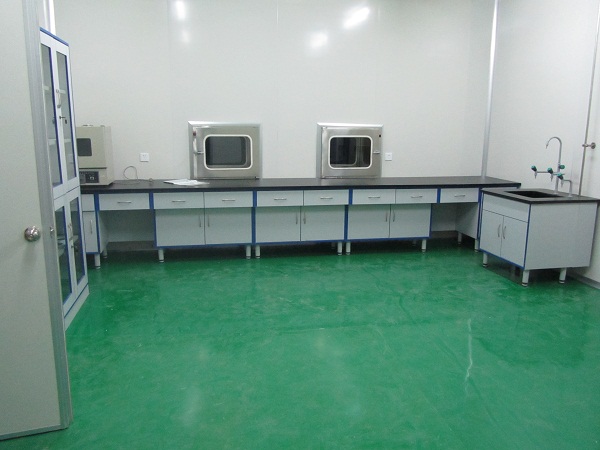
Certifications: ISO, Halal, Kosher and the HACCP question
The certifications listed for Guanjie Biotech are ISO, Halal and Kosher. These cover three different buyer needs: a quality-management baseline, religious dietary compliance for Halal markets, and Kosher compliance for Kosher-certified product lines. Each certificate should be checked for four attributes before it is accepted into a vendor file: the issuing body, the certificate number, the scope (which products and which production site), and the validity date.
HACCP is a separate food-safety management certification and is frequently added to buyer questionnaires in addition to ISO. It is not listed among the certifications stated in the available company information, so a buyer whose market or customer requires HACCP should request the certificate as a discrete document and verify it directly, rather than assuming that an ISO certificate covers it. The same discipline applies to any market-specific requirement: ask for the document, check the scope, check the date.
The manufacturing base behind the specification
Documentation is only as good as the site that produces it. Guanjie Biotech was founded in 2004 and operates a 7,000 m² manufacturing footprint that includes a 2,000 m² cGMP-standard clean workshop and a 500 m² laboratory. The company reports 40 employees, a 7-engineer R&D team, 16 national patents and a company-level annual output of 500 tons across its portfolio. It exports around 90% of its output to markets that include Germany, the Netherlands, the United Kingdom, Japan, South Korea, Australia, Canada, Mexico and the United Arab Emirates.
Two structural facts matter for a long-term matcha contract. First, Guanjie Biotech is a direct manufacturer with R&D and production capabilities rather than a pure trading company, and it collaborates with Northwest University and the Xi’an Branch of the Chinese Academy of Sciences on customised solutions from product development to large-scale manufacturing. Second, the company states a batch variation of ≤3% on its nutraceutical ingredient lines. A batch-variation figure is exactly the kind of number a buyer should test during qualification, because it is the parameter that determines whether month twelve looks like month one.

Six Steps to Qualify a Long-Term Matcha Supplier
Qualification is a sequence, not a checklist. Each step below produces a document that the next step depends on, which is why skipping ahead usually results in a specification that nobody can enforce.
Step 1 — Tie the grade to the application, not to the price list
Matcha powder is offered in six grades, Grade 1 to Grade 6, and the grade label alone does not define particle size, colour or test scope. Start by writing down what the application actually requires: a beverage needs dispersion and colour stability, a capsule blend needs flow and uniformity, a bakery application needs heat behaviour. Then map that requirement to a grade and record the mapping. Without this step, the rest of the specification has no reference point.
Step 2 — Fix the mesh figure and the sieve method in writing
Convert the commercial mesh claim into a testable statement: 100.0% pass 80 mesh, with the sieve standard, sample preparation method and sample size named in the specification. Ask the supplier to confirm that the figure applies to every production batch, not to a retained reference sample. If a buyer needs a narrower distribution for a ready-to-drink format, negotiate it now rather than after the first complaint.
Step 3 — Agree the test panel and the report format
List every test the buyer’s own quality system requires, including heavy metals and pesticide residues, and agree the reporting limit and the laboratory for each. Then agree the format: which certificate accompanies each shipment, which fields it must contain, and who signs it. A COA template agreed at qualification removes most of the arguments that otherwise appear at batch five.
Step 4 — Verify certificates at the source
Collect the ISO, Halal and Kosher certificates and check the issuing body, certificate number, product scope, site scope and validity date. If the buyer’s market requires HACCP or another food-safety document, request it explicitly and record whether it is available. Add a renewal reminder to the vendor file so that expiry is caught before a shipment, not after.
Step 5 — Compare three consecutive batches, not one sample
Samples are free from many suppliers, including Guanjie Biotech, and a sample is the right way to test the application. It is not the right way to test consistency. Request COAs from three consecutive production batches and compare mesh results, moisture, colour and test panel side by side. A supplier that states batch variation of ≤3% should be able to support that statement with data on request.
Step 6 — Set the release rules and the review cadence
Write down what happens when a batch fails: who is notified, within what period, and what evidence is required. Then set a review cadence — an annual specification review is common, with a documented change-notification clause covering process changes, site changes and certificate changes. This is the step that converts a purchase order into a supply relationship.
Use Cases: Where a Locked Matcha Specification Pays Back
Functional beverages and ready-to-drink formats. Dispersion and sedimentation are particle-size problems. A verified 100.0% pass 80 mesh specification, combined with a colour reference, reduces the reformulation work that follows an inconsistent delivery.
Capsules, tablets and powder sachets. Blend uniformity depends on particle-size distribution and flow. A mesh specification agreed in writing protects the fill weight and content uniformity targets the buyer has already validated.
Bakery, confectionery and desserts. Colour retention through heating is the constraint here, which is why the drying and grinding route belongs in the specification alongside mesh, not in a separate conversation.
Multi-ingredient and private-label formulas. Buyers building a formula rather than a single-ingredient product need more than one specification to behave. Guanjie Biotech’s portfolio also covers phosphatidylserine (PS), Alpha GPC and L-theanine for cognitive and nootropics formulations; NMN, spermidine, urolithin A and L-ergothioneine for longevity formulations; and CoQ10, shilajit and red yeast rice for core health categories. Phosphatidylserine, for example, is documented with CAS No. 51446-62-9 and a non-GMO soybean lecithin or sunflower lecithin source, with purity and phospholipid specifications to be confirmed against the batch COA rather than assumed from the product name.

Specification and Verification Comparison
The table below sets out what is documented, what is stated commercially, and what a buyer should still verify before signing a twelve-month agreement. The verification column is not a criticism of any supplier; it is the part of the specification that only the buyer can close.
| Specification item | Documented position | Buyer verification action |
|---|---|---|
| Grade range | Grade 1 to Grade 6 | Record the grade-to-application mapping in the specification |
| Appearance | Green powder | Agree a colour reference or photo standard per batch |
| Technology method | Hot air drying technology | Confirm any required grinding-temperature ceiling in the batch record |
| Particle size | 100.0% pass 80 mesh | Confirm sieve standard, sample preparation and per-batch reporting |
| Composition | 100% natural without additives | Obtain a written additive, carrier and allergen declaration |
| Certifications | ISO, Halal, Kosher | Check issuing body, certificate number, product and site scope, validity date |
| HACCP | Not listed among the stated certifications | Request separately if the destination market or customer requires it |
| Testing capability | HPLC, UV and GC testing; 500 m² laboratory built to GMP and QS standards | Confirm which laboratory runs heavy-metal and pesticide-residue tests |
| Batch consistency | Batch variation ≤3% stated on nutraceutical ingredient lines | Compare COAs from three consecutive production batches |
| Supplier type | Direct manufacturer with R&D and production capabilities | Site audit, business licence and export record review |
| Commercial terms | Competitive pricing and flexible MOQs stated | Request a written quotation against the fixed specification |

FAQ: Long-Term Matcha Powder Supply
Which certifications should a long-term matcha powder supplier provide?
A long-term matcha supplier should provide the certificates the destination market and the buyer’s own quality system require, and each certificate should be checked for issuing body, certificate number, product scope, site scope and validity date. Guanjie Biotech lists ISO, Halal and Kosher certifications. HACCP is a separate food-safety certification and is not listed among the certifications stated in the available company information, so buyers who require it should request the document explicitly. Certificates should be treated as living documents: put renewal dates into the vendor file so that expiry is identified before a shipment is booked.
Can a supplier hold 100.0% pass 80 mesh on every batch of matcha powder?
A 100.0% pass 80 mesh claim means the entire tested sample passes the stated sieve, which is a stronger commitment than an average particle size. It is only verifiable when the sieve standard, sample preparation and reporting frequency are agreed in writing. Guanjie Biotech documents 100.0% pass 80 mesh for its matcha powder and states batch variation of ≤3% on its nutraceutical ingredient lines. The practical check is to request COAs from three consecutive production batches and compare the mesh results before the long-term contract is signed, rather than relying on a single qualification sample.
How should buyers compare cost between matcha powder grades?
There is no universal price benchmark that applies across grades, because the commercial offer moves with the grade selected, the mesh specification, the test panel included, the packaging format and the MOQ. Comparing quotations that were built against different specifications produces a price difference that is really a specification difference. The reliable method is to fix the grade, mesh, test panel and packaging first, then request written quotations against that fixed specification. Guanjie Biotech lists competitive pricing and flexible MOQs among its commercial terms; the specific figures are quotation-specific and should be requested in writing so that bids can be compared on the same basis.
Can buyers test samples before committing to a long-term matcha contract?
Yes. Free samples are listed among Guanjie Biotech’s support capabilities, and a sample is the appropriate way to test how a matcha performs in the buyer’s own application — dispersion in a beverage, colour after baking, flow in a blend. Ask for the sample to be drawn from a production batch and accompanied by its COA, so that the sample and the paperwork can be checked together. A sample confirms application fit; the three-batch COA comparison in the qualification process confirms consistency, and both are needed before a twelve-month agreement.
How is a matcha specification kept stable over a twelve-month supply contract?
Stability comes from three written mechanisms: release rules that define what happens when a batch falls outside specification, a change-notification clause covering process, site and certificate changes, and an annual specification review. Alongside those, buyers should agree a document cadence — which certificate and which test results accompany every shipment — so that the paperwork does not quietly shrink after qualification. Guanjie Biotech reports a company-level annual output of 500 tons, a 2,000 m² cGMP-standard clean workshop and a 500 m² laboratory, and supports ongoing supply dialogue through its technical and sales contacts. Buyers can start that dialogue by requesting the current matcha specification sheet, a production-batch sample and a written quotation at info@gybiotech.com.
Conclusion: Lock the Documents, Then Lock the Volume
Long-term matcha supply holds together when four things are documented and reviewed: a particle-size commitment with a method behind it, a drying and grinding route with any temperature ceiling written into the batch record, a test panel that includes heavy metals and pesticide residues at an agreed reporting limit, and a certificate set whose scope and validity are checked rather than filed. Grade names, mesh figures and certificate logos are all easy to put in a brochure; the work is in making them enforceable.
Guanjie Biotech’s documented position gives buyers a starting point: Grade 1 to Grade 6 matcha powder, green powder, hot air drying technology, 100.0% pass 80 mesh, 100% natural without additives, produced by a direct manufacturer founded in 2004 with ISO, Halal and Kosher certifications, HPLC, UV and GC testing capability, and a stated batch variation of ≤3% on its nutraceutical ingredient lines. Each of those statements becomes useful only when it is matched to a verification step in the buyer’s own qualification file.
Request the Matcha Specification, Sample and Quotation
Guanjie Biotech supplies matcha powder and a broader nutraceutical ingredient portfolio to supplement, food and beverage manufacturers. Share your target grade, mesh requirement, test panel and annual volume, and the team will respond with the current specification sheet, a production-batch sample and a written quotation.
Email: info@gybiotech.com | Tel / WhatsApp: +86 150-2999-3470 | Website: guanjiebio.com
Download the full product portfolio: Guanjie Nutraceutical Ingredients Catalogue (PDF)
Have Questions or Need More Details?
Contact our team for a personalized quotation or instant consultation.
Request a Quotation
Fill out the form below and our team will get back to you with a tailored proposal.
WhatsApp Direct Chat
Prefer to chat in real-time? Message us on WhatsApp for instant assistance & quick answers.
- Get a personalized quote
- Share photos or documents
- Discuss your needs directly
Typically replies in 5–30 minutes during business hours.