
Managing pH-Driven Color Shifts in Blue Butterfly Pea Beverages: A Formulation Fix
A beverage team adds blue butterfly pea flower powder to a clear base and expects a stable blue. After acid adjustment, flavor addition, or a thermal process, the same powder reads purple, violet, or pink. The batch may look inconsistent even when the powder specification has not changed. The issue is usually not a single bad lot. It is an uncontrolled formulation variable: pH.
Introduction: Why Blue Butterfly Pea Color Moves
Blue butterfly pea flower powder is used for botanical color in beverages because it contains water-soluble anthocyanins. Those pigments are responsive to pH. The powder can therefore show a blue-to-purple shift as the beverage moves from one acid-base condition to another. This is a documented behavior of the ingredient, and it should be treated as a formulation input rather than as a defect to be corrected with more powder.
Within the broader nutraceutical ingredients category, botanical powders are often selected for clean-label positioning, solubility, and documentation. Blue butterfly pea flower powder fits that pattern: the documented product is a gray blue powder produced by hot air drying technology, with 100.0% passing 80 mesh and 100% natural without additives. Those attributes support dispersion and label simplicity, but they do not make the anthocyanin color pH-independent. The formulator still has to decide which pH window the product will hold and what color that window should produce.
Problem Definition: The Color Is Not Off-Spec; the pH Is Uncontrolled
pH-driven color shift becomes a formulation problem when the finished beverage has no pH target, no color acceptance range, and no documented link between the two. Buyers then compare batches by eye, reject lots that are chemically consistent, or over-correct with more powder. None of these actions fixes the root cause.
The powder's documented behavior is the starting point: blue butterfly pea flower powder shows a blue-to-purple shift with pH changes and contains water-soluble anthocyanins. That means the color response is expected. The formulator's job is to decide which pH window the product will hold and what color that window should produce. Without that decision, every batch becomes a visual negotiation.
The problem also affects supplier qualification. A buyer may request a blue powder and then judge the finished beverage against a blue reference. If the beverage is formulated at a more acidic pH, the finished color may be purple even when the incoming powder meets its specification. The mismatch is in the application brief, not necessarily in the material.
Industry Background: Botanical Color in Functional Beverage Development
Functional beverage development increasingly uses botanical powders to support clean-label color and botanical positioning. Within the nutraceutical ingredients category, plant-derived powders are selected for documentation, solubility, and process fit, not only for appearance. Blue butterfly pea flower powder is one example: the documented product is a gray blue powder produced by hot air drying technology, with 100.0% passing 80 mesh and 100% natural without additives.
Those attributes matter for formulation. A fine powder passing 80 mesh can disperse more evenly in aqueous systems, while the absence of additives keeps the label simple. Neither attribute removes the pH effect. The anthocyanins are water-soluble, so they move with the water phase and respond to the beverage's acid-base balance. The practical question is therefore not whether the color changes, but whether the formula and the supplier specification define how much change is acceptable.
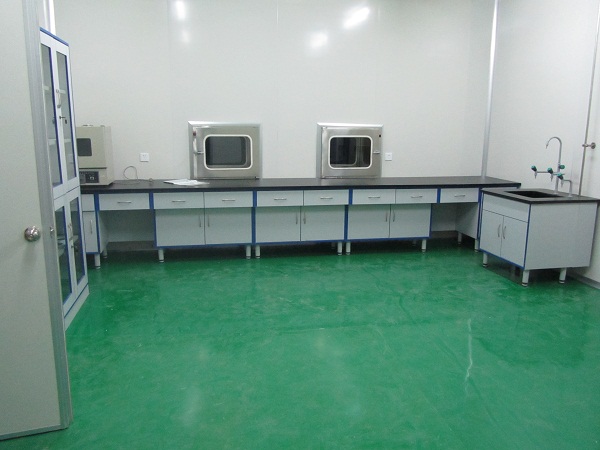
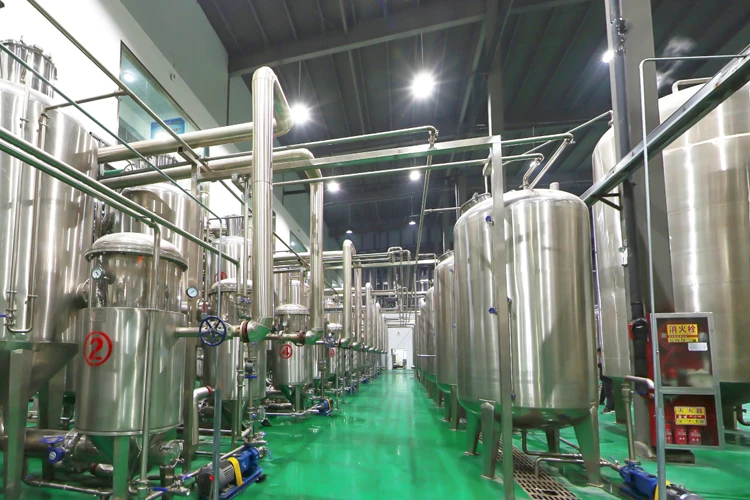
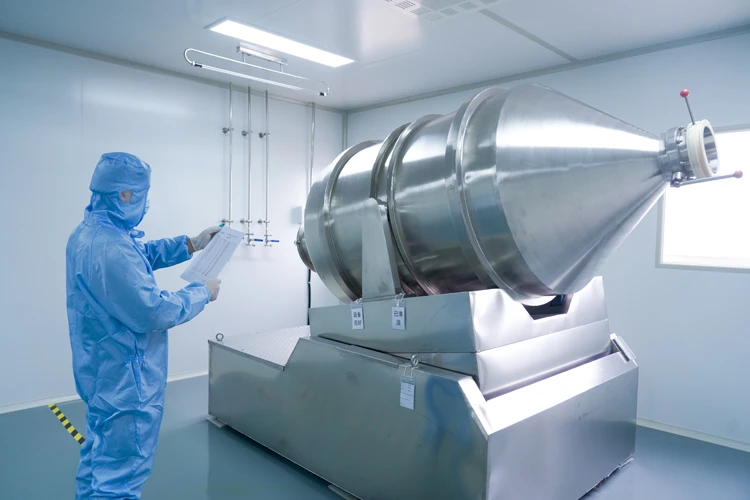
This is also where long-term supply discipline matters. A beverage brand may approve a pH target and a color range, but repeatability depends on incoming batch consistency, COA review, and a supplier relationship that can support recurring orders. Guanjie Biotech is a manufacturer of plant extracts and nutraceutical ingredients with a 7,000-square-meter facility, a 2,000-square-meter cGMP-standard clean workshop, and a 500-square-meter advanced laboratory. The company reports annual production capacity of approximately 500 tons and monthly production capacity of 30 tons, supporting scalable powder ingredient orders.
Detailed Solution: Use the Documented pH Behavior to Set a Target
The fix is a specification-led approach. Do not ask the powder to behave like a pH-stable synthetic color. Instead, use the documented blue-to-purple shift to set a pH target and an application expectation. The following actions convert the behavior into a workable formulation brief.
Accept the shift as a specification input
Write the pH-color relationship into the product specification. The specification should state the target pH range, the reference color at that pH, and the acceptable visual or instrumental color range. This prevents the common error of approving a powder against a blue reference when the finished beverage is designed to sit in a more acidic, purple-shifted range.
Build a pH-color map for the final beverage
Prepare a small trial with the same powder dose, water, sweetener, acidulant, flavor, and process sequence intended for production. Adjust pH across a practical range and record the color at each point. The map does not need to be complex; it needs to be specific to the final matrix. A clear water system, a cloudy juice system, and a powdered mix can produce different visual results even at the same pH because background color, haze, and dilution change perception.
Match powder specification to the application
Use the documented powder attributes as selection criteria. The source is butterfly pea; the appearance is gray blue powder; the processing method is hot air drying; the mesh is 100.0% pass 80 mesh; and the product is 100% natural without additives. For a beverage, mesh and dispersion matter because they affect mixing time and sediment risk. For a clean-label claim, the additive-free statement matters, but it still needs batch-level confirmation through a COA.
Qualify a long-term supplier for repeatable batches
pH control reduces formula variability, but it does not replace supplier control. For recurring beverage production, Guanjie Biotech supports long-term supplier partnerships with COAs, batch traceability, and quality agreements. These are practical controls: the COA confirms the batch against the agreed specification, batch traceability links the delivered powder to production records, and the quality agreement defines sampling and acceptance before the next order is released.
Certifications such as ISO, Halal, and Kosher support qualification discussions where the target market requires them; they do not replace the batch COA or the formulator's own pH trial. The buyer should also confirm the fields that affect dispersion and appearance, including mesh and processing method, so that the trial material and the production material are described in the same way.

Step-by-Step Breakdown: A Formulation Fix from Bench to Batch
- Define the target pH and the desired color in words. Decide whether the product should read blue, blue-violet, or purple. Record the pH range that produces that reading.
- Fix the powder dose and the base formula for the trial. Change only pH in the first trial so the color response is not confused with sweetener, flavor, or solids effects.
- Run a pH-color map. Measure pH and record color at each point. Use the same light source and background for visual comparison, or use an instrument if one is available.
- Choose the acidulant and buffering approach. Select the acid system that holds the target pH through processing and shelf life. Confirm that the acidulant does not introduce its own color or flavor conflict.
- Test the thermal process and storage conditions. Heat treatment, cooling, and time can change both pH and perceived color. Recheck the pH-color relationship after the process, not only before it.
- Lock the specification and acceptance criteria. Write the powder specification, the target pH range, the reference color, and the batch COA requirements into the development record.
- Qualify the supplier against the locked specification. Request a sample with COA, confirm batch traceability, and agree on quality terms for recurring orders.
Use Cases: Where pH Targeting Prevents Color Surprises
Clear functional water and sparkling beverages
In clear systems, small pH changes are more visible because there is little background color to mask the shift. Set the pH target first, then choose the powder dose. If the formula requires higher acidity, plan for a purple-leaning color rather than forcing a blue claim.
Powdered drink mixes
For a powder mix, the relevant pH is the pH after reconstitution, not the pH of the dry blend. Validate the powder in the reconstituted beverage and state the preparation method on the technical brief. The 80 mesh pass rate supports dispersion, but the final color still depends on the water and acidulant used by the consumer.
Ready-to-drink teas and botanical blends
Tea solids and botanical extracts can add their own color and acidity. Test blue butterfly pea flower powder alongside the full blend. A color that looks correct in water may read differently in a tea base. The documented water-soluble anthocyanins will follow the aqueous phase, so pH and dilution should be checked together.
Long-term retail programs
For recurring orders, the formulation fix must survive batch changes. Keep a retained reference sample, a pH-color record, and a COA file. A supplier that supports batch traceability and quality agreements makes this control system easier to maintain. Guanjie Biotech supports long-term supplier partnerships with COAs, batch traceability, and quality agreements for recurring orders.
Comparison Table: Documented Powder Attributes and Formulation Decisions
| Documented attribute | Verified detail | Formulation decision it supports |
|---|---|---|
| Botanical source | Butterfly pea | Confirm identity and the expected anthocyanin color behavior. |
| Appearance | Gray blue powder | Set a visual reference for incoming material; final beverage color still depends on pH. |
| Processing method | Hot air drying technology | Describe the production route in the specification and compare it with the trial material. |
| Mesh | 100.0% pass 80 mesh | Plan dispersion, mixing time, and sediment checks in the beverage base. |
| Additive status | 100% natural without additives | Support clean-label positioning; verify each batch through the COA. |
| Color behavior | Water-soluble anthocyanins; blue-to-purple shift with pH changes | Set a pH target and a color acceptance range before scale-up. |
| Annual production capacity | Approximately 500 tons | Assess long-term supply fit for recurring orders. |
| Monthly production capacity | 30 tons | Assess scalable powder ingredient orders and planning discussions. |
| Certifications | ISO, Halal, Kosher | Support qualification discussions where the target market requires them. |
FAQ: pH, Documentation, Samples, and Supply
What documentation should a beverage manufacturer request for blue butterfly pea flower powder?
Request a product specification sheet, a batch certificate of analysis, and confirmation of the fields that affect the application: appearance, mesh, processing method, and additive status. For blue butterfly pea flower powder, the documented specification includes gray blue powder, hot air drying technology, 100.0% pass 80 mesh, and 100% natural without additives. Where the target market requires them, request current certification evidence such as ISO, Halal, or Kosher. Guanjie Biotech supports long-term supplier partnerships with COAs, batch traceability, and quality agreements for recurring orders.
Can blue butterfly pea flower powder be used in water-based beverages?
Yes. The powder contains water-soluble anthocyanins, so it is suited to aqueous beverage systems. The practical limit is pH: the same powder can read blue, blue-violet, or purple as pH changes. Validate the powder in the final beverage matrix and set a pH target before fixing the color claim.
How does pH targeting affect formulation cost?
pH targeting reduces avoidable cost by preventing over-dosing and batch rejection caused by color mismatch. It does not remove the need for a trial. The commercial benefit comes from fewer reformulation loops and a clearer acceptance standard, not from a specific price assumption.
Can buyers request a sample for a pH trial?
Yes. A sample should be requested with the specification sheet and COA so the trial uses documented material. Test the sample at the intended pH range and in the final matrix. Sample and quotation discussions can be directed to Guanjie Biotech at info@gybiotech.com or WhatsApp +86 150-2999-3470.
What supply factors should be confirmed for recurring orders?
Confirm MOQ, lead time, packaging, batch size, and acceptance criteria in writing. Guanjie Biotech reports annual production capacity of approximately 500 tons and monthly production capacity of 30 tons, supporting scalable powder ingredient orders. For recurring orders, the company supports long-term supplier partnerships with COAs, batch traceability, and quality agreements. A current quotation and sample schedule should be confirmed directly with the supplier.
Conclusion: Fix the pH Target, Not Just the Color
pH-driven color shift in blue butterfly pea beverages is a formulation behavior. The powder contains water-soluble anthocyanins and shows a blue-to-purple shift as pH changes. Treating that behavior as a defect leads to batch chasing. Treating it as a specification input leads to a controlled product.
Set the pH target, build a pH-color map in the final matrix, lock the powder specification, and qualify a supplier that can repeat the batch. Guanjie Biotech supplies blue butterfly pea flower powder within a broader nutraceutical ingredients portfolio and supports long-term partnerships with COAs, batch traceability, and quality agreements. For a sample, quotation, or specification review, contact info@gybiotech.com or use the brochure link below.
Have Questions or Need More Details?
Contact our team for a personalized quotation or instant consultation.
Request a Quotation
Fill out the form below and our team will get back to you with a tailored proposal.
WhatsApp Direct Chat
Prefer to chat in real-time? Message us on WhatsApp for instant assistance & quick answers.
- Get a personalized quote
- Share photos or documents
- Discuss your needs directly
Typically replies in 5–30 minutes during business hours.