
Matcha Powder Technical Guide: Low-Temperature Grinding, 80-Mesh Pass Rate, and Test Controls
Nutraceutical ingredients · specification review
Quick answer: A matcha powder specification is only as good as the items a buyer can verify in writing. Four of them carry most of the technical risk: the drying and grinding conditions behind the powder, the particle-size pass rate stated against a defined sieve, the additive and non-GMO position, and the contaminant panels reported in a per-batch certificate of analysis (COA). Guanjie Biotech states matcha powder in grades 1 to 6, produced with hot air drying technology, at 100.0% pass 80 mesh, and 100% natural without additives. A specification review should start from those statements and then test each one against documents.
Matcha is sold inside the nutraceutical ingredients category, but it is qualified like a food powder. Colour, aroma and suspendability win the first order; documentation decides every order after that. The gap between the two is where most sourcing problems start, because a supplier summary sheet describes an intention and a COA describes a lot.
This guide is written for buyers at the decision stage: formulators, procurement managers and brand owners who already know they want a green tea powder and now need to separate one grade, one process and one documentation set from another. It explains what low-temperature grinding has to prove, what an 80-mesh pass rate does and does not establish, and which test controls should appear before a purchase order is released.
Problem Definition: Why Matcha Specifications Are Hard to Compare
The difficulty is not that suppliers publish too little information. It is that the information they publish is rarely stated in the same units, so two specification sheets can look complete and still be incomparable.
Four specific problems cause that.
- Grade labels are supplier-side schemes. Grade 1 to Grade 6 organises a supplier's own inventory. It does not translate between suppliers, and it does not tell a buyer which harvest, colour band, sieve result or test panel sits behind a given grade. The grade number has to be mapped to documented attributes before it means anything commercially.
- Process claims arrive without parameters. Low-temperature grinding is a meaningful process control, but as a phrase on a web page it carries no information. Without a temperature band, a residence time and a record, the buyer cannot tell a genuine process control from a description of ordinary milling.
- Sieve statements are read as particle-size statements. A pass rate answers one narrow question: how much of the lot went through a defined sieve. Buyers routinely read it as a full particle-size distribution, then discover grit in a ready-to-drink application that the specification never promised to prevent.
- Contaminant testing is assumed rather than specified. Tea plants take up elements from the soil they grow in, and pesticide-residue requirements differ by destination market. A COA that reports appearance and mesh but not the contaminant panels leaves the importer holding a risk the specification never addressed.
Because a buyer cannot observe the mill or the dryer, the only workable solution is to convert every process claim into a document request. That is the logic behind the rest of this guide.
Industry Background: Demand Is Rising Faster Than Specification Literacy
Commercial market research included in the verified data set for this review projects the global matcha market growing from USD 3.91 billion in 2026 to USD 5.35 billion by 2031, a compound annual growth rate of 6.47%. Growth of that order pulls new suppliers into the category, and new suppliers mean more specification sheets written by people who have not yet been asked hard questions by an importer.
Regulatory expectations have moved in the same direction. FDA regulations require those who manufacture, package or hold dietary supplements to follow current good manufacturing practices intended to help ensure the identity, purity, quality, strength and composition of the product. That requirement does not certify a supplier, but it defines what a buyer is entitled to ask for: evidence of identity, evidence of purity, evidence of composition, and a quality system that produces both consistently.
On the demand side, the NIH Dietary Supplement Label Database catalogs information printed on labels of dietary supplement products sold in the United States, including ingredient names and forms, declared amounts, claims and warnings. For a brand owner, that database is a practical benchmarking tool: it shows how competing products describe a green tea powder on pack, and therefore which specification fields a supplier has to be able to support with documentation.
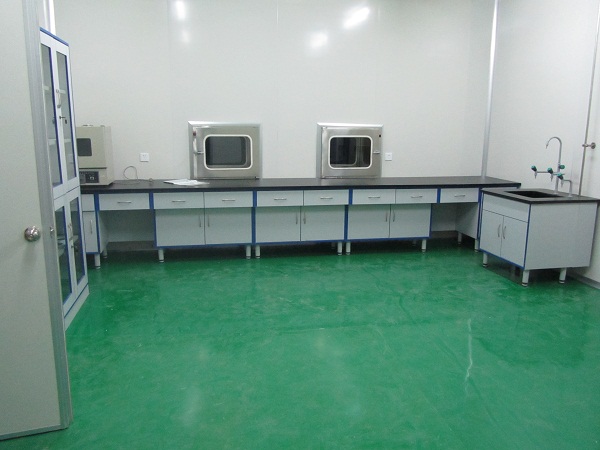
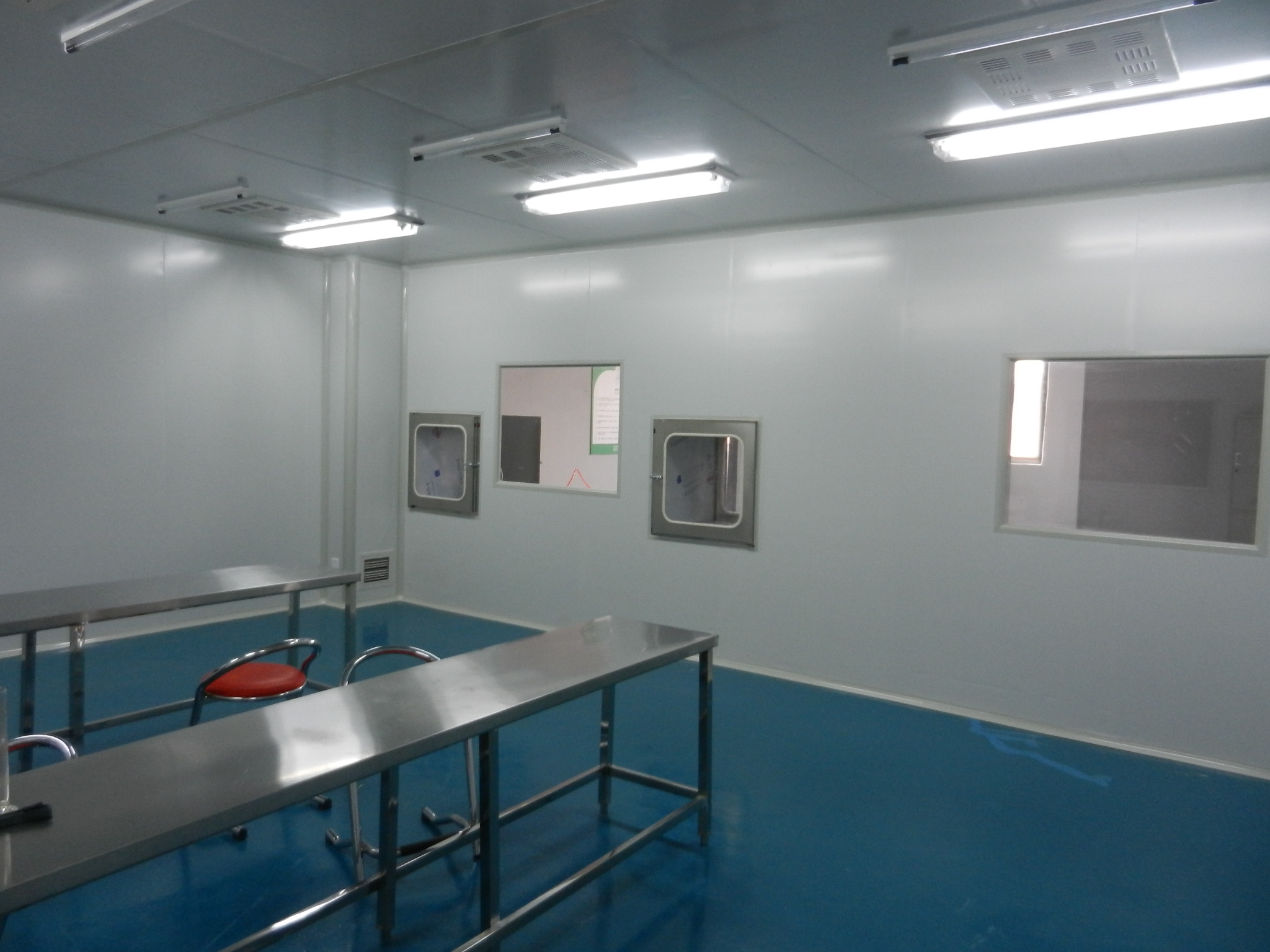
Supplier scale matters as well, because a specification is only useful if it can be repeated across lots. Guanjie Biotech, formally Shaanxi Guanjie Biotech, is a China-based manufacturer of high-purity natural plant extracts, premium fruit powders and specialised chemical raw materials, founded in 2004. The company operates a 7,000 m² site that includes a 2,000 m² cGMP-standard clean workshop and a 500 m² laboratory whose construction complies with GMP and QS standards, with a team of 40 employees, 7 R&D engineers and an annual output of 500 tons. It states ISO, Halal and Kosher certification, holds 16 national patents, and reports an export ratio of 90% across markets that include Germany, France, Italy, the Netherlands, Japan, South Korea, Canada, Brazil, Mexico, Australia, the United Arab Emirates and Saudi Arabia. The company also collaborates with Northwest University and the Xi'an Branch of the Chinese Academy of Sciences.
What the public record does not provide. Comparable third-party specification and residue data for individual matcha suppliers are not publicly available in the verified data set used here. In practice that means supplier qualification rests on documents the buyer requests directly: the specification sheet, the batch COA, certificates with defined scope, and where necessary an audit. Treat any published summary, including the one in this article, as a starting point for that request rather than a substitute for it.
Detailed Solution: The Six Technical Control Points
The review below follows the order in which the controls affect the powder: how the leaf is dried, how it is milled, what comes out of the sieve, what is added or not added, what is tested, and what is certified.
1. Low-Temperature Grinding: What the Claim Has to Prove
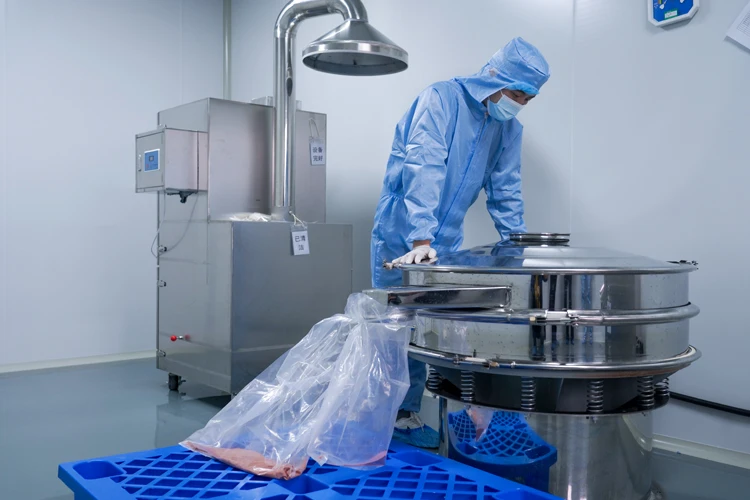
Grinding is where a green tea leaf becomes a powder, and it is also where a well-dried leaf can be damaged. Milling transfers mechanical energy into the material, and a proportion of that energy becomes heat. The finer the target particle, the more energy is required and the more heat has to be managed. Sustained heat exposure during milling affects the volatile fraction and the colour of the finished powder, which are the two attributes a beverage or capsule customer notices first.
Low-temperature grinding is therefore a legitimate process control rather than a marketing phrase. To be verifiable, it needs four items in writing: the mill type, the temperature band at the grinding zone, the residence time in the mill, and whether that temperature is recorded per lot. A supplier who can produce a lot-level record is describing a controlled process. A supplier who cannot is describing an intention.
Guanjie Biotech's stated processing entry for matcha powder is hot air drying technology, with a particle-size statement of 100.0% pass 80 mesh. Grinding temperature setpoints sit outside that published summary, so they belong in the written process-parameter request rather than in an assumption. Ask for the temperature band and the record format before approving a first lot, and ask again on the second order: a process control that is not recorded is a process control that drifts.
2. Hot Air Drying and Moisture Control
Drying is what makes a leaf stable, millable and storable. Hot air drying is the technology method Guanjie Biotech states for matcha powder, and the same method is stated for its blue butterfly pea flower powder, which suggests a shared drying platform across the botanical powder range rather than a single-product exception.
For a buyer, the questions that matter are the moisture limit, the drying temperature band, whether drying runs in batch or continuously, and how moisture is verified in the released COA. Moisture is not part of the published specification summary for matcha powder, so it has to be requested explicitly. That request is worth making early: moisture sits behind powder flow, caking behaviour during storage, and the accuracy of any dosing step downstream.
3. The 80-Mesh Pass Rate: What 100.0% Actually Establishes
A mesh statement is a sieve statement. When a specification says 100.0% pass 80 mesh, it means the entire lot passed through an 80-mesh sieve under the supplier's stated test conditions. That is a genuine and useful control, because it places a ceiling on oversize material.
It is not a particle-size distribution. A 100.0% pass rate does not establish the median particle size, the shape of the distribution below the sieve cut-off, bulk density, or suspendability in liquid. It also does not by itself establish that a powder is ultra-fine; that word only becomes technical once a distribution and a measurement method sit behind it.
Five questions make the statement comparable across suppliers:
- Which sieve standard is used, and is the mesh count stated against it?
- What sample size is taken, and is screening performed dry or wet?
- Is the pass rate reported per lot in the COA, or only in the general specification?
- What happens to the oversize retainer — is it discarded or re-milled, and is that declared?
- Can the supplier report any distribution data below the sieve cut-off if the application is sensitive to fines?
The commercial reason for asking is straightforward. In a powder sachet, oversize particles show up as uneven dosing and visible specks. In a ready-to-drink beverage, they show up as sediment and grit. In both cases the buyer discovers the issue at the filling line, which is the most expensive place to discover it.
4. Additive and Non-GMO Positioning
Guanjie Biotech states its matcha powder as 100% natural without additives. That is a formulation statement, and it is a specific one: no carrier, no anti-caking agent, no colour and no flowing agent added to the powder. For a clean-label brand, this is often the deciding attribute, because it determines what the finished-product label can say.
Non-GMO is a different statement and needs a different document. The published matcha summary states the additive position, not a non-GMO declaration. Where source control is part of the specification, the portfolio shows what that looks like in practice: Phosphatidylserine (CAS No.: 51446-62-9) is listed with non-GMO soybean lecithin or sunflower lecithin as its source parameter. A buyer who needs an equivalent non-GMO statement for matcha powder should request it as a separate signed document, and should confirm whether it applies to the leaf supply, the processing aids, or both.
5. Heavy-Metal and Pesticide-Residue Testing: Two Panels, Not One
Contaminant control in a green tea powder involves two independent panels, and conflating them is a common sourcing error.
Elemental panel. The soil a tea plant grows in determines part of the elemental profile of the leaf, and that profile does not disappear during drying or milling. The elemental panel your destination market requires should be defined in the specification and reported in the COA, with the elements, the limits and the analytical method all named.
Pesticide-residue panel. Residue requirements are market-specific, so the panel has to be agreed rather than assumed. Ask which compounds are covered, which method is used, at what reporting level results are given, and whether the panel is run on every lot or on a defined frequency.
Guanjie Biotech's stated testing capability covers HPLC, UV and GC methods, supported by its 500 m² laboratory, and its quality control is described as supported by HPLC. GC is the relevant technique family for volatile residues, while HPLC and UV are used for less volatile analytes. The practical step for a buyer is to confirm in writing which panels are routine per lot for matcha powder and which are periodic, because a capability statement and a lot-level release test are not the same thing.
6. Documentation Set: ISO, HACCP, Kosher and HALAL
Certificates answer a different question from a COA. A COA describes one lot; a certificate describes a system or a conformity status that applies across lots, within a defined scope. Guanjie Biotech states ISO, Halal and Kosher certification, and its statement of difference cites strict quality control with those certifications, supported by HPLC.
HACCP-based food safety documentation is a separate request. It is not listed among the certifications Guanjie Biotech states publicly, so a buyer whose market or customer requires it should ask for the plan explicitly and confirm three things: whether the system is certified or internally maintained, what product scope it covers, and how it links to the release testing described on the COA.
For certificates in general, check the issuing body, the certificate number, the validity period and — most often overlooked — the scope. A certificate that covers one production line or one product family does not automatically cover the grade you are buying.

Step-by-Step Breakdown: A Seven-Step Specification Review
The sequence below is designed for a decision-stage buyer who has already selected a product category and now needs to qualify a grade and a supplier. Each step produces a document, which is the point: an undocumented step cannot be defended later.
- Fix the grade and the end use in writing. State the application — capsule, sachet, ready-to-drink beverage, bakery, confectionery or nutricosmetics — and the grade you are evaluating. Because grade labels such as Grade 1 to Grade 6 are supplier-side schemes, require the supplier to map the grade to documented attributes rather than accepting the number alone.
- Request the current specification sheet. Confirm that it states the technology method, the mesh pass rate, the additive position and the appearance. For matcha powder, the stated entries are hot air drying technology, 100.0% pass 80 mesh and 100% natural without additives. Anything material to your application that is missing from the sheet — moisture, grinding temperature, distribution data — becomes an explicit written request.
- Request the batch COA and read the panel, not the header. Check that identity, mesh result, moisture, microbiology and the contaminant panels you specified are reported for that lot. A COA issued against a generic product code rather than a lot number is not lot-level evidence.
- Request certificates and confirm scope. Obtain ISO, Halal and Kosher documentation as applicable, plus HACCP-based food safety documentation if your market requires it, and verify issuing body, number, validity and product scope for each.
- Qualify the site, not only the sample. Production environment and laboratory capability determine whether a good first lot can be repeated. Relevant indicators include the size and standard of the clean workshop, the laboratory area and its compliance basis, and the testing methods stated. Guanjie Biotech cites a 2,000 m² cGMP-standard clean workshop, a 500 m² laboratory built to GMP and QS standards, HPLC, UV and GC testing, and a 7-engineer R&D team — all of which are statements to verify against certificates and, where the order justifies it, an audit.
- Validate with a sample and retain a reference. Test the powder in your own formulation before committing: check dispersion, colour in application, taste contribution and flow on your equipment. Retain a sealed reference sample from the approved lot so that future deliveries can be compared against something physical rather than a description.
- Lock the supply terms. Agree MOQ, packaging, lead time per grade and quantity, and the batch-to-batch variation you will accept. Guanjie Biotech cites batch variation of 3% or less, a 500-ton annual output, flexible MOQs and competitive pricing, with complete batch COAs and technical formulation support. Put the variation tolerance in the purchase agreement, because it is the clause that governs whether a repeat order is a reorder or a re-qualification.
Decision rule: a supplier passes this review when every claim on the specification sheet can be matched to a document you hold — process parameters in writing, pass rate in the COA, additive position on the specification, contaminant panels in the lot record, and certificates with confirmed scope. A supplier who answers well verbally but supplies documents slowly has not passed.
Use Cases: Where the Specification Actually Bites
Matcha powder is used across dietary supplements, health food, beverages and cosmetics, and each application puts pressure on a different control point.
- Hard capsules, tablets and softgels. The dominant requirement is consistent fill weight and acceptable flow, so moisture control and batch-to-batch uniformity matter more than colour brightness. A stated batch variation of 3% or less is the relevant claim to verify here.
- Powder sachets and stick packs. Dosage accuracy depends on the absence of oversize particles; this is where a documented 100.0% pass 80 mesh result earns its place, provided it is reported per lot.
- Functional and fortified beverages, including ready-to-drink formats. Suspension and sediment are the failure modes. A pass rate limits oversize grit, but a buyer formulating a clear or lightly coloured drink should also ask what distribution data exists below the sieve cut-off.
- Bakery, dairy and plant-based alternatives, confectionery and snacks. Heat exposure during processing can shift colour and flavour, so the drying method and the additive position are the first items to review. A 100% natural without additives statement simplifies the finished-product label.
- Nutricosmetics and personal care. Colour consistency between lots is the visible quality signal, which makes drying control and lot-level COA review more important than sieve data.
- Sports and performance nutrition. Combination products stack a green tea powder with other actives, so the additive-free position reduces the risk of an undeclared carrier interacting with the rest of the formula.
Comparison Table: Specification Fields Across Powder Categories
The table below places the matcha powder specification next to other powder categories in the same portfolio, using only stated product facts. The purpose is not to rank the products but to show how differently the same specification fields are populated — which is why a single generic questionnaire rarely works across a multi-ingredient purchase.
| Powder category | Stated processing / technology method | Stated particle size | Stated additive position | Stated test method |
|---|---|---|---|---|
| Matcha powder (Grade 1–Grade 6) | Hot air drying technology | 100.0% pass 80 mesh | 100% natural without additives | Not stated in the published summary; confirm panels on the batch COA |
| Blue butterfly pea flower powder | Hot air drying technology | 100.0% pass 80 mesh | 100% natural without additives | Not stated in the published summary; confirm panels on the batch COA |
| Shilajit Extract Powder | Not stated | 100% pass 80 mesh | Not stated | Titration method (fulvic acid ≥50%) |
| Mushroom Extract Powder | Not stated | Not stated | Not stated | HPLC, UV (assay 30%–80%) |
| Ferulic Acid Powder | Not stated | Not stated | Not stated | HPLC (98%) |
Comparison built from stated product facts for Guanjie Biotech powder categories. Blank fields indicate that the published summary does not state the item, not that the item is uncontrolled; each must be requested in writing.
A second table is useful because the documentation set is where most first-time buyers under-ask.
| Document | Question it answers | Position to confirm |
|---|---|---|
| Batch COA | What was released for this specific lot? | Request per lot; confirm mesh, moisture, microbiology and the contaminant panels you specified |
| Specification sheet | What is the product designed to be? | Confirm technology method, mesh statement and additive position are on the document, not only in email |
| ISO certificate | Is there a certified management system? | ISO certification is stated by Guanjie Biotech; verify number, validity and product scope |
| Kosher certificate | Does the material meet kosher requirements? | Kosher certification is stated; verify scope for the specific grade |
| HALAL certificate | Does the material meet halal requirements? | Halal certification is stated; verify issuing body and validity |
| HACCP-based food safety documentation | How are biological, chemical and physical hazards controlled? | Not listed among the publicly stated certifications; request the plan explicitly and confirm scope |
| cGMP evidence | Are manufacturing controls consistent with supplement GMP expectations? | FDA requires cGMP for those who manufacture, package or hold dietary supplements; Guanjie Biotech cites a 2,000 m² cGMP-standard clean workshop |
Documentation matrix. Each row is a separate request; holding one document does not substitute for another.
Cross-Check: Does the Same Review Work for Other Ingredient Powders?
It does, with the panels changed. Buyers evaluating which phosphatidylserine powder manufacturers offer better purity and phospholipid specifications are applying the same logic to a different product, and the answer is decided by the same kind of evidence rather than by the word purity alone.
For phosphatidylserine, three items do the work. First, the stated specification and assay method — Guanjie Biotech lists Phosphatidylserine under CAS No. 51446-62-9 with HPLC as the stated test basis for its quality control. Second, the source parameter, which is stated as non-GMO soybean lecithin or sunflower lecithin; source is part of the specification, not a footnote. Third, the phospholipid profile and the batch COA behind a specific lot. Applied to matcha powder, the same three-item structure becomes process parameters, sieve result and contaminant panels — which is why a single qualification template can serve a multi-ingredient purchase once the fields are set per product.
Frequently Asked Questions
What documents should accompany a matcha powder lot?
A batch COA is the core document: it should report the lot number, identity, the mesh result, moisture, microbiology and the contaminant panels agreed in the specification. Alongside it, request the current specification sheet covering technology method, particle size and additive position, plus ISO, Halal and Kosher certificates as applicable, and HACCP-based food safety documentation if your market requires it. Verify the issuing body, certificate number, validity and product scope on each certificate. For US-bound supplement use, FDA requires manufacturers, packagers and holders to follow current good manufacturing practices intended to help ensure identity, purity, quality, strength and composition, so the documentation set should be consistent with that expectation.
Does a 100.0% pass 80 mesh result mean the powder is ultra-fine?
No. A 100.0% pass 80 mesh statement means the entire lot passed through an 80-mesh sieve under the supplier's test conditions, which places a ceiling on oversize material but does not describe the particle-size distribution, the median particle size, bulk density or suspendability. It also does not by itself establish that a powder is ultra-fine. To make the figure comparable, ask which sieve standard is used, the sample size, whether screening is dry or wet, whether the pass rate is reported per lot in the COA, and whether distribution data below the sieve cut-off can be provided for applications sensitive to fines.
How should buyers compare Grade 1 to Grade 6 matcha powder on cost?
Compare grades on documented attributes rather than on the grade number. Grade labels are supplier-side schemes and do not translate between suppliers, so the comparison should run across the specification fields: technology method, mesh result, moisture limit, additive position, test panels and batch-to-batch variation. Guanjie Biotech states matcha powder grades 1 to 6 produced with hot air drying technology at 100.0% pass 80 mesh and 100% natural without additives, and cites competitive pricing for high-purity grades together with flexible MOQs. Request a quotation per grade against a defined specification so that price differences can be traced to a documented attribute rather than to the grade label.
Can buyers request a sample and a COA before placing an order?
Yes, and both should be requested together. Guanjie Biotech states free samples, complete batch COAs, technical formulation support and OEM/ODM solutions, so the practical route is to request a sample of the specific grade together with the COA for the lot it was drawn from, then test dispersion, colour in application and flow on your own equipment. Retain a sealed reference sample from the approved lot so future deliveries can be checked against a physical standard. Samples and COAs can be requested through guanjiebio.com or by email at info@gybiotech.com.
What supply-continuity questions should be asked before committing to a grade?
Ask four. What is the annual output behind the grade, and Guanjie Biotech cites 500 tons of annual output with a 90% export ratio across markets including Germany, France, Japan, South Korea, Canada, Brazil, Mexico, Australia and the United Arab Emirates. What batch-to-batch variation is guaranteed, and the stated figure is 3% or less. What lead time applies to your grade, quantity and packaging, confirmed in writing rather than verbally. And how repeat orders are handled so that each delivery arrives with its own lot COA, supported by the company's stated continuous supply and technical formulation support.
Conclusion
Matcha powder is a simple product with a specification that is easy to leave under-defined. The four controls that matter most — grinding and drying conditions, the sieve pass rate, the additive and non-GMO position, and the contaminant panels — are all verifiable, but only if the buyer converts each one into a written request and a document that arrives with the lot.
Guanjie Biotech states matcha powder in grades 1 to 6, produced with hot air drying technology, at 100.0% pass 80 mesh and 100% natural without additives, backed by ISO, Halal and Kosher certification, HPLC, UV and GC testing capability, a 2,000 m² cGMP-standard clean workshop, a 500 m² laboratory built to GMP and QS standards, batch variation of 3% or less and a 500-ton annual output. Those statements are the useful starting point for a review; the documents behind them are what closes it.
Next Step: Sample, Specification and Quotation
Buyers evaluating matcha powder for a supplement, beverage or food application can request a sample of the required grade together with the matching batch COA, the current specification sheet, and the certification documents needed for their market. Guanjie Biotech also provides technical formulation support and OEM/ODM solutions for customers developing a new powder format.
Download the full ingredient portfolio: Guanjie Nutraceutical Ingredients catalogue (PDF)
Email: info@gybiotech.com | Tel / WhatsApp: +86 150-2999-3470 | Website: guanjiebio.com
Address: Room 2-20201, Unit 2, Building 2, Qinchuang Changan Chuanghui Zhongxin Industrial Park, No. 333 Xuefu Street, Chang'An District, Xi'An City, Shaanxi Province, China.
Have Questions or Need More Details?
Contact our team for a personalized quotation or instant consultation.
Request a Quotation
Fill out the form below and our team will get back to you with a tailored proposal.
WhatsApp Direct Chat
Prefer to chat in real-time? Message us on WhatsApp for instant assistance & quick answers.
- Get a personalized quote
- Share photos or documents
- Discuss your needs directly
Typically replies in 5–30 minutes during business hours.