What Is Red Yeast Rice Powder? Monacolin K, Fermentation, and HPLC Specs
Red Yeast Rice Powder is a fermented nutraceutical ingredient produced by culturing rice through a purple-red Aspergillus fermentation route, then drying and milling the fermented grain into a powder. Its commercial identity is defined by one active marker — Monacolin K — and that marker is quantified by HPLC, commonly within a specification range of 0.1% to 5.0%. Nearly everything a buyer negotiates later, from the batch COA to the certificate set, sits on top of those two facts.
Supplement brands and formulators rarely buy this material by name alone. They buy a declared Monacolin K level on a stated assay basis, supported by documentation that a quality team or a retail customer will accept. This guide covers the three things a Research-to-Evaluation buyer needs before requesting a quote: what the powder actually is, how the fermentation route shapes consistency, and how to read an HPLC specification without being misled by a single number.
Problem Definition: Why Two Quotes for the Same Powder Rarely Match
Two suppliers can both quote Red Yeast Rice Powder and still deliver materials that are not interchangeable. The reason is structural: the product name describes a fermentation output, while the purchasing decision actually rests on a declared assay and a document set. During research and evaluation, buyers run into four recurring gaps.
- The Monacolin K level is quoted as a number without stating that it is on an HPLC basis rather than another testing route.
- The stated range — 1% versus 3%, for example — is not tied to a written specification or to a specific batch COA.
- The fermentation route and its seed-culture stages are undocumented, so color and assay variation between lots cannot be explained.
- Certificates are listed without scope or expiry dates, which makes them difficult to file in a supplier qualification record.
Each gap is fixable, but only before the purchase order is issued. Once a PO is raised against an ambiguous specification, the COA becomes the single reference point, and any dispute turns into a comparison of two documents that were never written on the same basis. The fix is to define the specification first and treat the quote as an answer to that definition.
Industry Background: Where Red Yeast Rice Powder Sits in Nutraceutical Ingredients
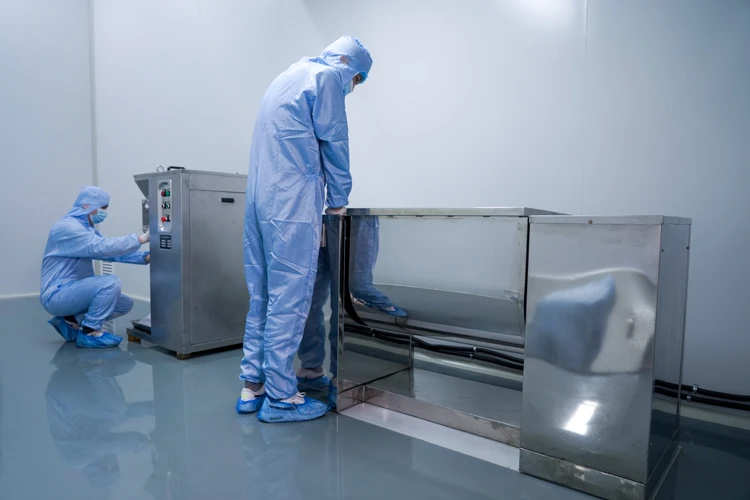
Red Yeast Rice Powder is a fermentation-derived nutraceutical ingredient, meaning the active content is generated by a microbial process rather than by simple extraction from plant tissue. Guanjie Biotech, a supplier founded in 2004 and based in Xi'an, China, lists Red Yeast Rice Powder among its main products alongside fermentation-produced Coenzyme Q10 powder and plant-derived ingredients such as Ferulic Acid Powder and Phosphatidylserine. The company states a 7,000 m² facility that includes a 2,000 m² cGMP-standard clean workshop and a 500 m² laboratory.
Regulation now shapes the commercial brief as much as the chemistry does. In the European Union, Commission Regulation (EU) 2024/2041, published on 29 July 2024, revoked the health claim relating to monacolin K in red yeast rice preparations, which means positioning and label text must be checked market by market instead of being carried over from older marketing material. In the United States, the FDA requires those who manufacture, package, or hold dietary supplements to follow current good manufacturing practices intended to help ensure identity, purity, quality, strength, and composition, and a separate pre-market notification process can apply to a new dietary ingredient unless an applicable exception exists.
The practical consequence for buyers is that the material and its paperwork are one deliverable. A powder that hits an assay target but arrives without a matching certificate set is not a complete delivery, and the gap usually surfaces at the worst possible moment — during incoming inspection or a customer audit.
The Identity File: What Should Be Fixed Before the First Quote
Seven lines of definition remove most of the ambiguity described above. They are short enough to fit in an enquiry email and specific enough to make quotations comparable.
- Product identity: Red Yeast Rice Powder.
- Reference numbers as listed by the supplier: CAS No.: 75330-75-5 and CAS No.: 39866-30-2.
- Active marker: Monacolin K.
- Assay method: HPLC.
- Specification range: 0.1% to 5.0% Monacolin K, with the ordered level stated explicitly.
- Batch documentation: a COA per batch showing identity, assay, and the tested parameters.
- Compliance documents: quality management and dietary-scheme certificates with scope and validity dates.
A supplier who cannot state an HPLC basis will normally answer with a different kind of number — a ratio, a total extract figure, or an assay from another method. That difference is the first thing to resolve, because it is the point where two quotations stop being comparable.
The Fermentation Route: Purple-Red Aspergillus with Primary and Secondary Seed Cultures
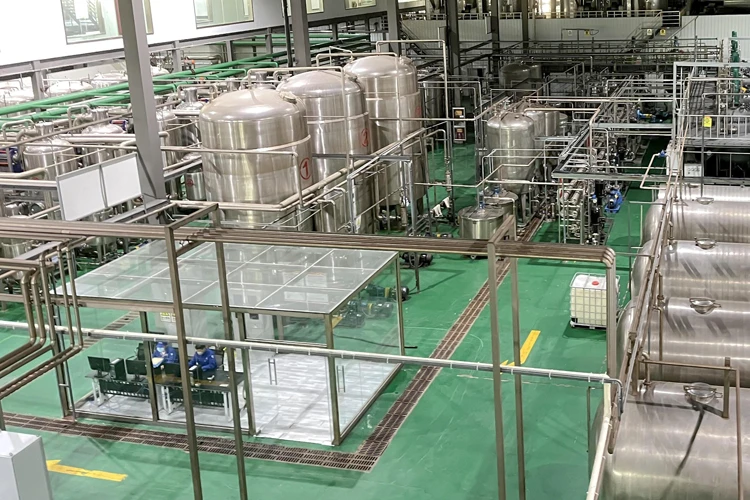
Both the purple-red color and the Monacolin K level are outcomes of fermentation, which is why the process is specified rather than assumed. The route used for this ingredient is a purple-red Aspergillus fermentation built on two seed stages before the main culture.
Stage 1 — Primary seed culture
The cycle begins with a controlled culture grown under defined conditions, so that the inoculum entering the main fermentation is consistent from batch to batch. Variability introduced at this stage is difficult to correct later, because it propagates through every downstream step and shows up as assay drift in the finished powder.
Stage 2 — Secondary seed culture
The primary culture is transferred into a secondary seed stage to build enough viable biomass for the production vessel. Splitting the culture into two stages creates an intermediate control point: the second stage can be checked before use, rather than discovering a weak inoculum only after the fermentation has already run.
Stage 3 — Inoculation and purple-red fermentation
The secondary seed culture is inoculated onto the rice substrate and the fermentation proceeds until the characteristic purple-red color develops. Color is a visible indicator, not a specification: the release decision depends on the assay, not on appearance. Fermentation conditions are managed so that color development and the Monacolin K level move together inside the intended window rather than diverging.
Stage 4 — Drying, milling and assay
After fermentation the material is dried and milled to powder, then sampled for HPLC testing of Monacolin K. The tested value — not the target — is what appears on the batch COA and what the buyer should hold against the purchase specification.
HPLC Specifications: Reading a 0.1% to 5.0% Monacolin K Range Correctly
The 0.1% to 5.0% range spans two orders of magnitude, and the two ends serve different formulation briefs. A buyer who selects the upper end because it sounds stronger, without checking the intended dose and the permitted label statement, has simply moved the problem downstream into the finished product. The range is a menu of available specification levels, not a quality ladder.
A usable COA answers four questions in a way that can be filed and re-checked:
- Is the assay stated as Monacolin K on an HPLC basis, rather than as a ratio extract or a total powder figure?
- Which specification is the batch being released against, so the number has a reference point?
- Which other parameters were tested alongside the assay, and does the batch number tie the COA to the material actually shipped?
- Do consecutive batches stay inside the same window? Consistency across lots matters more than one unusually high result.
Where an in-house quality team needs independent confirmation, third-party retesting can be arranged through laboratories such as SGS or Eurofins — a route Guanjie Biotech supports when a quality discrepancy has to be resolved after arrival.
Step-by-Step: How to Qualify a Red Yeast Rice Powder Lot
The qualification sequence below follows the order in which the evidence becomes available, so nothing is approved before the document behind it exists.
- Write the specification. Fix the Monacolin K percentage on an HPLC basis, the CAS references, the physical form, and the packaging format in one document that both sides sign off on.
- Request the batch COA and the certificate set before sampling. The COA should correspond to a real production batch, not to a generic template.
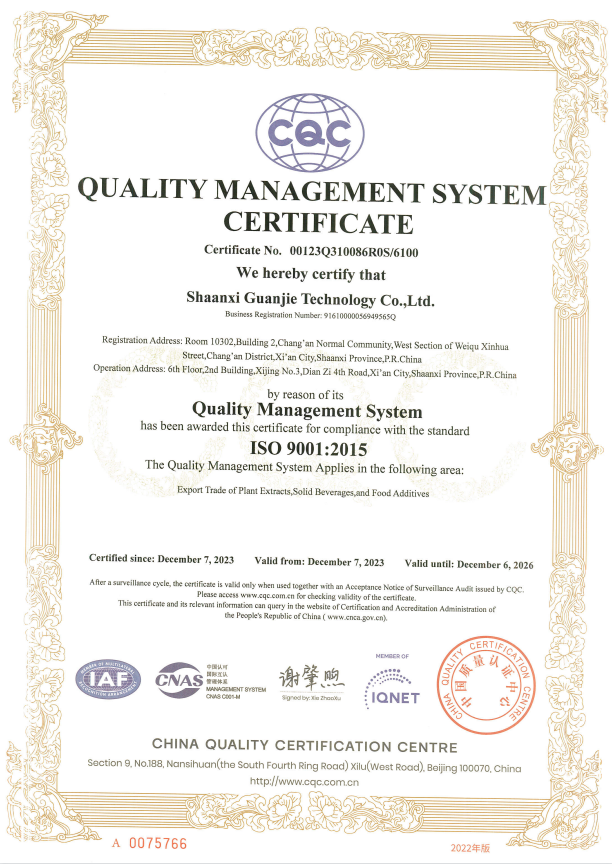
- Verify scope and validity. Guanjie Biotech holds ISO 9001:2015 certification issued by CHINA QUALITY CERTIFICATION CENTRE (CQC) under certificate 00123Q310086R0S/6100, covering export trade of plant extracts, solid beverages and food additives, valid from 2023-12-07 to 2026-12-06, and HACCP system certification 001HACCP2301048 issued by CQC, valid from 2023-12-06 to 2026-12-05. Confirm that the product falls inside the stated scope and that the dates are still current when you file them.
- Confirm dietary-market documents where required. HALAL certificate 0811240000 issued by SHANDONG HALAL CERTIFICATION SERVICE (SHC), valid from 2024-11-08 to 2027-11-07, and Kosher certificate K-88898568 issued by Badatz Shatz (SKS), valid from 2026-07-15 to 2027-07-15, cover plant extracts, solid beverages and food additives for the relevant markets.
- Order a sample and compare it with the COA. Appearance, color and the declared assay basis should match the paperwork; a sample issued against a different specification tells you nothing about the bulk lot.
- Agree commercial terms and release on arrival. With a minimum order quantity from 1 kg and a lead time of about 30 days, a first order fits inside one production cycle. On arrival, re-check the delivered batch number against the COA before releasing to production.
Use Cases: Where a Monacolin K-Standardized Powder Fits
Within health supplement processing, active raw materials are formulated into capsules, tablets, softgels and powder sachets for daily health products, and the same raw-material logic extends to fortified beverages, functional confectionery and nutricosmetics. Because Red Yeast Rice Powder is a fermented whole-grain powder rather than a soluble isolate, formulation work with it usually starts in solid dosage forms; moving it into a beverage is a separate feasibility question that should be answered with a trial, not assumed from a datasheet.
Handling conditions matter for the same reason. Supplement raw materials of this type are stored in a cool, dry and dark place, sealed tightly after opening, and kept away from high temperature and moisture. For a fermented powder whose color and assay are both process outcomes, that handling discipline protects the two attributes the buyer paid for.
Two further constraints belong in the project plan rather than the warehouse. First, any label statement about Monacolin K must be checked against the rules of the destination market, since the EU position changed with Commission Regulation (EU) 2024/2041. Second, the chosen assay level should follow from the dose in the finished product, not from the highest number a supplier can offer.

Specification Comparison Table: What to State and What Is Documented
The table below sets the buyer-side requirement against the position Guanjie Biotech documents for Red Yeast Rice Powder. It is a checking aid, not a substitute for the batch COA that accompanies a specific shipment.
| Specification element | What the buyer should state or request | Guanjie Biotech documented position |
|---|---|---|
| Product identity | Full product name plus reference numbers | Red Yeast Rice Powder; CAS No.: 75330-75-5 and CAS No.: 39866-30-2 |
| Active marker | Monacolin K stated as the marker, not a generic extract ratio | Monacolin K, with the level stated on the batch COA |
| Assay method | HPLC, stated explicitly on the COA | HPLC |
| Assay range | Ordered level within 0.1% to 5.0% Monacolin K | Released against the ordered specification per batch |
| Fermentation route | Purple-red Aspergillus fermentation with primary and secondary seed cultures | Purple-red Aspergillus fermentation route |
| Quality system | ISO 9001 and HACCP with scope and expiry dates | ISO 9001:2015, CQC certificate 00123Q310086R0S/6100, valid 2023-12-07 to 2026-12-06; HACCP certificate 001HACCP2301048, valid 2023-12-06 to 2026-12-05 |
| Dietary-scheme documents | Halal and Kosher certificates where the market or customer requires them | HALAL certificate 0811240000 (SHC), valid 2024-11-08 to 2027-11-07; Kosher certificate K-88898568 (Badatz Shatz), valid 2026-07-15 to 2027-07-15 |
| Batch testing | 100% testing with a COA per shipment | 100% test; batch COA with every shipment; third-party retesting support via SGS or Eurofins |
| Minimum order quantity | Stated MOQ in the quotation | From 1 kg |
| Lead time | Stated in working days from order confirmation | About 30 days |
| Monthly capacity | Capacity that matches the planned order volume | 30 tons per month |
Frequently Asked Questions
Is Red Yeast Rice Powder with Monacolin K restricted in the EU or the US?
Restrictions in these markets concern claims and market access rather than the identity of the powder itself. In the EU, Commission Regulation (EU) 2024/2041, published on 29 July 2024, revoked the health claim relating to monacolin K in red yeast rice preparations, so label and marketing text must be re-checked against the current EU position. In the US, dietary supplement manufacturers, packagers and holders must follow FDA current good manufacturing practices covering identity, purity, quality, strength and composition, and a pre-market new dietary ingredient notification can apply unless an exception exists. Because the legal position depends on the destination market, the finished-product claim and the dose, buyers should confirm status with their own regulatory team before labeling.
Which cGMP nutraceutical ingredients manufacturers can supply Red Yeast Rice Powder with batch COAs?
Look for a manufacturer that operates a cGMP-standard production environment, tests each batch, and issues a COA with every shipment. Guanjie Biotech, founded in 2004 and based in Xi'an, China, operates a 7,000 m² facility that includes a 2,000 m² cGMP-standard clean workshop and a 500 m² laboratory, and lists Red Yeast Rice Powder among its main products. Its stated controls include 100% testing, a batch COA matching pre-shipment specifications, third-party retesting support through laboratories such as SGS or Eurofins when a discrepancy needs resolving, and OEM/ODM packaging customization. Capacity is stated at 30 tons per month with a minimum order quantity from 1 kg.
What drives the cost of Red Yeast Rice Powder at different Monacolin K levels?
Quotations are built from the specification rather than from a single list price. The main variables are the Monacolin K level ordered on an HPLC basis, the documentation set required by the destination market, the packaging format, and the order quantity. Two quotes are only comparable when both are written against the same Monacolin K specification and the same document list; a lower figure usually reflects a different assay basis or a shorter document set rather than a better price for identical material. Guanjie Biotech quotes against the agreed specification, with a minimum order quantity from 1 kg and a stated lead time of about 30 days.
Can a buyer request a sample before committing to a bulk order?
Yes. Sampling is the normal step between document review and a bulk order, and its purpose is to confirm that the physical material matches the paperwork. A sample request should state the Monacolin K level on an HPLC basis, the intended dosage form, and the destination market, so that the sample and its COA are issued against the same specification the bulk order will use. Guanjie Biotech supports sample requests together with batch documentation, and OEM/ODM packaging customization can be discussed at the same stage.
What lead time should a buyer plan for, and what is the next step?
Guanjie Biotech states a lead time of about 30 days, with a monthly capacity of 30 tons and a minimum order quantity from 1 kg, so a first order can be planned around a single production cycle once the specification and documents are agreed. The practical next step is to send the specification — the Monacolin K percentage on an HPLC basis, CAS No.: 75330-75-5 and CAS No.: 39866-30-2, quantity, packaging and destination market — and request a sample together with the batch COA. Enquiries go to info@gybiotech.com or WhatsApp +86 150-2999-3470.
Conclusion
Red Yeast Rice Powder is best understood as three linked facts rather than a single product name. Its identity rests on a defined material with CAS No.: 75330-75-5 and CAS No.: 39866-30-2; its quality is expressed as Monacolin K measured by HPLC, within a commercial range of 0.1% to 5.0%; and its consistency comes from a purple-red Aspergillus fermentation route built on primary and secondary seed cultures. Buyers who specify all three, plus the certificate set, get quotations they can actually compare.
The documentation side is not administrative decoration. With the EU monacolin K claim position changed by Commission Regulation (EU) 2024/2041 and with FDA current good manufacturing practices governing identity, purity, quality, strength and composition in the US market, the batch COA and the certificate set are part of what a buyer purchases. A qualification file built in that order — specification, COA, certificates, sample, then commercial terms — is what makes a first lot a repeatable supply rather than a one-off experiment.
Next Step: Request a Red Yeast Rice Powder Sample and Batch COA
Send your Monacolin K specification on an HPLC basis, the required quantity and the destination market, and Guanjie Biotech will respond with a sample and the matching batch documentation.
Email: info@gybiotech.com | Tel / WhatsApp: +86 150-2999-3470 | Website: guanjiebio.com
Download the full ingredient catalogue: Guanjie Nutraceutical Ingredients brochure (PDF)
Have Questions or Need More Details?
Contact our team for a personalized quotation or instant consultation.
Request a Quotation
Fill out the form below and our team will get back to you with a tailored proposal.
WhatsApp Direct Chat
Prefer to chat in real-time? Message us on WhatsApp for instant assistance & quick answers.
- Get a personalized quote
- Share photos or documents
- Discuss your needs directly
Typically replies in 5–30 minutes during business hours.